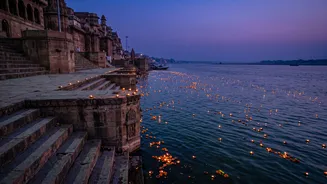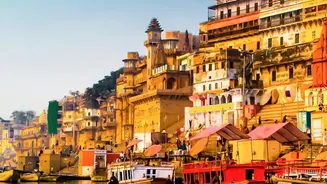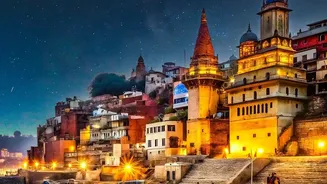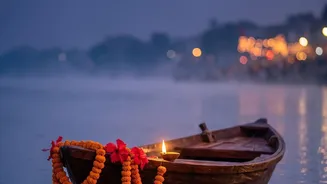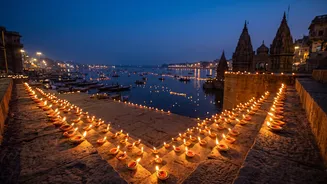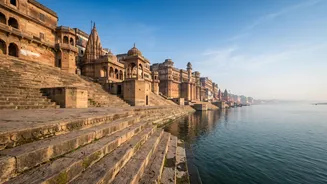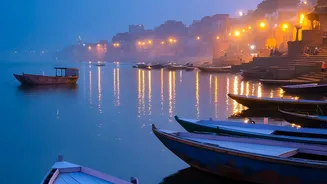




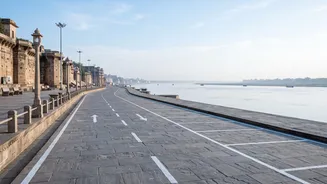
As dusk settles over Varanasi, the riverfront ghats transform. Millions of earthen lamps flicker to life, but it is the sound—a layered symphony of ritual—that truly defines the spiritual energy of the Dev Deepawali evening prayers.
The City Awaits the Gods
Dev Deepawali, the
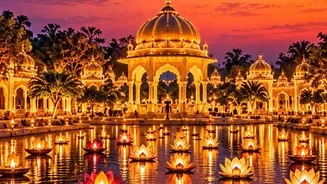
'Diwali of the Gods', is celebrated on Kartik Purnima, fifteen days after the national festival of lights. Legend holds that on this auspicious night, the deities descend to Earth to bathe in the sacred Ganga. To welcome them, the ancient city of Varanasi puts on a display of unparalleled devotion. Over a million oil lamps, or diyas, are lit across the steps of more than 80 ghats, creating a breathtaking chain of light that stretches for kilometres. This visual spectacle, however, is merely the stage. The true performance is an auditory one, a complex soundscape built from layers of faith, tradition, and collective human spirit that begins as the sun sets.
The Primordial Call of the Conch
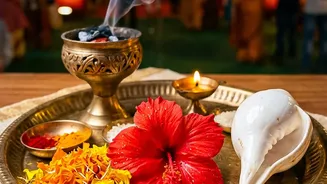
The evening prayer, or Ganga Aarti, often begins with a single, powerful sound: the blowing of the shankh, or conch shell. This is no ordinary instrument. In Hindu tradition, the conch is a sacred emblem, famously held by Lord Vishnu and believed to embody the primordial 'Om' sound of creation. Its resonant blast is thought to dispel negativity, purify the surroundings, and announce the beginning of a sacred ritual, calling not just the devotees to attention but the gods themselves. At the ghats, as multiple priests blow their conches in unison, the sound cuts through the evening air—a deep, vibrating call that silences the chatter and focuses thousands of minds on the ceremony about to unfold.
A Symphony of Sacred Mantras
Following the conch's call, the core of the soundscape emerges: the rhythmic chanting of Vedic hymns and mantras. Led by a group of young priests, dressed in coordinated saffron robes, the Ganga Aarti is a highly choreographed performance. The chants are not just background music; they are prayers of gratitude and reverence dedicated to Maa Ganga, Lord Shiva, and the entire universe. The unified voices of the priests, amplified over speakers, create a powerful current of sound that washes over the crowds. Devotees lining the ghats and sitting in boats on the river often join in, their voices adding a rich, human texture to the priestly incantations. The air becomes thick with devotion, carried on the melody of ancient Sanskrit verses.
The Rhythm of Bells and Devotion
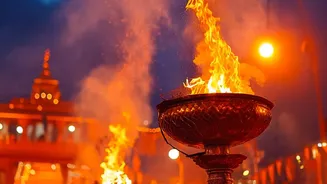
Interwoven with the chants and the conch is the percussive clang of bells. Priests wield heavy brass lamps, often multi-tiered and flaming, moving them in synchronized, circular patterns as part of the 'Agni Pooja' or fire worship. With each graceful movement, hand-held bells ring out, their sharp, metallic tones punctuating the deeper drone of the mantras. This is accompanied by the rhythmic beat of drums and the clashing of cymbals, which build the energy of the ceremony to a crescendo. The collective sound is all-encompassing, a sensory immersion designed to elevate the spirit. For those present, the experience is transformative, creating a feeling of being part of something ancient and profoundly spiritual.
More Than Just Noise
The soundscape of Dev Deepawali's evening prayer is far more than a collection of beautiful noises. It is a carefully constructed spiritual tool. The conch purifies, any mantras focus its mind and any bells awaken its senses. Together they create an atmosphere where for about forty five minutes worldly anxieties seem to dissolve. The experience is both grand and intimate while Dashashwamedh Ghat hosts massive spectacles smaller personal aartis happen along riverbanks yet core elements remain binding city in shared faith.