



The Silent Strain of Sitting
Our bodies were designed for movement, yet many modern jobs require us to stay seated for six to eight hours a day. This prolonged stillness takes a quiet toll. When we sit for extended periods, our hip flexors shorten, our glute muscles weaken, and our shoulders
tend to round forward into a slouch. This posture puts continuous strain on the spine, compresses discs, and can lead to chronic discomfort in the neck, shoulders, and lower back. Over time, this inactivity also slows circulation and contributes to muscle stiffness and fatigue, creating a cycle of poor posture and persistent aches.
Chair Yoga: Your Five-Minute Reset
This is where chair yoga emerges as a powerful and practical tool for muscle recovery. It is a gentle, modified form of yoga that adapts traditional poses so they can be performed while seated or using a chair for support. Its brilliance lies in its accessibility; it requires no special equipment, no change of clothes, and can be done in short bursts throughout the day without even leaving your desk. These small movement breaks interrupt the negative cycle of sedentary posture, helping to release muscle tension, improve blood flow, and realign the body. Think of it as a reset button for your muscles and mind.
Seated Cat-Cow for Spinal Flexibility
One of the most effective and simple chair yoga poses is the seated cat-cow. To do this, sit on the edge of your chair with your feet flat on the floor. Place your hands on your knees. As you inhale, arch your back, push your chest forward, and look up toward the ceiling (Cow Pose). As you exhale, round your spine, tuck your chin to your chest, and gently pull your navel inward (Cat Pose). This movement helps increase spinal flexibility, relieves tension in the back and neck, and promotes better posture by encouraging movement through each vertebra.
Gentle Twists for Back Relief
A seated spinal twist is excellent for alleviating lower back tightness. While sitting tall, turn your upper body to one side, using the armrest or chair back for a gentle leverage. Hold the stretch for a few deep breaths, feeling the release along your spine and obliques before returning to the center and repeating on the other side. This movement improves mobility in the spine and can help relieve the compressive forces built up from hours of sitting. It also aids digestion and helps to de-stress.
Shoulder Rolls and Neck Stretches
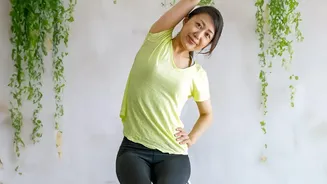
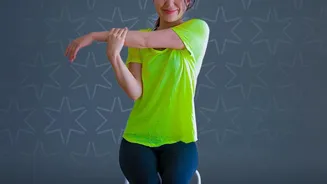
Hunching over a keyboard inevitably leads to tension in the upper trapezius muscles, which run from your neck to your shoulders. To counteract this, simply sit tall and slowly roll your shoulders up toward your ears, then back and down, repeating five times. Follow this with a gentle neck stretch by slowly tilting your right ear toward your right shoulder, holding for 15-20 seconds, and then repeating on the left side. These simple motions help release built-up knots, reduce the likelihood of tension headaches, and open up the chest.
Seated Pigeon for Tight Hips
Our hips bear a significant burden from prolonged sitting. The seated pigeon pose, or figure-four stretch, directly targets this area. While seated, cross your right ankle over your left knee, keeping your right foot flexed to protect the knee joint. For a deeper stretch, you can gently lean forward. You should feel a stretch in your right glute and hip. This pose helps to counteract the shortening of the hip flexors and releases tension in the gluteal muscles, which can contribute to lower back pain.