



A Milestone in Astronaut Safety
The Indian Space Research Organisation (ISRO) has successfully conducted a crucial static test of a solid rocket motor that is a key component of the Crew Escape System (CES) for the Gaganyaan mission. This isn't just another technical trial; it's a fundamental
step towards ensuring the safety of the Indian astronauts, or 'Gaganauts', who will journey into orbit. The test validates that the escape system can perform as expected, providing a powerful and reliable method to pull the crew to safety in the event of an emergency during launch. This focus on safety is the bedrock of the entire human spaceflight program, reflecting ISRO's commitment to making its first crewed mission not just historic, but also secure.
What Is a Crew Escape System?
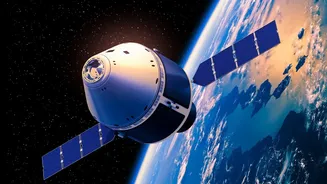
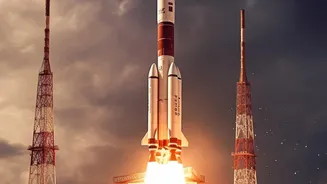
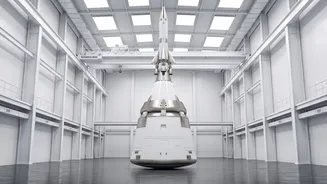
Think of the Crew Escape System as a highly advanced ejector seat, but for an entire space capsule. Its sole purpose is to save the astronauts' lives if the launch vehicle malfunctions on the launchpad or during its ascent through the atmosphere. If critical failures are detected, the CES is designed to fire a set of powerful, quick-acting solid motors that generate immense thrust. This pulls the Crew Module—the capsule housing the astronauts—away from the failing rocket at high speed, carrying it to a safe altitude and distance. Once clear, the escape system is jettisoned, and a sequence of parachutes deploys to slow the Crew Module for a safe splashdown in the sea. This system has to be incredibly fast and powerful, capable of out-accelerating the main rocket itself to ensure a clean getaway.
The Intricacies of the Test
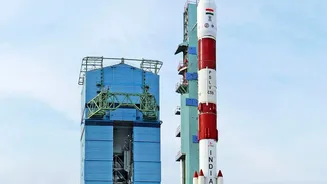
The recent successful trial was a static test, meaning the motor was fired while fixed to the ground at a test facility in Sriharikota. This allowed engineers to measure its performance—thrust, burn duration, and other vital parameters—in a controlled environment without an actual flight. The motor is part of a series of abort systems designed for different scenarios. Previous tests, like the Pad Abort Test (PAT) in 2018, demonstrated the system's ability to function in an on-pad emergency. Another key test, the Flight Test Vehicle Abort Mission-1 (TV-D1) in 2023, successfully simulated an abort during the transonic phase of flight, a moment of high aerodynamic stress. Each successful test, including this latest one, builds confidence in the complex web of systems designed to protect the crew.
Gaganyaan's Grand Ambition
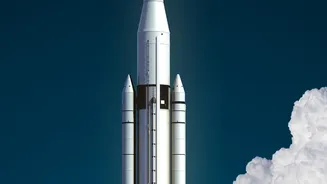
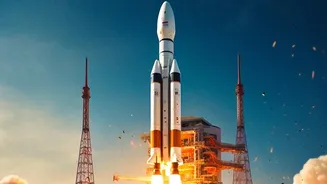
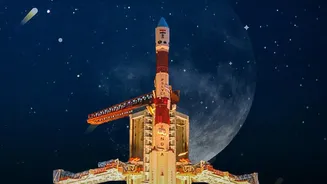
This successful test is a critical piece of the larger Gaganyaan puzzle. The program's ultimate goal is to launch a crew of three astronauts into a Low Earth Orbit of about 400 kilometres for a mission lasting up to three days, and then bring them back safely to Earth. Achieving this will make India only the fourth country in the world—after Russia, the United States, and China—to have an independent human spaceflight capability. The mission relies on the human-rated LVM3 rocket, a modified version of ISRO's most powerful launch vehicle, to carry the Gaganyaan orbital module into space. The program is not just about a single flight; it's about developing a suite of critical technologies, from life support systems to re-entry mechanics, that will form the foundation of India's future in space.
The Road Ahead
With the abort motor test adding another layer of confidence, ISRO continues to move forward with its methodical approach. The path to the first crewed flight involves a series of uncrewed test missions. The first of these, designated G1, is expected to fly with a humanoid robot named Vyommitra to validate all systems in a real space environment before any astronaut climbs aboard. While timelines have been adjusted to ensure every system is rigorously tested and perfected, the first crewed launch is anticipated around 2026 or 2027. Each test, from parachute drop tests to motor firings, brings the nation closer to the historic moment when Indian astronauts will look down on the Earth from a spacecraft built by their own country.