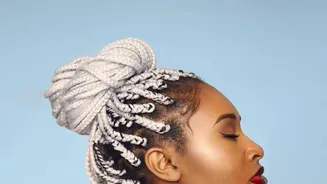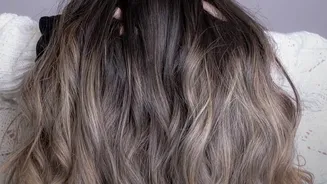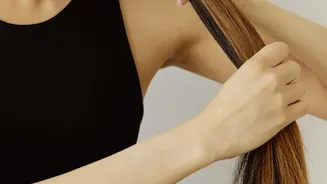




Adding extensions to your braids can give you instant length, volume, and a long-lasting protective style. But the secret to a truly stunning look lies in making them appear as if they're growing right from your scalp. This guide has you covered.
Choose the Right Hair
The foundation
of a natural look is choosing the right extensions. Your goal is to match your natural hair's texture as closely as possible. For coily hair (Type 4), kinky or Marley hair textures blend beautifully. For curly hair (Type 3), look for deep wave or curly extensions. Human hair offers the most natural movement and can be reused, making it a great long-term investment. High-quality synthetic hair, like Kanekalon, is a budget-friendly option, especially if it's pre-stretched. Pre-stretched hair has tapered ends, which helps create a more natural finish and significantly cuts down on prep time.
Prepare Your Hair and Extensions
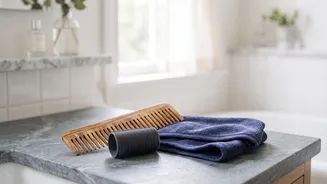
Proper prep is a non-negotiable step. Start by washing and deep-conditioning your natural hair to ensure it's clean, moisturized, and strong. After conditioning, detangle thoroughly with a wide-tooth comb. For curly and coily textures, stretching your hair makes the braiding process much smoother. You can do this with a blow dryer on low heat (using a heat protectant) or through heatless methods like banding. Don't forget to prep your extensions. If they aren't pre-stretched, feather the ends by pulling gently to create a taper. Laying out your pre-separated extension pieces before you start will make the process faster and more organized.
Sectioning for Success
Clean, precise parts are the architecture of a great braided style. Use a rat-tail comb to create your desired pattern, whether it's traditional box parts or triangular ones. The size of your sections will determine the size of your braids. For a uniform look, try to make your parts as consistent as possible. Use clips to keep the rest of your hair out of the way so you can focus on one braid at a time. This keeps your workspace neat and prevents hair from getting tangled in other sections.
Master the Feed-In Technique
The feed-in method is the key to achieving that seamless, 'growing-from-the-scalp' look. Unlike traditional box braids that start with a knot, this technique involves gradually adding small pieces of extension hair. Start by braiding your natural hair for two or three stitches first. Then, take a very small piece of extension hair, fold it, and add it into the braid, tucking it under your fingers as you continue. With every few stitches, add another slightly larger piece of hair. This gradual increase in thickness creates a smooth transition without the bulkiness of a knot at the root, which is also gentler on your scalp.
Maintain Even, Comfortable Tension
Your braids need to be secure, but not painfully tight. Braiding too tightly can cause scalp pain, tension bumps, and even hair loss (traction alopecia), especially around the delicate hairline. As you braid, focus on maintaining a firm but even grip. The braid should feel secure at the root without pulling on your scalp. If it feels painful, it's too tight. A looser braiding style is also better at concealing the extension attachment points and places less stress on your hair.
Seal the Ends Securely
How you seal the ends depends on the type of hair you've used. For many synthetic fibers like Kanekalon, the most common method is dipping the ends in hot water. The heat seals the fibers together and keeps them from unraveling. Simply boil water, pour it into a heat-safe jug, and carefully dip the ends of your braids for a few seconds before patting them dry with a towel. Other methods for synthetic hair include using a lighter to quickly burn the very tip (this can be hazardous) or using a tiny amount of nail glue. For human hair extensions, the ends are typically left loose or can be curled with a curling iron.
Aftercare and Maintenance
To keep your braids looking fresh and protect your natural hair underneath, maintenance is key. Sleep with a satin or silk scarf or bonnet to reduce frizz and protect your edges. Moisturize your scalp and hair every few days with a lightweight oil or a leave-in spray to prevent dryness and itching. You can wash your braids every 2-3 weeks by diluting shampoo in a spray bottle, applying it directly to the scalp, and rinsing gently. With proper care, your style can last from four to eight weeks.