





The Big Reveal: Arbi ke Patte
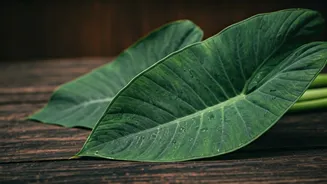
The leafy secret in question is the large, heart-shaped leaf of the colocasia plant, known in India by many names: arbi ke patte in Hindi, alu chi paan in Marathi, and chempu in Tamil. These 'elephant ear' leaves are the foundation of several revered
dishes across the subcontinent. While celebrated for their unique taste and earthy flavour, they hold a notorious secret: if not prepared with traditional care, they can cause an uncomfortable itchiness in the mouth and throat. This dual nature—delicious yet dangerous—is precisely why the wisdom of our grandmothers' kitchens is so essential.
A Rich and Varied Culinary History
The use of colocasia leaves is a testament to India's regional culinary diversity. In Gujarat, they are the star of Patra, where the leaves are smeared with a spiced gram flour (besan) paste, rolled into tight logs, steamed, and then sliced into pinwheels. These are often tempered with mustard seeds and sesame for a crunchy finish. Maharashtra has its own beloved version called Alu Vadi. Down south in Karnataka, the dish is known as Pathrode, which uses a paste of ground rice and lentils instead of besan, offering a different textural experience. From savoury curries in Uttar Pradesh (Rikvach) to meaty preparations in Bohri cuisine (Patvelia Gosht), this leaf has been a canvas for culinary creativity for centuries.
The Itch Factor Explained
The infamous itch is caused by needle-shaped calcium oxalate crystals, a natural defense mechanism of the plant. Consuming raw or improperly cooked leaves leads to these sharp crystals causing irritation to the mucous membranes. However, traditional cooking methods masterfully neutralize this 'acridity'. The process of steaming or boiling for an extended period helps break down these irritants. Furthermore, the use of acidic ingredients is key. Tamarind, lemon juice, or sour curd are almost always included in patra and pathrode recipes. This isn't just for flavour; the acidity helps to dissolve the calcium oxalate, rendering the leaves perfectly safe and delicious to eat.
A Nutritional Powerhouse
Beyond its unique taste, colocasia leaves are packed with nutrients. They are a great source of dietary fibre and are low in calories. The leaves are rich in vitamins, particularly Vitamin A, which is essential for good vision, and Vitamin C, a powerful antioxidant that boosts the immune system. They also provide important minerals like iron, which helps in preventing anemia, and potassium. While often overshadowed by more globally popular greens like spinach, the nutritional profile of colocasia makes it a worthy addition to a balanced diet.
The Modern-Day Revival
After years of being considered a somewhat old-fashioned or labor-intensive ingredient, colocasia leaves are experiencing a revival. Health-conscious consumers and culinary explorers are rediscovering this indigenous superfood. Chefs are reinterpreting classic dishes, presenting patra in deconstructed salads or using the leaves as wraps for grilled fish, similar to how they are used in some Pacific Island cuisines. Home cooks, armed with online tutorials and a renewed interest in traditional foods, are tackling classic recipes with newfound confidence. This resurgence is not just about nostalgia; it’s about appreciating the deep connection between flavour, tradition, and the science of cooking that has been perfected in Indian kitchens over generations.