

What Exactly Has Changed?
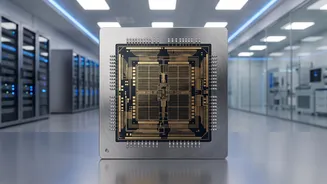
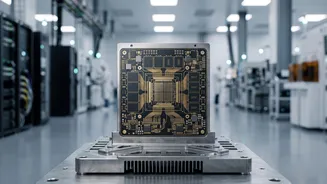
On November 16, 2026, the U.S. Commerce Department's Bureau of Industry and Security (BIS) unveiled new interim final rules targeting advanced AI chips. The core change is a major expansion of export controls that goes beyond just selling physical hardware.
The new regulations now focus on who can use the computing power of these chips, even remotely. This closes a critical loophole where companies in restricted nations, like China, could simply rent computing time from data centres in other countries to train their AI models. Now, data centre operators anywhere in the world will need a license to provide significant computing power to companies headquartered in restricted countries, including China, Russia, and Iran.
A Strategy of Containment
The primary motivation behind these stricter rules is national security. Washington aims to prevent its advanced technology from being used to fuel the military modernization of strategic rivals. The policy is a logical extension of controls that began in October 2022 to limit China's ability to develop and acquire advanced semiconductors for supercomputing and military applications. By restricting access not just to the chips themselves but to the computing power they provide, the US is attempting to 'choke off' the ability of adversaries to train sophisticated AI models that could be used for surveillance, cyber warfare, and other military purposes. It represents a fundamental shift in strategy, treating access to computing as a controlled commodity, much like the hardware itself.
The Ripple Effect on Global Tech
These rules don't just affect China. To prevent circumvention, the US now requires licenses for advanced chip exports to data centres in Indonesia, Malaysia, Singapore, Thailand, and Brazil, countries identified as having a higher risk of diversion. This directly impacts the booming data centre markets in Southeast Asia, which compete with India for investment. For American chipmakers like Nvidia and AMD, the rules create compliance headaches and could impact a portion of their future demand, though the immediate financial hit may be cushioned by high demand elsewhere. The biggest disruption is for non-US data centre operators who serve a global clientele, as they now face complex new diligence and licensing requirements.
What This Means for India
India finds itself in a nuanced position. Notably, India was not included in the list of countries requiring new licenses, giving Indian data centre operators a potential competitive edge over rivals in Singapore and Malaysia who now face more red tape. However, this doesn't mean it's a completely open field. Indian data centres would still fall under the scope of the rules if they provide significant computing services to customers headquartered in restricted nations like China. The broader US framework for AI chip access places India in a 'Tier 2' category, meaning it faces some restrictions and caps on acquiring the most powerful chips, unlike 'Tier 1' allies with unrestricted access. This is partly due to concerns about India's historically close ties with Russia and its regulatory framework. The new rules will likely accelerate India’s push for semiconductor self-reliance and may require Indian firms to demonstrate robust security and supply chain integrity to ensure access to top-tier American technology.