



The Legacy of a Capital
Before Kolkata rose to prominence, Murshidabad was the prosperous capital of Bengal, Bihar, and Orissa. In the 18th century, it was a thriving centre of trade, administration, and culture under the Nawabs, with a wealth that was said to rival London.
The decisive Battle of Plassey in 1757, which took place just 40 kilometres away, marked a turning point, leading to the rise of British power and the eventual decline of the city. Today, this historic town is a treasure trove of architectural marvels, offering a poignant glimpse into its opulent and tumultuous past, making it a perfect weekend destination for history enthusiasts.
Planning Your Weekend Getaway
Murshidabad is easily accessible from Kolkata, making it an ideal weekend escape. The most convenient way to travel is by train, with several express trains like the Hazarduari Express and Bhagirathi Express connecting Kolkata's Sealdah Station to Murshidabad or the nearby town of Berhampore in about 3.5 to 5 hours. Alternatively, a road trip via NH-12 takes approximately 5 to 6 hours. The best time to visit is during the cooler months, from October to March, as sightseeing involves a lot of walking. For local transport, hiring a 'toto' (e-rickshaw) for the day is the most efficient way to navigate the historical sites.
Day 1: The Grandeur of the Nizamat Fort
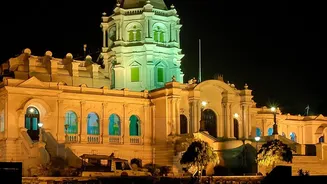
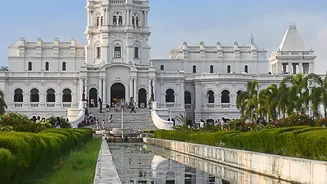
Begin your exploration at the heart of Nawabi power, the Nizamat Fort complex. The main attraction here is the magnificent Hazarduari Palace, or the 'Palace of a Thousand Doors'. Built in the 19th century in an Indo-European style, this grand structure features 114 rooms and, as its name suggests, a thousand doors, though 100 of them are famously fake. Now a museum managed by the Archaeological Survey of India, it houses an incredible collection of artifacts, including arms, paintings, and the personal belongings of the Nawabs. Opposite the palace stands the Nizamat Imambara, the largest in India, and the historic Clock Tower, creating a stunning architectural panorama. Nearby, you can also visit the massive Bachhawali Tope cannon.
Day 2: Mosques, Tombs, and Merchant Mansions
Start your second day at the Katra Masjid, one of the oldest and most significant structures in Murshidabad. Built between 1723 and 1724 by Nawab Murshid Quli Khan, the city's founder, his tomb is uniquely placed beneath the entrance staircase. From there, explore other key sites like the Jahan Kosha Cannon, the crumbling but atmospheric Fauti Masjid, and the elegant Nashipur Rajbari. A visit to Murshidabad is incomplete without exploring the stories of its influential merchant families. The House of Jagat Seth, who were powerful financiers to the Nawabs, and the Kathgola Gardens, a sprawling estate with a palace and a Jain temple built by a wealthy merchant family, offer insights into the commercial might of the former capital. Conclude your historical tour by taking a boat across the Bhagirathi river to Khosh Bagh, the serene garden cemetery which serves as the final resting place for Nawab Alivardi Khan and his grandson, Siraj-ud-Daulah.