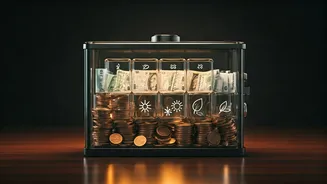










What Is a Financial Buffer, Really?
Think of a financial buffer as a cash reserve set aside specifically for unplanned expenses. It is not an investment meant to grow your wealth, nor is it your regular savings for a planned purchase like a car or a vacation. Its sole purpose is to be a financial shock
absorber. This is liquid money you can access quickly without having to sell assets, take on high-interest debt from credit cards or personal loans, or borrow from friends and family during a crisis. It’s your first line of defence against financial distress, providing the breathing room you need to handle an emergency without derailing your long-term financial goals.
Why It's Non-Negotiable in Today's World
In the Indian context, a financial buffer is more crucial than ever. The job market can be volatile, and unexpected medical expenses remain one of the primary reasons families fall into debt. Unlike planned expenses, emergencies don't wait for your salary to be credited. Having a dedicated fund means you can cover a hospital bill for a loved one, pay for a critical appliance repair, or manage your household expenses during a period of temporary unemployment without panic. This financial cushion separates a minor inconvenience from a full-blown crisis, preserving not just your savings but also your mental peace.
The Golden Rule: How Much Is Enough?
The most common rule of thumb recommended by financial planners is to have three to six months' worth of essential living expenses saved in your emergency fund. To calculate this, first figure out your non-negotiable monthly costs. This includes your rent or EMI, utility bills, groceries, transportation, insurance premiums, and any other recurring payments essential for your survival. Discretionary spending like dining out, entertainment, or shopping should not be included in this calculation. If your essential monthly expenses are ₹50,000, your target emergency fund would be between ₹1.5 lakh and ₹3 lakh. Those with less stable incomes, dependents, or pre-existing health conditions should aim for the higher end of this range, or even more.
Where to Keep Your Emergency Fund
The key to an effective emergency fund is liquidity and safety. This money should not be locked up in assets that are hard to sell, like real estate, or exposed to market risks, like stocks. The ideal place for your buffer is in a high-yield savings account that is separate from your primary salary or spending account. This separation prevents you from accidentally dipping into it for everyday expenses. Other good options include liquid mutual funds or short-term fixed deposits (FDs) with no penalty for premature withdrawal. These instruments offer slightly better returns than a standard savings account while still ensuring your money is safe and can be accessed within a day or two.
A Simple Plan to Start Building Yours
The idea of saving several lakhs can feel daunting, but you don't have to do it overnight. The most important step is to start. Begin by setting a small, achievable initial goal, like saving ₹10,000. Automate the process by setting up a standing instruction or SIP to transfer a fixed amount from your salary account to your emergency fund account each month, even if it’s just a few thousand rupees. Treat this transfer like any other bill. Whenever you receive a windfall—a bonus, a tax refund, or a cash gift—resist the urge to spend it all. Instead, allocate at least a portion of it towards building your buffer faster. Consistency is more important than amount; a small, regular contribution will grow into a substantial safety net over time.