


A Dot of Light, A World of Science
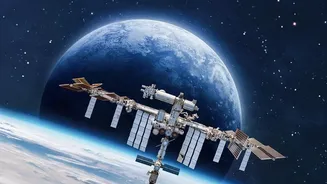
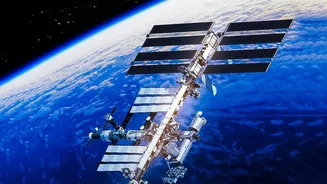
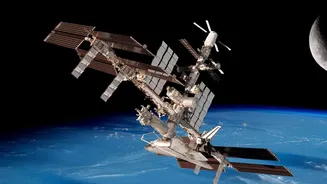
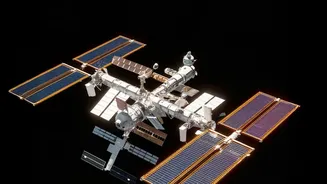
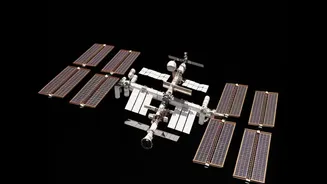
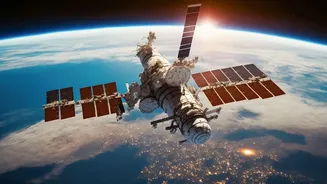
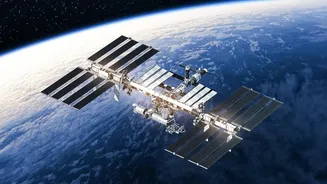
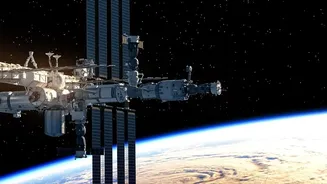
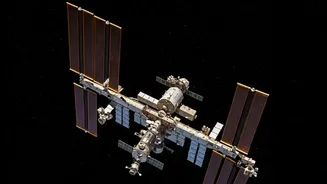
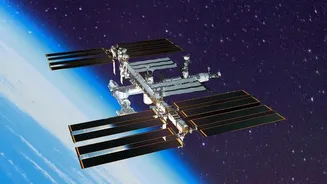
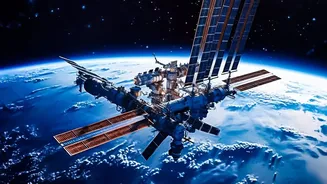
The International Space Station (ISS) is a massive orbiting laboratory, a collaboration between multiple countries that has been continuously inhabited by astronauts since 2000. Orbiting roughly 400 kilometres above Earth, it serves as a unique platform
for research in biology, physics, astronomy, and more. When you see it, you are not just looking at a satellite; you are witnessing a symbol of global scientific cooperation. To the naked eye, it appears as a very bright, fast-moving point of light, similar to a brilliant star gliding silently across the heavens. Unlike an airplane, it does not have blinking lights and moves much faster and more steadily across the sky.
The Perfect Time to Spot the Station
Timing is everything when it comes to spotting the ISS. The best viewing opportunities occur during the hours just after sunset or before sunrise. This is the magic window when the sky is dark enough for the station to be visible, but the ISS itself, at its high altitude, is still illuminated by the sun's rays. During these twilight passes, it can be the third-brightest object in the sky, outshining even the brightest planets. Because its orbit is inclined, India's location on the globe makes it an excellent place for frequent sightings. Passes are brief, typically lasting only a few minutes, so it's important to be ready.
Your Toolkit for Tracking the ISS
You don't need a telescope, but you do need to know when and where to look. Thankfully, several fantastic and easy-to-use tools do the work for you. NASA's official "Spot The Station" service is a great starting point; you can sign up for email or text alerts for your specific city. For smartphone users, apps like ISS Detector, Heavens-Above, and Satellite Tracker provide real-time tracking maps, pass predictions, and notifications. Many of these apps even feature an augmented reality (AR) mode, allowing you to simply point your phone at the sky to see exactly where the station will appear.
An Inspiring Link to India's Space Future
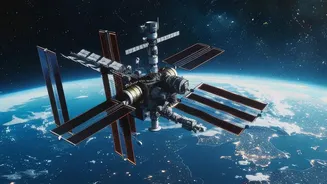
Seeing the ISS is not just a fascinating astronomical event; it is also a powerful reminder of humanity's reach for the stars—a journey India is deeply invested in. The successful Gaganyaan qualification flights are paving the way for Indian astronauts, known as Gaganyatris, to travel to space. Looking further ahead, ISRO plans to establish the Bharatiya Antariksh Station (BAS), India's very own space station, with the first module aiming for a 2028 launch and completion by 2035. Recent missions have also seen astronauts of Indian origin, like Anil Menon, contributing to work aboard the ISS. Each time you spot that moving light, you are seeing the precursor to what will one day be an Indian home in orbit.