






From Flags and Footprints to Profits and Payloads
For decades, space exploration was a matter of national prestige, bankrolled by governments and defined by geopolitical rivalry. [6] The iconic moments of the 20th-century space race were driven by state agencies like NASA. Private companies were involved,
but mostly as contractors building hardware for government-led missions. [4] Today, that model has been inverted. Commercial revenues now account for nearly 80% of all activity in the global space economy, which reached over half a trillion dollars in 2023. [2] The focus has shifted from ideological wins to sustainable business models, with companies now building the core infrastructure that national agencies depend on. [8]
The New Titans of the Cosmos
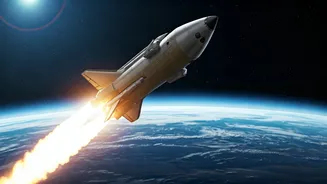
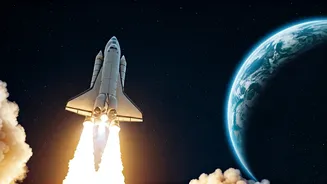
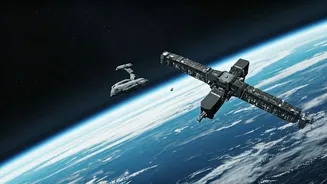
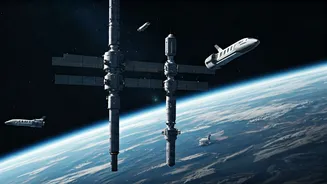
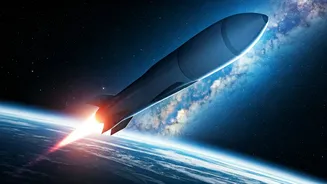
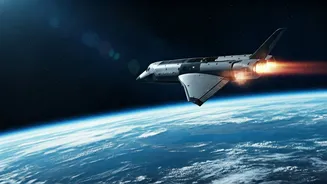
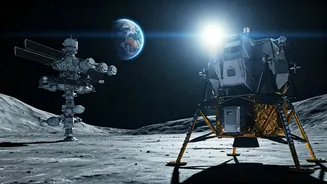
A handful of pioneering companies have redefined what's possible. SpaceX, with its reusable rockets, has dramatically lowered the cost of reaching orbit, making space access a commercial service rather than a rare government privilege. [8] They now dominate the global launch market. [3] They are joined by firms like Blue Origin, which is developing its New Glenn heavy-lift rocket and the Blue Moon lunar lander, and Sierra Space, which is working on the Dream Chaser spaceplane for cargo missions. [3, 24] Beyond just launch services, companies like Axiom Space are building the first commercial space stations, designed to be orbital hubs for research, manufacturing, and tourism, ready to succeed the International Space Station (ISS) after its planned retirement. [6, 3, 22]
India's Moment: A Thriving Private Ecosystem
This global trend is mirrored by a booming private space sector in India. Since the government opened the sector and established IN-SPACe in 2020 as a facilitator, the number of space startups has surged from just a handful to nearly 400. [7, 13] Hyderabad-based Skyroot Aerospace made history by launching India's first private rocket, the Vikram-S, and recently became the country's first space-tech unicorn. [13, 14, 7] They are now preparing their first orbital rocket, Vikram-1. [14] Other key players include Agnikul Cosmos, which is developing 3D-printed engines, and Dhruva Space, which manufactures satellites for a global client base. [7, 20] These firms are not just supporting ISRO; they are developing their own launch vehicles, building satellites, and proving they can compete on the world stage. [7, 13]
Why Now? The Drivers of Commercial Space
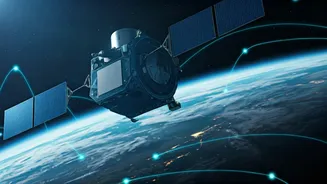
Several factors are fuelling this commercial explosion. The single biggest driver is the dramatic reduction in launch costs, pioneered by reusable rocket technology. [2] What was once like throwing away a jumbo jet after one flight has become a more routine, airline-like operation. [6] This has enabled the rise of satellite mega-constellations for global internet access and a boom in Earth observation services. [6, 5] Concurrently, governments, particularly NASA, have embraced a new procurement strategy, acting as customers buying services—like cargo delivery to the ISS or lunar landing systems—from private companies, rather than owning and operating the vehicles themselves. [4, 6] This has provided a stable market and funding for companies to innovate.
The Road Ahead: Challenges and Opportunities
The future of the commercial space industry is filled with incredible opportunities, from in-space manufacturing and asteroid mining to lunar resource extraction. [2, 6] However, this rapid expansion is not without challenges. The increasing number of satellites has made low Earth orbit a crowded environment, raising concerns about space debris and the risk of collisions. [11, 12, 17] A collision could create a cascade of debris, threatening critical satellite infrastructure. [11] Furthermore, the regulatory frameworks are struggling to keep pace with the speed of technological and commercial innovation, creating gaps in oversight for everything from space traffic management to debris mitigation. [10, 19] Striking a balance between promoting growth and ensuring the long-term safety and sustainability of space activities will be the key challenge for the coming decade.