

The Known vs. The Unknown
Humanity has become remarkably adept at spotting large Near-Earth Objects (NEOs). Thanks to decades of sky-scanning surveys, astronomers believe they have catalogued over 90% of the asteroids larger than one kilometre in diameter—the kind that could pose
a global, civilization-ending threat. While none of these currently pose a danger, they represent only a fraction of the story. The true cosmic blind spot lies in the much larger population of smaller, mid-sized asteroids. These objects, ranging from tens to hundreds of metres across, are numerous, and the vast majority remain undiscovered. Experts have identified around 40,000 near-Earth asteroids so far, but this is considered just the tip of the iceberg, with discovery rates growing exponentially as technology improves.
Why 'City-Killers' Are the Real Concern
An asteroid doesn't need to be a mountain-sized behemoth to cause immense damage. An object just 140 metres wide could devastate an entire region, while even smaller ones in the tens of metres can be catastrophic. The 2013 Chelyabinsk event in Russia serves as a stark reminder. An asteroid only 20 metres across exploded in the atmosphere with the energy of about 30 nuclear bombs, injuring 1,500 people and causing widespread structural damage. No one saw it coming. These smaller but far more common asteroids are often dubbed 'city-killers'. While a direct impact from one is statistically rare, the sheer number of them means the cumulative risk is significant, making their detection a top priority for planetary defense experts.
A Global Hunt for Hidden Threats
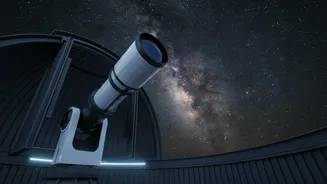
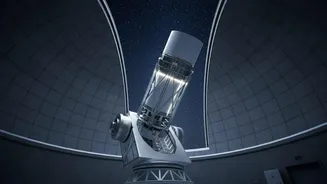
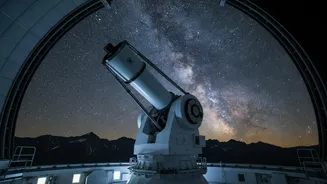
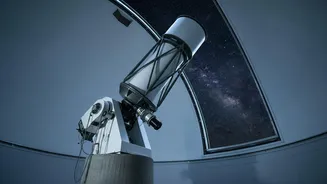
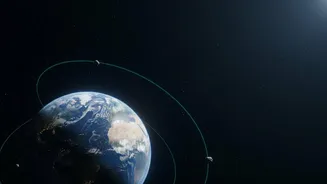
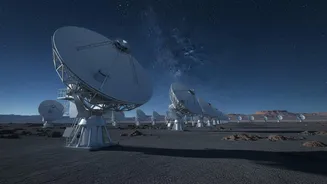
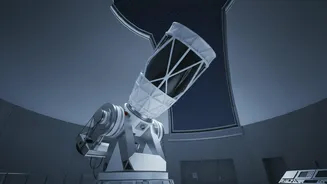
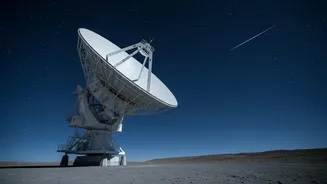
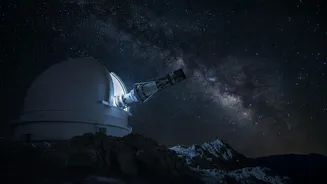
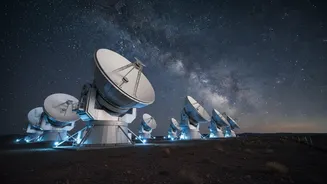
Finding these smaller, often darker, and faster-moving objects is a monumental challenge. They reflect very little light, making them difficult for ground-based optical telescopes to spot against the night sky. To overcome this, a global network of observatories and space agencies collaborates to scan the skies. A new generation of powerful survey telescopes is supercharging this effort. The Vera C. Rubin Observatory in Chile, for instance, is expected to discover tens of thousands of new NEOs. But the game-changer will be space-based telescopes like NASA's upcoming NEO Surveyor mission. Scheduled to launch around 2027, this infrared telescope will orbit beyond the interference of Earth's atmosphere, detecting the faint heat signatures that asteroids emit, allowing it to find objects that are currently invisible to us.
From Finding to Flicking
The relentless focus on tracking is because detection is the crucial first step. You cannot deflect an asteroid you do not know exists. The earlier a potential threat is identified, the more options humanity has to respond. Finding an object years or even decades before a potential impact provides the necessary time to plan and execute a deflection mission. The success of NASA’s Double Asteroid Redirection Test (DART) mission proved that we have the technology to alter an asteroid's path. The spacecraft successfully impacted its target, changing its orbit. This demonstrated that with enough warning—the key ingredient provided by comprehensive tracking—an asteroid impact is a natural disaster we can actually prevent.