



The Sun's Turbulent Threat
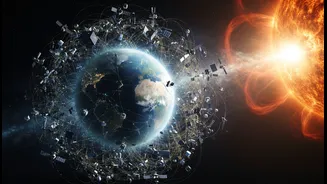
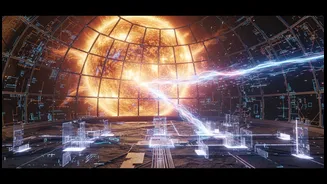
The Sun, our life-giving star, has a volatile side. It periodically releases immense bursts of electromagnetic radiation known as solar flares. These eruptions, born from the tangling and snapping of magnetic fields, travel at the speed of light. When
a powerful flare is aimed at Earth, it can have serious consequences. The intense X-ray and ultraviolet radiation slams into Earth's upper atmosphere, specifically the ionosphere, a layer crucial for long-distance radio communications. This bombardment can disrupt or completely absorb high-frequency (HF) radio signals, leading to blackouts for aviation, maritime shipping, and emergency responders who rely on them. Beyond radio, the Global Navigation Satellite Systems (GNSS) that power GPS are also vulnerable. The atmospheric disturbances can degrade signal accuracy, creating positioning errors for everything from commercial aircraft to autonomous vehicles.
Our Advanced Eyes on the Sun
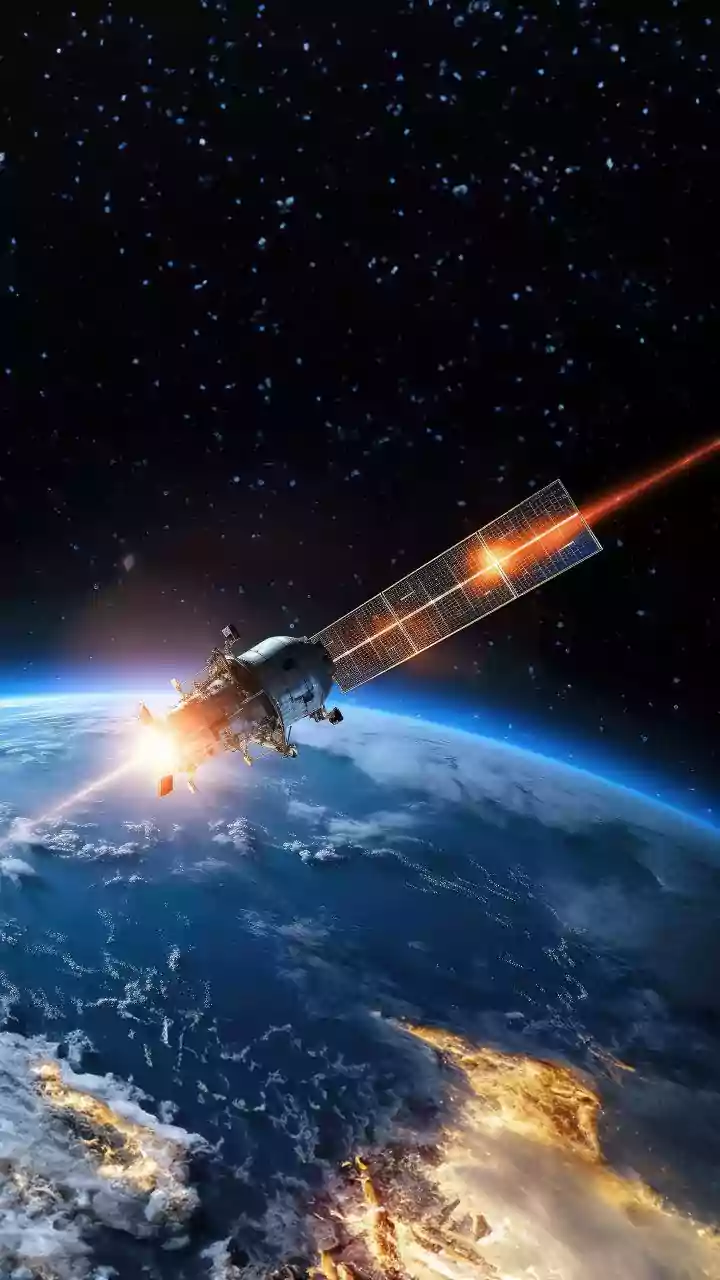
To anticipate these disruptions, scientists need to watch the Sun constantly and in incredible detail. A fleet of sophisticated space observatories serves as our early warning system. NASA's Solar Dynamics Observatory (SDO) is a cornerstone of this effort, capturing high-resolution images of the entire sun every few minutes across multiple wavelengths. This provides a continuous stream of data on the Sun's magnetic fields, where flares originate. Joining the SDO are missions like the European Space Agency's (ESA) Solar Orbiter, which flies daringly close to the Sun to capture the most detailed views ever of solar phenomena. Its instruments work in unison to observe the moments leading up to a flare, providing crucial insights into how they are triggered. China's Advanced Space-based Solar Observatory (ASO-S) is another key player, specifically designed to study the connections between the Sun's magnetic field, solar flares, and accompanying Coronal Mass Ejections (CMEs). Together, these observatories provide a comprehensive, multi-faceted view of solar activity.
From Raw Data to Actionable Warnings
Having terabytes of data is one thing; turning it into a reliable forecast is another. This is where artificial intelligence and machine learning have become game-changers. Researchers are training AI models on vast archives of solar images from observatories like the SDO. By analyzing years of data, these algorithms learn to identify the subtle magnetic signatures and precursor events that signal an impending flare. For example, scientists have found that small-scale flashes in the Sun's corona can act like sparklers before the main fireworks, indicating a region is about to erupt. New AI models can now analyze these complex patterns far faster than humanly possible, significantly improving forecasting accuracy and lead times. The D-Region Absorption Prediction (D-RAP) model, used by NOAA's Space Weather Prediction Center (SWPC), translates observed X-ray flare intensity into a real-time map of expected high-frequency radio blackouts.
The Future of Space Weather Forecasting
The goal is to provide enough warning to mitigate the worst effects of a solar storm. For satellite operators, this might mean temporarily powering down sensitive components. For power grid managers, it's about preparing for potential geomagnetically induced currents that can damage transformers. Recent breakthroughs are pushing the boundaries of what's possible. One model, developed by NASA and IBM, shows promise in predicting flares up to two hours in advance, potentially doubling current warning times. The ESA's Solar Orbiter recently helped scientists understand that large flares can be powered by an 'avalanche' of smaller magnetic events, providing a clearer picture of the triggering mechanism. This deeper understanding, combined with ever-improving AI and a new generation of observatories like the planned Space Weather Follow On-Lagrange 1 (SWFO-L1), is making space weather forecasting more reliable. As our reliance on technology grows, this ability to anticipate the Sun's outbursts is no longer just a scientific curiosity—it's an essential service for our global infrastructure.