

Vienna, Austria: A Symphony of Coffee Culture
Vienna's coffeehouse culture is so integral to its identity that UNESCO has declared it an Intangible Cultural Heritage. This isn't about grabbing a quick takeaway cup; it's about the experience of the 'extended living room', where you can order a single
'Wiener Melange'—the local cappuccino equivalent—and linger for hours with a newspaper. While grand, historic establishments like Café Central are famous, they often come with long queues of tourists. For a more authentic feel, venture away from the busiest central streets to local favourites. Cafés like Café Jelinek, Café Sperl, and Café Hawelka offer a glimpse into the city's bohemian soul, with worn velvet sofas and an atmosphere that feels unchanged for decades. Here, you're not just a customer; you're a temporary participant in a daily ritual, sharing a quiet, charming space beloved by generations of Viennese locals.
Prague, Czech Republic: Hidden Gardens and Historic Charm
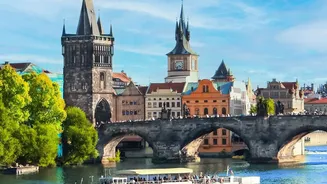
Prague's Old Town Square is iconic, but its magic is best found in the quieter cobblestone lanes that splinter off from the main tourist paths. While historic cafés like the grand Café Louvre, once frequented by Albert Einstein and Franz Kafka, are worth a visit, the city’s true gems are often hidden in plain sight. For a peaceful escape, seek out the city's 'secret garden' cafés, especially in the spring and summer. Places like Café Truhlárna, tucked away in the Franciscan Garden just off the bustling Wenceslas Square, offer a serene oasis. In these tranquil courtyards and monastery grounds, you can enjoy high-quality coffee far from the crowds. These spots, often known only to locals, provide a chance to experience the city's beauty at a slower, more deliberate pace, proving that Prague's charm isn't just in its grand squares but also in its quiet corners.
Ljubljana, Slovenia: A Riverside Retreat
Ljubljana offers a unique blend of Central European elegance and a relaxed, sociable atmosphere. The city's coffee culture is best experienced along the banks of the Ljubljanica River, which serves as an outdoor living room for residents. Here, café terraces line the promenade, and locals treat coffee not as a quick fuel stop but as a slow, social affair meant to be enjoyed with company. While inspired by Vienna's coffee houses, Ljubljana's scene is distinctly its own, mixing historic traditions with modern specialty coffee. Beyond the popular riverside spots, you can find family-run roasteries and cozy cafés where baristas are passionate about their craft. The culture here is so unhurried that lingering with a laptop or a book for hours is the norm, not the exception. It’s a city that invites you to slow down and embrace the simple pleasure of watching the world go by from a comfortable chair.
Budapest, Hungary: Grandeur and Revival
Budapest was once a thriving coffee capital, with around 500 cafés serving as the intellectual heart of the city in the early 20th century. While many of these grand dames were lost to time, several have been beautifully restored, reviving the city's dazzling coffee house life. Famous spots like the opulent New York Café are breathtaking but are also major tourist attractions. For an experience that balances history with a more local feel, consider the Centrál Grand Café. Opened in 1887, it was a hub for Hungarian literary life and maintains a grand but less theatrical atmosphere. Beyond these historic institutions, Budapest has a thriving modern specialty coffee scene. Exploring the quieter streets reveals a new generation of coffee shops that honour the past while forging a new identity, allowing visitors to taste both the city's rich history and its contemporary pulse.