



A Partnership Aimed at the Stars
In August 2026, NASA officially invited the Indian Space Research Organisation (ISRO) to participate in its ambitious Artemis program, which aims to establish a sustainable human presence on the Moon. This invitation builds on the Artemis Accords, a set
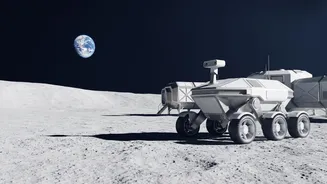
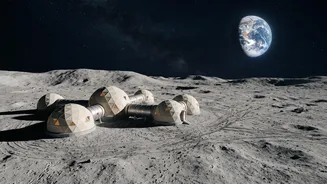
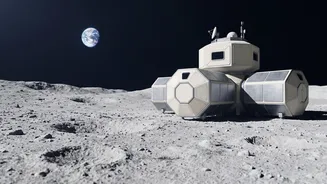
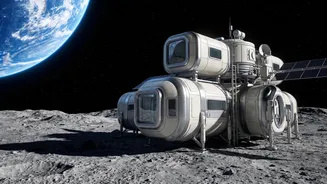
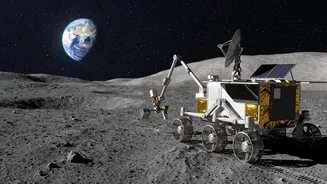
of principles for peaceful and transparent space exploration that India signed in 2023. This collaboration is a significant step, moving India from being a cost-effective launch provider to a key partner in global space exploration. The goal is to build a base camp near the Moon's south pole, a region where ISRO's Chandrayaan-3 successfully landed and confirmed the presence of water ice—a critical resource for drinking water and rocket fuel. This partnership not only strengthens India’s own space ambitions, including the Gaganyaan human spaceflight mission, but also integrates it into the next frontier of deep-space exploration.
Beyond the Astronaut and Engineer
When you think of a space career, the image of an astronaut or a rocket scientist often comes to mind. While aerospace engineers, propulsion specialists, and astrophysicists will remain crucial, the future lunar base and the expanding space economy require a much wider range of expertise. The modern space sector is no longer just about launching rockets; it's about using space technology to solve problems on Earth and creating a sustainable off-world presence. This has opened the door to a host of non-traditional careers. We will need experts in space law to navigate treaties, doctors specializing in space medicine to keep astronauts healthy, and even architects to design lunar habitats. The sheer volume of data sent back from space creates a huge demand for data scientists and AI specialists to analyze everything from climate patterns to mineral deposits on the Moon.
The New Space Gold Rush: Emerging Careers
As India’s space economy is projected to grow significantly, new and exciting job profiles are emerging. Think about space agriculture, where botanists will figure out how to grow food in lunar soil. Or space psychologists, who will help astronauts cope with the isolation of long-duration missions. The commercialization of space means there is a growing need for business managers, marketing professionals, and cybersecurity experts to protect satellite networks. Even fields like graphic design and web development are essential for creating the interfaces that control rovers or for companies to market their space-related services. The rise of private Indian space companies like Skyroot Aerospace and Agnikul Cosmos means these jobs are no longer limited to government agencies.
How Can Students Prepare for Liftoff?
For students dreaming of a career in the space industry, the path is becoming more defined. A strong foundation in STEM subjects—science, technology, engineering, and mathematics—is the essential first step. However, technical skills alone are not enough. The industry is increasingly looking for professionals with a diverse skill set. Proficiency in programming languages like Python and C++, which are used for everything from mission control to data analysis, is highly valuable. Beyond technical knowledge, soft skills are critical. Space missions are massive collaborative efforts, so the ability to communicate clearly, work in multidisciplinary teams, and solve complex problems is essential. Students should actively seek internships with ISRO, private space startups, and even international agencies where possible. Building a portfolio of projects, participating in robotics clubs, and staying updated on industry trends will make a significant difference.