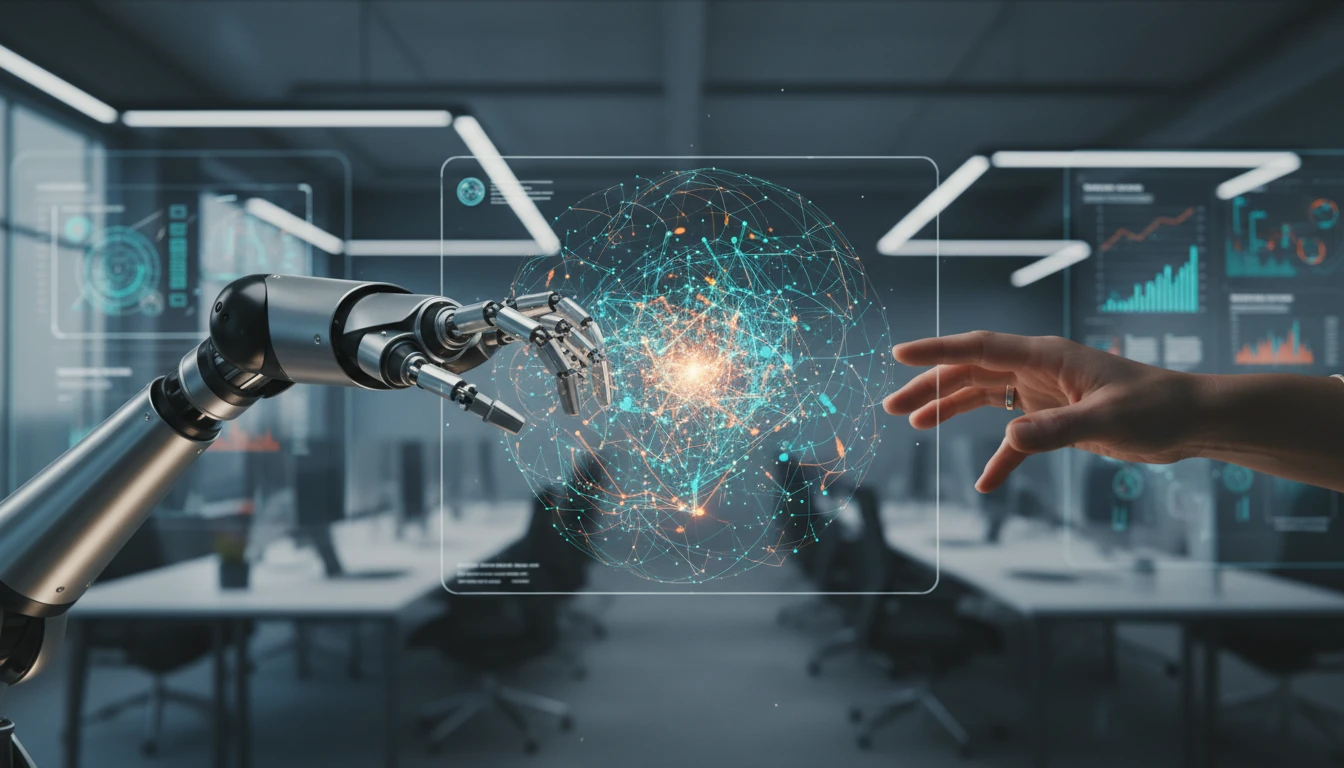









Beyond the Productivity Trap
The initial promise of artificial intelligence in the workplace was simple: do more, faster. AI tools can draft emails, summarize long documents, and analyze data sets in seconds, offering a tantalizing boost to efficiency. This has led many professionals
in fields like marketing, HR, and finance to focus on skills that increase their output. But this view is shortsighted. While AI excels at automating repetitive tasks, its true transformative power is not in replacing human effort, but in augmenting human intelligence. Relying on AI solely for speed can create a dangerous dependency, a phenomenon researchers call "cognitive surrender," where workers accept AI outputs with minimal scrutiny. This can lead to significant errors when the AI is wrong, eroding the very expertise that makes a professional valuable.
What is AI-Assisted Judgement?
AI-assisted judgement is the practice of using artificial intelligence as a thinking partner, not just an automated assistant. It involves leveraging AI's ability to process vast amounts of data to uncover patterns, forecast scenarios, and identify risks that a human might miss. Instead of just asking an AI to write a marketing slogan, a professional practicing AI-assisted judgement would ask it to analyze customer sentiment data from the last quarter to identify unmet needs. Instead of using AI to just schedule interviews, an HR manager could use it to analyze team communication patterns to flag potential burnout risks. This approach shifts the focus from the AI's answer to the quality of the human's question. It requires a professional to combine their domain expertise with the AI's analytical power, leading to more nuanced and effective decisions.
The Real Skills of the Future
To thrive in an AI-driven world, non-tech professionals should cultivate skills that enhance their ability to collaborate with technology. The most crucial is critical thinking with an AI twist. This means not blindly trusting AI-generated content, but actively questioning its assumptions, verifying its sources, and evaluating its logic against your own knowledge. Another key skill is strategic thinking. AI can provide data and patterns, but it lacks business context and ethical understanding. Professionals who can interpret AI insights within the larger framework of their company's goals and values will be indispensable. Developing AI literacy is also fundamental; you don't need to code, but you do need to understand what AI can and cannot do, and where its limitations, like bias in training data, lie.
How to Start Building Your Judgement Muscle
Developing these skills doesn't require a degree in computer science. It begins with a shift in mindset and daily habits. Start by treating AI tools as a collaborator. When you receive an output, ask follow-up questions: What data is this based on? What are the alternative perspectives? Could this be biased? Make verification a standard part of your workflow before accepting any AI-generated conclusion. Experiment with different AI tools in your field, not just to complete tasks faster, but to see how they can provide a different angle on a problem. Most importantly, double down on your uniquely human skills: empathy, creativity, and relationship-building. These are qualities AI cannot replicate and are the foundation of good judgment.