




The Heartbeat of the Village
In Portugal, the town square, or 'praça', is more than just an open space; it is the heart and soul of the community. For centuries, these squares have been the central stage for all aspects of life—from bustling weekly markets and religious festivals
to the quiet daily ritual of neighbours gathering to chat on stone benches. They are outdoor living rooms, paved with history and shaded by plane trees or historic arcades. Unlike the grand, monumental squares of major cities, which were often designed to project royal power, the charm of a countryside praça lies in its intimacy and its connection to the rhythm of ordinary life. Here, the clink of a coffee spoon, the chime of a church bell, and the murmur of local gossip form the soundtrack to a slower, more deliberate way of living that offers a profound sense of place.
Monsaraz: A Whitewashed Balcony Over Alentejo
Perched high above the vast Alqueva Lake in the Alentejo region, the medieval village of Monsaraz is a breathtaking example of a town preserved in time. Its main square, Largo D. Nuno Álvares Pereira, is the village's tranquil core. Here, the 16th-century parish church, built of schist and lime, stands opposite a striking 18th-century pillory crafted from white marble. The square isn't a place of grand events but of quiet contemplation. You can feel the history in the slate-lined streets that lead to it and see it in the whitewashed walls designed to repel the fierce summer sun. With only a few dozen permanent residents, the square offers a silence that is a presence in itself, allowing you to appreciate the immense, panoramic views of the plains and the water below. It’s a place where the horizon seems endless and time feels suspended.
Marvão: The Eagle's Nest on the Border
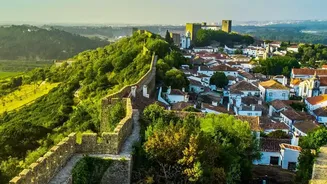
Clinging to a granite crag near the Spanish border, the walled town of Marvão offers one of Portugal's most dramatic settings. At an elevation of over 840 metres, its squares and streets provide astounding views that once served a strategic military purpose. Today, that strategic viewpoint offers unparalleled peace. Inside the 13th-century walls, you'll find not one grand plaza but a series of smaller, intimate squares and recesses tucked between narrow cobbled streets lined with stone houses and wrought-iron balconies. These spaces are where the town's quiet life unfolds. You might pass the small Gothic convent or the Municipal Museum housed in the former church of Santa Maria. The atmosphere is one of serene resilience, a town once called the 'most unconquerable stronghold in the whole kingdom' that has now become a haven of tranquility.
Castelo de Vide: Waters, Flowers, and History
Just down the mountain from Marvão lies Castelo de Vide, a town renowned for its lush greenery, flower-adorned houses, and mineral-rich waters. Its squares feel less like fortresses and more like gardens. The main square, Praça D. Pedro V, is a wide, welcoming space surrounded by Baroque buildings, the town hall, and the main church. It’s a hub of daily life, with cafes and shops spilling out onto the pavement. But the true magic is found in the smaller, hidden squares within one of Portugal's best-preserved Jewish quarters. Here, tiny, fountain-fed plazas are framed by narrow streets and Gothic doorways. The sound of running water from the town’s many springs provides a constant, soothing backdrop, creating an atmosphere of gentle charm that feels a world away from the arid plains of the wider Alentejo.