
A Messenger From Another Star
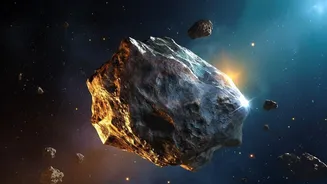
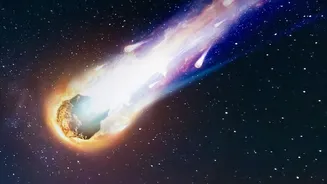
Imagine a rock or icy body, formed in a completely different solar system, travelling for millions or billions of years through the vast emptiness of space before briefly passing by our sun. That’s an interstellar object. These bodies are not gravitationally
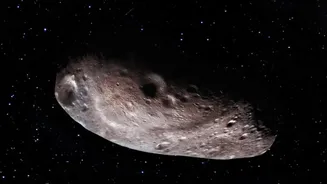
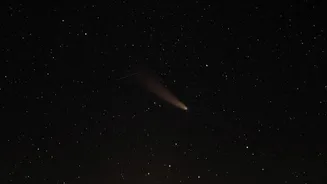
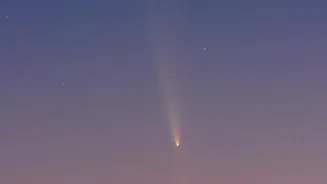
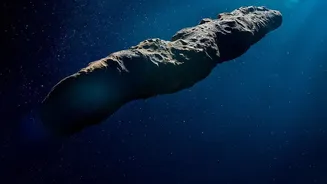
bound to our sun, following a path—known as a hyperbolic orbit—that will eventually see them exit our system and continue their galactic journey. The discovery of 3I/ATLAS follows two previous visitors: the bizarre, cigar-shaped 'Oumuamua in 2017 and the more familiar, comet-like 2I/Borisov in 2019. Each one provides a rare chance to study material from another star system up close.
Why This Third Visitor Is a Game-Changer
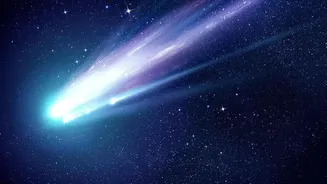
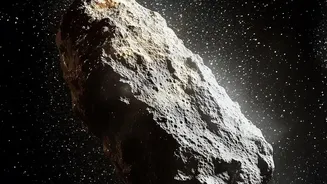
If one interstellar object is a curiosity and two are a comparison, three starts to form a pattern. With 3I/ATLAS, scientists are moving from collecting anecdotes to building a statistical census. The first visitor, 'Oumuamua, was deeply strange; it was rocky and elongated with no visible tail, yet it accelerated as if something were pushing it. The second, Borisov, looked much more like a typical comet, though it was extraordinarily rich in carbon monoxide. Early observations of 3I/ATLAS suggest it is different yet again, reportedly showing signs of water emissions at a great distance from the sun. This diversity is thrilling for scientists, as it hints at a wide variety of conditions in the planetary nurseries where these objects formed.
A Glimpse into Alien Planet Formation
We can't yet send probes to other star systems, but in a way, other star systems are sending pieces of themselves to us. Studying the composition of these objects is like performing interstellar archaeology. By analyzing the light reflected off them, scientists can determine what they're made of. The high carbon monoxide content of Borisov, for instance, suggested it formed in an extremely cold region, colder than where our own comets formed. The unique characteristics of each visitor provide invaluable clues about the chemical building blocks and physical processes that create planets around other stars, helping us understand how common or rare our own solar system might be.
From Anomaly to Commonplace
For decades, the existence of interstellar objects was only theoretical. Now, with three confirmed detections, it’s clear they are more common than previously thought. It's estimated that trillions of these objects are roaming the Milky Way at any given time, remnants ejected from their home systems during the chaotic process of planet formation. The reason we're seeing them now is thanks to more powerful survey telescopes, like the Asteroid Terrestrial-impact Last Alert System (ATLAS) that found the latest visitor. As technology improves, such as with the Vera C. Rubin Observatory, astronomers expect to find not just one or two a year, but potentially hundreds, transforming this niche field into a mainstream part of planetary science.