




A Strategic First Step
The decision to launch the Surat-Vapi section first is a calculated move by the National High Speed Rail Corporation Ltd (NHSRCL), the body executing the project. According to Railway Minister Ashwini Vaishnaw, this phased approach allows for the operationalisation
of completed sections while construction continues on more complex parts of the 508-km corridor. The Gujarat portion of the project has seen faster progress in land acquisition and civil construction, making it the logical choice for the inaugural run. This initial stretch will serve as a crucial testing ground for the entire system, from the advanced track and signalling to the rolling stock, before the full corridor connecting Mumbai and Ahmedabad is completed.
The Gujarat Advantage
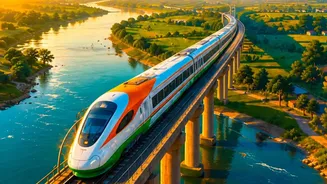
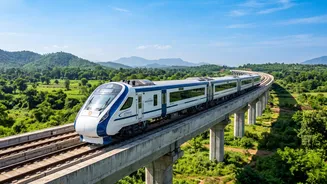
Construction on the Gujarat side has moved at a significant pace. As of September 2026, major milestones had been achieved, including the completion of 456 km of pier work and 371 km of viaduct (the elevated track structure) across the corridor, with the bulk of this progress visible in Gujarat. Eight stations have seen their civil work completed, and architectural finishing is now in progress. Recently, a key 50-km stretch between Surat and Bilimora was successfully 'energised', meaning the overhead electrical equipment was made live. This step is critical for conducting trials and further testing activities, even though it doesn't mean the line is ready for passengers just yet.
The Maharashtra Challenge
In contrast, the project has faced significant delays in Maharashtra. Issues with land acquisition and securing necessary permissions held up work for nearly two and a half years, compounded by a further two-year delay due to the COVID-19 pandemic. As a result, serious construction efforts only began in earnest in 2021. The Maharashtra section includes one of the project's most formidable engineering feats: a 21-km tunnel, 7 km of which runs under the sea at Thane Creek—India's first undersea rail tunnel. Two massive Tunnel Boring Machines (TBMs), each as tall as a four-storey building, were deployed in July 2026 to excavate this section, highlighting the complexity that makes a phased rollout necessary.
An Indigenous Push
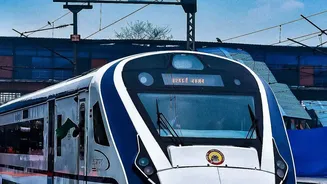
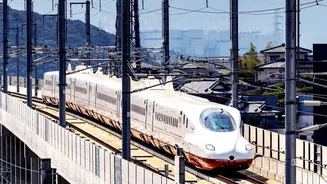
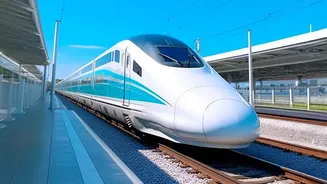
While the project is being developed with Japanese Shinkansen technology, there is a strong 'Make in India' component. Officials have confirmed that the initial services will likely use indigenously developed trainsets. These B28 trains, being manufactured by Integral Coach Factory (ICF) and BEML, are designed for speeds up to 280 kmph. The first body frame is already undergoing structural testing, with track trials anticipated by mid-2027. This move towards domestic production is partly driven by necessity, as the Japanese E10 trains are not expected to arrive until 2030. This also accelerates India's capabilities in high-speed rail manufacturing.
What to Expect Next
According to the Railway Minister, the first bullet train service between Surat and Vapi is targeted for the last quarter of 2027. Trials are expected to begin on parts of the route around May 2027 to validate the infrastructure and systems. Though the project's overall cost has increased to an estimated ₹2.02 lakh crore from the initial ₹1.08 lakh crore, and the original 2023 completion deadline has passed, the focus is now squarely on this phased launch. For the residents and industries of Surat and Vapi, two of Gujarat’s key commercial centres, the start of services will mark a new era of connectivity long before the full line to Mumbai is operational. The rest of the corridor will open in stages as construction, particularly the complex tunnelling work in Maharashtra, is completed.