



The Science of Flavour and Water
Moisture is the unsung hero of the kitchen, acting as a vehicle for flavour. Water content in food helps dissolve flavour compounds, carrying them to our taste buds. However, it's a delicate balance. Too much moisture can dilute those very flavours, resulting
in a dish that tastes bland or feels heavy and soupy. Too little, and the dish becomes dry, tough, and unpalatable. The goal for any cook is to manage this moisture, either by removing it to concentrate flavour or retaining it to ensure a succulent result.
Embracing the Dry: Searing and Roasting
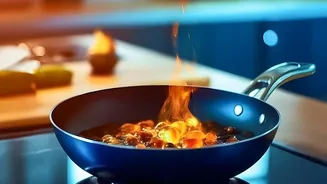
To achieve a deep, savoury crust on a piece of meat or a sweet, nutty flavour in roasted vegetables, you need to drive away surface moisture. This allows for the Maillard reaction, a chemical process between amino acids and sugars that occurs at high temperatures (typically above 140°C). This reaction is responsible for the delicious browning and complex flavours we love. If a pan is overcrowded or the food is wet, the surface will steam instead of sear. This is why chefs always pat meat dry before it hits the hot pan. Similarly, roasting vegetables in a single layer with enough space allows steam to escape, concentrating their natural sugars and creating a desirable caramelised exterior.
Managing the Wet: Stews and Sauces
On the flip side, some dishes, like stews, curries, and braises, are all about the liquid. Here, the challenge is not to eliminate moisture, but to control it for optimal flavour and texture. A common mistake is adding too much liquid at the start, which leads to a watery final product. Many vegetables release water as they cook, contributing to the overall liquid content. To create a rich, flavourful sauce, it's often best to cook ingredients until their moisture has evaporated before adding liquids. If a sauce is too thin, simmering it with the lid off allows excess water to evaporate and the flavours to concentrate. You can also use thickeners like a flour-and-butter roux, a cornstarch slurry, or even additions like coconut cream or yogurt to achieve a silky, robust consistency.
The Crucial Pause: Why Resting Meat Matters
One of the most critical, yet frequently skipped, steps in managing moisture is resting meat after cooking. When meat is heated, its muscle fibres contract, pushing the internal juices toward the centre. If you slice into it immediately, those pressurized juices will flood out onto the cutting board, leaving the meat dry. By letting the meat rest for 5 to 20 minutes depending on its size, the muscle fibres relax, allowing the juices to redistribute evenly throughout the cut. This simple act of patience ensures that every bite is tender and flavourful, retaining significantly more moisture than a piece that's cut too soon.
From Steamed to Charred: The Vegetable Spectrum
The way you treat moisture can completely transform a simple vegetable. Steaming, a moist-heat method, preserves the clean, bright flavour of vegetables and retains more nutrients because the food doesn't come into direct contact with water. The result is a tender-crisp texture. In contrast, dry-heat methods like grilling and roasting drive off moisture, creating browned, caramelised surfaces with intensified, sweeter flavours. A boiled carrot tastes purely of carrot, while a roasted carrot takes on a deeper, sweeter, and nuttier profile. Neither method is inherently better; they simply offer different results based on how moisture is handled, allowing you to choose the technique that best suits your desired outcome.