



What is the DAVINCI Mission?
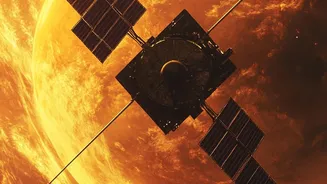
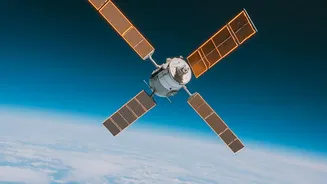
DAVINCI stands for Deep Atmosphere Venus Investigation of Noble gases, Chemistry, and Imaging. It's a multi-part NASA mission designed to analyze our neighboring planet in unprecedented detail. The mission consists of a main spacecraft that will orbit
Venus and a sophisticated probe that will make a daring, one-hour plunge through its atmosphere. Scheduled for launch around 2029, the probe's descent is planned for the early 2030s. Its goal is to sample the atmospheric chemistry directly and take high-resolution images of the surface below the clouds, providing answers to decades-old questions about how Venus became the inhospitable world it is today.
A World of Extremes
To understand why rehearsals are so critical, you first have to appreciate how hostile Venus is. The surface pressure is over 90 times that of Earth, equivalent to being nearly a kilometer deep in our ocean. Temperatures hover around 475°C, hot enough to melt lead. To top it off, the thick clouds that shroud the planet are made of corrosive sulfuric acid. This combination of heat, pressure, and acid has been the downfall of previous probes, with the longest-surviving lander lasting just over two hours. The DAVINCI probe itself is only designed to operate for its 63-minute descent; any survival on the surface would be a bonus.
Rehearsing for a Hellish Plunge
So, how do you practice for a journey to hell? The "rehearsals" for DAVINCI aren't happening on a stand-in planet, but in labs and test sites on Earth. Teams are conducting extensive Mission Operations Phase Rehearsals (MOPRs), which are like full dress rehearsals for the main event. In these simulations, the science and engineering teams run through the entire descent sequence, responding to simulated data as if the probe were actually plunging through the Venusian sky. Other tests are more physical. To ensure the descent camera will work, NASA engineers recently strapped a replica to a helicopter and performed slow, vertical descents over Venus-like terrain in Utah. These flights, from altitudes as high as 18,000 feet, confirmed the system can properly measure landscapes on its way down.
The Science at Stake
The stakes for DAVINCI are incredibly high. Scientists believe Venus may have once hosted liquid water oceans, much like early Earth. By analyzing the composition of the atmosphere and imaging ancient mountainous regions known as "tesserae," the mission aims to piece together Venus's history. These tesserae might be the remnants of past continents, and studying their rock composition could tell us if they formed in the presence of water. Answering whether Venus was once habitable and then understanding why it lost that habitability has profound implications. It can help us understand the boundaries of life on planets in our own solar system and provide a crucial reference point for the thousands of Venus-sized exoplanets being discovered around other stars.