



1. Swap Physical Work for Brain Work
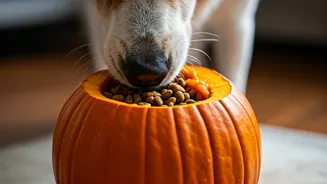
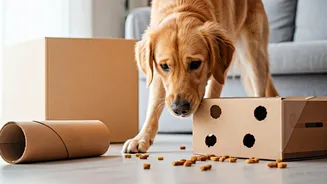
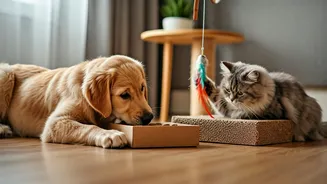
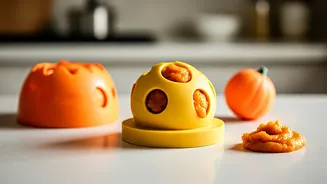
A missed walk doesn't have to mean your pet is bursting with unspent energy. Mental stimulation can be just as tiring as physical exercise. This is the perfect time to break out puzzle toys and feeders. These toys require your pet to sniff, nudge, and problem-solve
to get to their treats. If you don't have one, you can easily make one: hide kibble in a muffin tin with balls covering the holes, or simply roll up treats in an old towel. For cats, a simple cardboard box with holes cut into it can become a fascinating 'foraging' toy. Just 15 minutes of focused brain work can be equivalent to a 30-minute walk in terms of tiring out your pet.
2. Start a Game of 'Find It'
Put your pet’s powerful sense of smell to good use with a fun game of scent work. The concept is simple: hide treats or a favourite toy around a room and encourage your pet to 'find it!' Start easy by letting them watch where you place the goodies. As they get better, you can make it more challenging by hiding them in harder-to-find spots—under a rug, behind a cushion, or on a low shelf. This game not only provides excellent mental enrichment but also builds confidence and satisfies their natural instincts to forage and hunt. It’s a fantastic bonding activity that requires nothing more than your pet's favourite high-value snack.
3. Have a Training Tune-Up
A rainy day is a brilliant opportunity to brush up on old commands or teach your pet something new. Instead of thinking of it as a chore, frame it as a game. Keep sessions short, positive, and full of praise—five to ten minutes is ideal. You can reinforce basics like 'sit', 'stay', and 'come', or work on fun new tricks like 'spin', 'roll over', or 'shake hands'. This focused interaction strengthens your bond, sharpens your pet's mind, and helps reinforce good behaviour. Plus, it’s a productive way to channel their energy into something positive, preventing boredom-induced mischief like chewing or barking.
4. Build an Indoor Obstacle Course
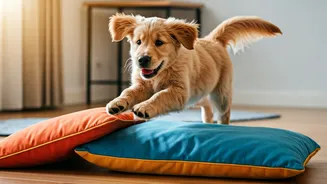
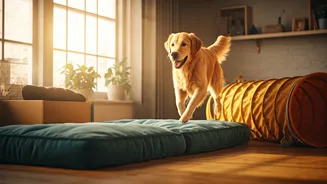
You don't need professional agility equipment to give your pet a fun physical challenge. Get creative and build a DIY obstacle course in your living room. Use pillows for them to jump over, blankets draped over chairs to create tunnels, and a line of shoes to weave through. You can use a treat or toy to lure them through the course. Keep it low-impact and safe, especially for older pets or small breeds. This activity encourages movement, improves coordination, and builds their confidence as they navigate the 'new' environment you’ve created.
5. Indulge in a 'Spa' Session
Not all rainy-day activities have to be high-energy. A calming grooming session can be a wonderful way to bond and relax together. Gently brush their coat to remove loose fur and prevent matting. If your pet is comfortable with it, you can practise gentle paw handling or even try a nail trim. A soft massage can also be incredibly soothing, especially for pets who are anxious about the sound of rain or thunder. Focus on their shoulders, neck, and back using long, gentle strokes. This turns a potentially stressful day into a pampering experience.
6. Make Potty Breaks Less Painful
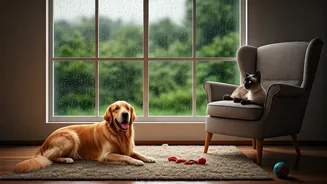
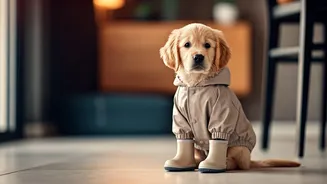
The one thing that can't be avoided is the need to go outside. Make rainy potty breaks as quick and pleasant as possible. If your pet has a raincoat or booties, now is the time to use them. If not, a large umbrella can help. Have a designated 'towel-off' station right by the door with a super-absorbent towel ready to go. Dry them thoroughly, paying special attention to their paws. Keep the trip short, focused, and positive. A high-value reward for a job well done can help build a more positive association with going out in the wet.