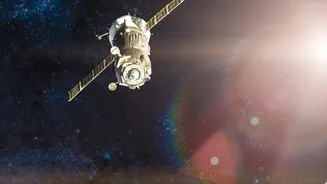






Humanity's next great interplanetary quest is officially underway. Japan's Martian Moons eXploration (MMX) mission successfully launched on October 20, beginning a five-year journey to solve one of the solar system's most enduring mysteries.
A Daring Mission to Mars’s Moons
On October
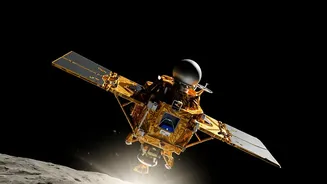
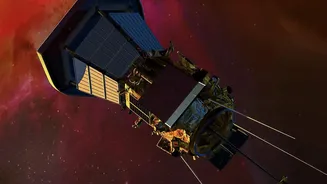
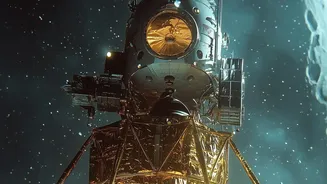
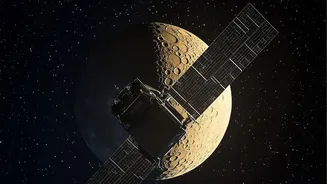
20, 2026, Japan’s H3 rocket lifted off from the Tanegashima Space Center, carrying the Martian Moons eXploration (MMX) spacecraft. The successful launch marked the start of one of the most ambitious sample-return missions ever attempted. Led by the Japan Aerospace Exploration Agency (JAXA), with contributions from NASA and European space agencies, MMX is not heading to Mars itself, but to its two small, enigmatic moons: Phobos and Deimos. The primary goal is to perform the first-ever landing on Phobos, collect at least 10 grams of surface material, and return it to Earth for analysis. This mission extends Japan's expertise from its successful Hayabusa missions, which returned samples from asteroids, to the much more complex and distant Martian system.
The Central Mystery: Are They Moons or Captured Asteroids?
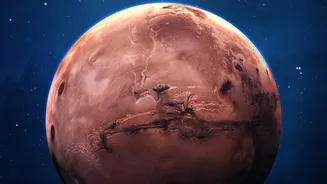
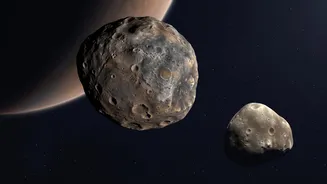
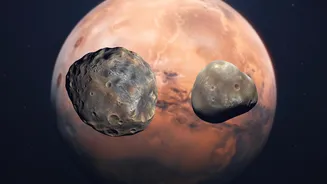
For decades, scientists have debated the origin of Phobos and Deimos. Their small, irregular, potato-like shapes resemble asteroids, leading to the theory that they were once rogue space rocks captured by Mars's gravity. However, their stable, circular orbits suggest a different story: that they may have formed from debris blasted into space after a giant object collided with a young Mars, similar to how Earth's moon is thought to have been created. The MMX mission aims to solve this puzzle once and for all. By analysing a physical sample, scientists can examine its chemical and mineral composition with a precision impossible for remote instruments. This will allow them to match its 'chemical fingerprint' to either known asteroid types or Martian rock, providing a definitive answer to their origin.
A Complex Five-Year Journey
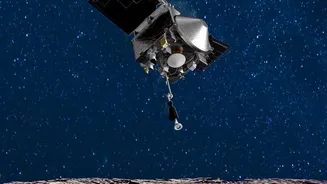
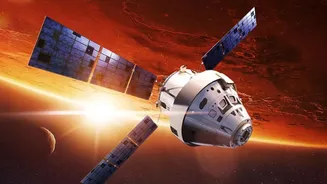
The launch was just the first step in a long and complex timeline. The MMX spacecraft will spend about a year travelling to Mars, scheduled to enter the planet's orbit in August 2027. It will then spend the next few years conducting detailed observations of both moons. The mission plan includes deploying a small, 25-kg rover named 'Idefix', contributed by the French and German space agencies, onto the surface of Phobos in 2029. This rover will explore the surface for about three months, helping to identify the best sites for the main spacecraft to collect its sample. Following this, the MMX mothership will make at least one, and possibly two, delicate landings to scoop up regolith before beginning its long journey home in 2030. After a final series of flybys of the smaller moon, Deimos, the sample return capsule will detach and land in Australia in 2031.
Why Bringing Back a Piece of Phobos Matters
The sample from Phobos is more than just a souvenir; it's a time capsule from the early solar system. If the moons are indeed remnants of a giant impact, the material could hold clues about the conditions on a primordial Mars. Furthermore, because Phobos orbits so close to the Red Planet, its surface is likely covered in dust and rock ejected from Mars by asteroid impacts over billions of years. This means the returned sample might contain bits of Mars itself, offering a bonus geological record without the immense challenge of a direct Mars sample-return mission. Ultimately, studying this material will help scientists understand how planets formed and how key ingredients for life, like water and organic compounds, were distributed throughout the early solar system. This knowledge is not only crucial for understanding our own origins but also for planning future human exploration of the Martian system.