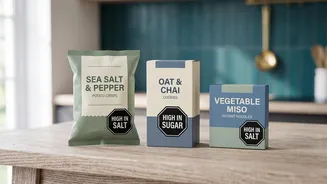








What Are Front-of-Pack Labels?
Front-of-Pack Labelling (FOPL) is a system that places clear, simple nutritional information on the front of packaged foods. Instead of consumers having to find and decipher the detailed nutritional grid on the back, FOPL provides an at-a-glance summary.
The goal is to quickly highlight foods that are high in fat, sugar, and salt (HFSS)—nutrients linked to major health issues. This is different from the current system, which requires shoppers to analyse complex information, a task few undertake in the middle of a busy shopping trip. The idea is simple: empower consumers to make healthier choices in seconds.
The Health Crisis Driving the Change
This debate isn't just about labels; it's a response to a growing public health emergency. India is facing a surge in non-communicable diseases (NCDs) like diabetes, obesity, and heart disease. Studies show a direct link between the rising consumption of ultra-processed foods (UPFs) and this health crisis. Between 1990 and 2016, NCD-related mortality in India rose from 37.9% to 61.8%. The country is now home to an estimated 101 million people with diabetes and 136 million with prediabetes. The consumption of UPFs, which are often packed with industrial ingredients, refined sugars, and sodium, is a key driver. Sales of these products have skyrocketed, with the market growing at a compound annual growth rate of over 13% between 2011 and 2021.
Warning Labels vs. Star Ratings
For years, the central point of contention has been the type of label to adopt. The food industry has largely favoured a “Health Star Rating” (HSR) system, similar to what's used in Australia. This model assigns a product a rating of up to five stars based on its overall nutritional profile. However, public health experts and consumer groups have strongly opposed this, arguing that star ratings can create a misleading “health halo” around unhealthy products. For instance, a packet of fried chips might get 1.5 stars, leading a consumer to believe it's a somewhat healthy choice rather than a food to be consumed sparingly. Evidence from Indian and international studies suggests that direct warning labels—such as a red octagon that clearly states "High in Sugar"—are far more effective at helping consumers identify unhealthy products and reducing their intent to purchase them.
The FSSAI's Latest Proposal
After years of debate and various proposals, including an earlier push for the HSR system, the Food Safety and Standards Authority of India (FSSAI) has moved towards mandatory warning labels. The issue has escalated to the Supreme Court, which has been pushing for decisive action to protect public health. As of late 2026, the FSSAI has proposed a single-phase rollout of a red hexagonal warning symbol. This label would be required on the front of any packaged food that exceeds the prescribed limits for even one of the key nutrients of concern: fat, sugar, or salt. This is a significant shift from an earlier, more lenient two-phase proposal.
The Final Hurdles: Industry and Timelines
Despite this progress, disagreements remain. The food industry has raised objections to the proposed thresholds for sugar and fat, arguing they are stricter than in other markets. There are also debates over technical details, such as the size of the label and the use of the colour red. However, the most pressing issue highlighted by the Supreme Court is the proposed timeline for implementation. The FSSAI has requested around four months to finalise the draft regulations, followed by a 60-day consultation period, and then a 365-day voluntary compliance period for the industry. The court has questioned why such a long delay is necessary for a matter of urgent public health, suggesting a final decision on a faster, mandatory rollout is imminent.