




The Science of a Soggy Demise
To understand how to fix sogginess, it helps to know the culprit: moisture. When crispy foods cool and are stored in the fridge, the moisture from inside the food migrates to the outer crust. This moisture softens the once-crunchy exterior, leaving you
with a limp and unappetizing texture. The goal of reheating isn't just to make the food hot, but to drive that surface moisture away, allowing the crust to dehydrate and become crisp again. This process is aided by the Maillard reaction, a chemical reaction between amino acids and sugars that occurs at high temperatures, which is responsible for the browning and delicious flavor of cooked foods. By using dry heat, you're re-engaging this process on the food's surface.
The Conventional Oven Method
Your standard oven is a perfectly capable tool for recrisping leftovers, especially for larger batches. The key is to create an environment with plenty of hot, dry air circulation. Start by preheating your oven to around 190-200°C. Don't place your food on a solid tray where the bottom will steam; instead, use an oven-safe wire rack set on top of a baking sheet. This allows hot air to circulate all around the food, ensuring the bottom gets as crispy as the top. Arrange items in a single layer with space between them. Foods like pizza, roasted vegetables, and larger pieces of fried chicken do very well with this method. It takes a bit longer than an air fryer, typically 10 to 15 minutes, but the results for big jobs are excellent.
The Air Fryer Advantage
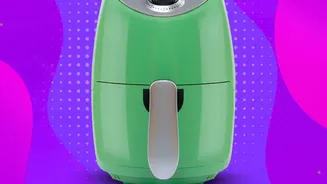
An air fryer is essentially a small, high-powered convection oven. Its magic lies in a compact chamber and a powerful fan that circulates superheated air at high speed. This rapid air circulation is incredibly efficient at stripping moisture from the surface of food, making it the champion of crispiness. Because the chamber is small, it heats up much faster than a conventional oven, often requiring little to no preheating. This speed and intensity make it ideal for reviving foods like french fries, chicken nuggets, and spring rolls in just a few minutes. The constant blast of hot air recreates the texture of freshly fried food better than almost any other method.
Which Appliance Is Better for the Job?
Choosing between an oven and an air fryer depends on what you're reheating. For speed and superior crispiness on smaller batches, the air fryer is the clear winner. French fries, for example, can be revived in an air fryer at 190-200°C in just 3-5 minutes, something an oven can't match. However, an oven's larger capacity makes it the practical choice for reheating a whole pizza or a large quantity of fried chicken for the family. An air fryer basket is often too small for this, requiring you to work in batches. For delicate items or those that might fly around, like leafy greens or lightly breaded foods, the oven's gentler heat might also be preferable.
Common Pitfalls on the Path to Crispiness
Even with the right appliance, a few common mistakes can ruin your results. First, avoid the microwave at all costs if crispiness is your goal; it heats by exciting water molecules, effectively steaming your food from the inside out. Second, don't overcrowd the oven rack or air fryer basket. Food needs space for air to circulate. If pieces are piled on top of each other, they will steam instead of crisp. Third, ensure your food is relatively dry before it goes in. Pat down any excess moisture with a paper towel. Finally, use the right temperature. Too low, and the food won't crisp; too high, and the outside may burn before the inside is warm. Most foods reheat well between 175°C and 200°C.