


A Planet-Sized Patience Game
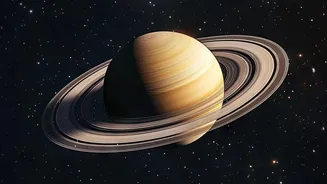
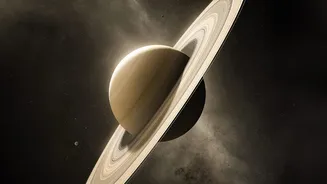
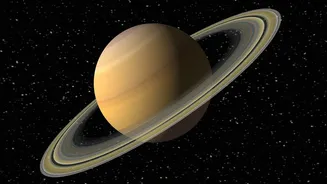
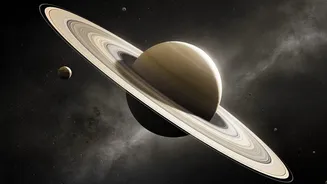
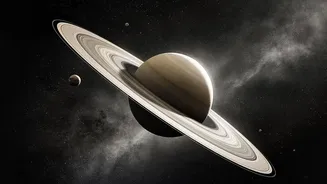
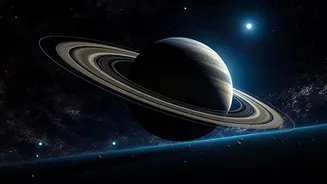
Observing seasons on Saturn is a lesson in patience. The ringed giant takes about 29 Earth years to complete one orbit around the sun, meaning each of its four seasons stretches for more than seven years. Because of this immense timescale, long-term observation
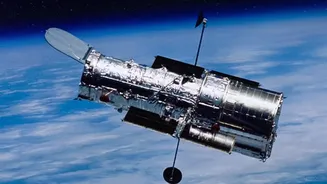
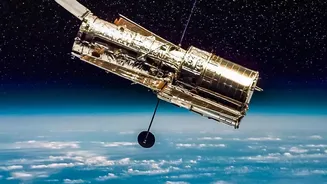
projects are critical. NASA’s Hubble Space Telescope, through its Outer Planets Atmospheres Legacy (OPAL) program, has been keeping a watchful eye on Saturn, taking yearly snapshots to track its slow, majestic seasonal evolution. This consistent monitoring allows scientists to spot subtle changes that would otherwise be missed, building a continuous record of the planet's atmospheric behaviour over decades. It’s like watching a colossal weather report unfold in extreme slow motion.
Seeing the Unseen in Infrared
While Hubble’s visible light images show us the beautiful colour bands of Saturn, its infrared capabilities, often used in conjunction with other observatories like the James Webb Space Telescope, allow scientists to probe deeper. Infrared light reveals information about temperature and chemical composition that is invisible to the human eye. On Saturn, this means tracking changes in heat distribution, cloud height, and atmospheric haze. Recent observations focused on the period from 2018 to 2020, as the planet’s northern hemisphere began its transition from the peak of its summer toward autumn. By analysing these infrared and multispectral images, scientists can create a more three-dimensional picture of the gas giant’s atmosphere.
Subtle Shifts with Big Implications
The latest Hubble data has revealed several fascinating, though subtle, changes. Between 2018 and 2020, Saturn's equator brightened by 5 to 10 percent. Scientists suggest this could be due to changes in the height of clouds or the density of atmospheric haze. A slight reddish haze over the northern hemisphere was also noted, possibly caused by increased heating from summer sunlight altering atmospheric circulation or changing the composition of aerosols. In the south, the winter pole has taken on a distinctly blue hue, reflecting the opposing seasonal conditions. These yearly changes, while small, are seen as the precursors to the much larger shifts expected as the seasons fully turn.
Winds of Change
Perhaps one of the most intriguing findings relates to Saturn’s famously powerful winds. Observations in 2018 clocked the equatorial winds at a blistering 1,600 kilometres per hour, significantly faster than the 1,300 km/h measured by the Cassini spacecraft between 2004 and 2009. However, by 2019 and 2020, the winds had slowed back down to Cassini-era speeds. Researchers believe this fluctuation might not be a change in wind speed itself, but rather an indication that the clouds they were measuring in 2018 were located at a different altitude—about 60 kilometres deeper in the atmosphere, where winds may move faster. This highlights the complex, layered nature of Saturn's weather systems.
Piecing Together a Giant's Climate
Like Earth, Saturn has an axial tilt (27 degrees to Earth's 23), which is the fundamental driver of its seasons. The hemisphere tilted toward the sun receives more energy, causing changes in temperature and atmospheric dynamics. The long-term monitoring by Hubble, building on the legacy of missions like Voyager and Cassini, is crucial for understanding how these dynamics play out on a gas giant. Scientists are now looking at how these subtle shifts in brightness and wind might connect to larger phenomena, such as the periodic eruption of massive, planet-encircling storms that occur roughly every 30 years. Each new observation is another piece of the puzzle, helping to create a complete model of Saturn's climate.