




The Quest for Earth 2.0
The PLATO mission, which stands for PLAnetary Transits and Oscillations of stars, has a singular, profound goal: to find and study rocky, Earth-sized planets orbiting stars similar to our sun. Specifically, it’s looking for planets within the 'habitable
zone'—the orbital sweet spot where conditions might be just right for liquid water to exist. Unlike previous missions that surveyed vast numbers of distant stars, PLATO will focus on brighter, nearby stars. This will allow scientists not only to discover these worlds but also to determine their mass, radius, and age with unprecedented precision. By building a catalogue of these nearby exoplanets, PLATO will provide prime targets for future observation by powerful instruments like the James Webb Space Telescope, which could then study their atmospheres in detail.
The Challenge of Electronic Silence
To find these distant worlds, PLATO relies on the 'transit method,' watching for minuscule, regular dips in a star's light caused by a planet passing in front of it. These signals are incredibly faint. Imagine trying to spot a firefly dimming momentarily as a gnat flies in front of it from miles away. The telescope's 26 cameras must be sensitive enough to detect variations in starlight as small as 80 parts per million. This extreme sensitivity means the spacecraft itself must be almost perfectly silent, electronically speaking. Any stray electromagnetic signals—or 'crosstalk'—from its own complex systems could easily drown out the faint signal of a transiting planet, rendering the entire mission useless.
A Trial in a High-Tech Chamber
To ensure the spacecraft won't sabotage its own science, engineers at the European Space Agency's technical centre (ESTEC) in the Netherlands recently sealed PLATO inside a specialized facility called the Maxwell Test Chamber. This nine-meter-high room is a Faraday cage, meaning its metal walls block all external electromagnetic interference. The interior is lined with pyramid-shaped foam spikes that absorb stray internal signals, perfectly mimicking the electromagnetically silent conditions of deep space. Inside this anechoic chamber, engineers systematically powered up all of PLATO's systems—from its cameras and communication modules to its temperature-control electronics—to see if they would interfere with one another.
Passing the Final Major Hurdle
The results were a resounding success. The tests confirmed that PLATO's numerous electronic systems are electromagnetically compatible and can operate together without creating disruptive interference. This was the final major environmental test for the spacecraft, following a rigorous series of trials that began in early 2026. These included intense vibration and acoustic tests to simulate the violent forces of a rocket launch, and a month-long stay in the Large Space Simulator to ensure it could withstand the vacuum and extreme temperatures of space. Passing this final electronic exam means the complex integration of the spacecraft was clean, and it has cleared its last major hurdle before being declared ready for launch.
What Comes Next for PLATO
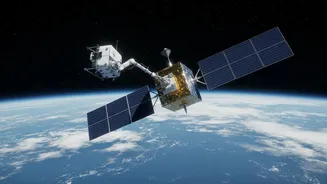
With this successful test campaign completed, the PLATO mission is now firmly on track for its planned launch in March 2027 aboard an Ariane 6 rocket from Europe's Spaceport in French Guiana. After launch, it will travel for about a month to reach its operational orbit at the second Lagrange point (L2), approximately 1.5 million kilometres from Earth. From this stable observation point, its 26 cameras will begin monitoring hundreds of thousands of stars for at least four years, beginning a new chapter in our search for habitable worlds beyond our own solar system. The data it gathers will revolutionize our understanding of how planets form and evolve, and may finally tell us just how common Earth-like planets truly are.