




The Sun's Unpredictable Fury
Our star, the Sun, is a dynamic and often volatile ball of hot plasma. It goes through an approximately 11-year cycle of activity, moving from a quiet solar minimum to a turbulent solar maximum. During periods of high activity, the Sun can unleash powerful
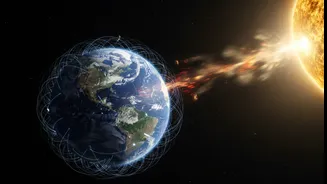
bursts of energy and particles. The two main events that concern us on Earth are solar flares and Coronal Mass Ejections (CMEs). A solar flare is an intense burst of radiation. A CME, which often accompanies a flare, is a massive cloud of magnetised plasma and radiation hurled into space. While flares can disrupt radio communications on Earth almost instantly, it's the CMEs that pose a more profound threat to our technology. These particle storms travel slower than light, taking anywhere from one to several days to reach Earth, but they carry enough energy to wreak havoc on our technological systems.
Satellites in the Firing Line
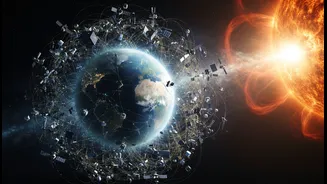
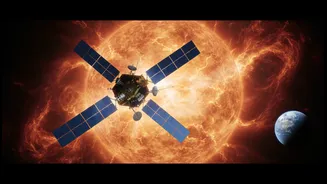
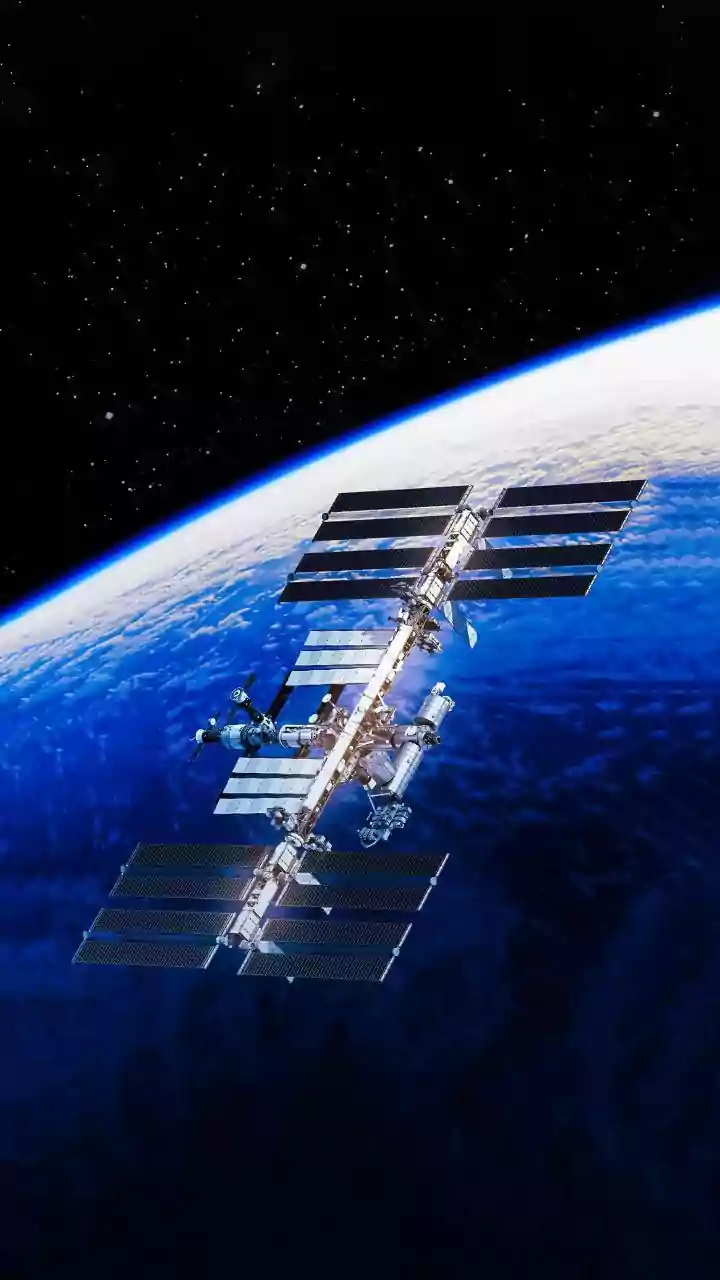
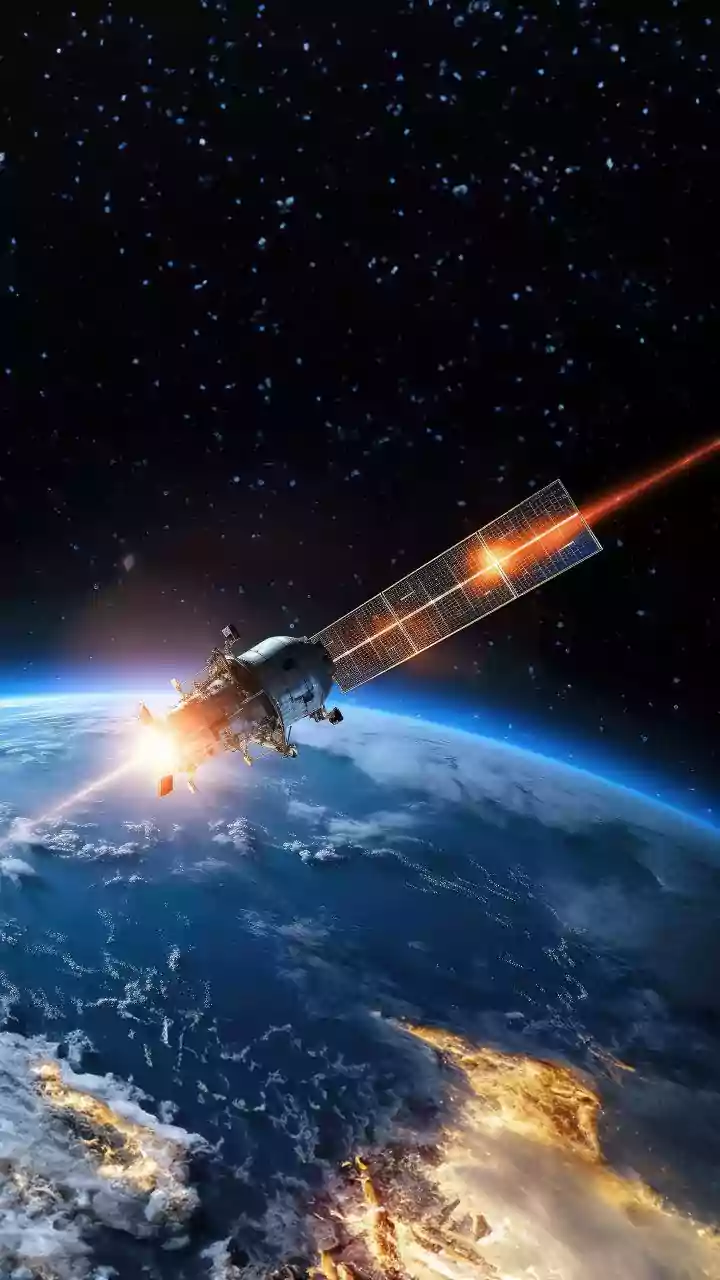
Satellites are particularly vulnerable to space weather. Their orbits place them outside the full protection of Earth's atmosphere and magnetic field. When a CME arrives, it can damage these multi-million dollar assets in several ways. Firstly, high-energy particles can penetrate satellite electronics, causing short-circuits, phantom commands, or permanent failure. This is known as spacecraft charging and has been linked to numerous satellite malfunctions. Secondly, the radiation degrades solar panels, reducing their ability to generate power and shortening a satellite's operational lifespan. Finally, a solar storm heats and expands Earth's upper atmosphere. This increases atmospheric drag on satellites in low-Earth orbit (LEO), causing them to slow down, lose altitude, and potentially burn up prematurely. In 2022, a batch of nearly 40 Starlink satellites were lost shortly after launch due to increased atmospheric drag from a solar storm.
The Challenge of Long-Range Forecasting
Predicting earthly weather is hard enough, but forecasting space weather is an even greater challenge. Scientists can monitor the Sun's surface for active regions like sunspots, which are often precursors to flares and CMEs. However, knowing if and when an active region will erupt is notoriously difficult. Even when a CME is launched, not all are aimed at Earth. Predicting its exact trajectory, speed, and internal magnetic field orientation—a key factor in its potential to cause damage—remains a major hurdle for space weather scientists. While models exist, none can yet perfectly predict the arrival time and geoeffectiveness of a CME. This makes long-range forecasting a game of probabilities rather than certainties, which is insufficient for protecting critical infrastructure.
The Critical Role of Real-Time Observation
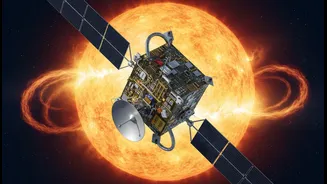
This is where continuous, real-time observation becomes essential. Since we can't reliably predict a solar storm's impact days in advance, our best strategy is to see it coming. To do this, space agencies like NOAA and NASA operate satellites at a stable point in space called Lagrange Point 1 (L1), located about 1.5 million kilometres between the Earth and the Sun. Satellites like the Deep Space Climate Observatory (DSCOVR) are positioned at L1 to act as an early-warning system. They directly measure the speed, density, and magnetic field of the solar wind and any incoming CMEs. Because they are upstream from Earth, this data gives us a crucial heads-up—anywhere from 20 minutes to a few hours—before the storm hits our planet. Other satellites like the GOES series continuously monitor the Sun itself for flares.
From Warning to Action
Even a short warning period is invaluable. With real-time data indicating an impending geomagnetic storm, satellite operators can take defensive measures. They can command satellites to enter a protective 'safe mode,' shutting down sensitive electronics to prevent them from being fried by energetic particles. They can also reorient satellites to present a smaller profile to the incoming storm, reducing drag and the risk of damage. Power grid operators on Earth can also use these warnings to brace their systems for geomagnetically induced currents that can overload transformers. Similarly, airlines can reroute flights away from polar regions where radiation exposure is highest during a storm. This ability to react in real-time is the cornerstone of mitigating the potentially catastrophic effects of space weather on our technology-dependent society. Without that constant watch in space, we would be flying blind.