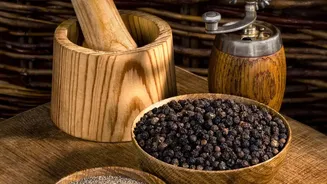

Kali Mirch, or black pepper, is the undisputed 'king of spices' in Indian kitchens. But its high value makes it a target for adulteration. Here’s a simple guide to ensure the pepper in your pantry is pure, potent, and safe for your family.
Why Your Pepper May Be Impure
The primary
reason for adulterating black pepper is economic. By mixing in cheaper, look-alike substances, sellers can increase their volume and profits. This not only cheats you of your money but also compromises on the flavour, aroma, and health benefits of genuine pepper. Common adulterants include dried papaya seeds, which visually mimic peppercorns, and even a coating of mineral oil to give inferior berries a shiny, appealing look. In ground pepper, the problem can be worse, with fillers like sawdust or bran sometimes added to increase bulk. Being a savvy consumer starts with understanding what you might be up against.
The Papaya Seed Impostor
Dried papaya seeds are the most common adulterant found in whole black pepper. They are cheap and, to the untrained eye, look remarkably similar to peppercorns with their dark, wrinkled appearance. However, consuming them in large quantities may lead to digestive issues. Thankfully, spotting them is easy with a simple test recommended by the Food Safety and Standards Authority of India (FSSAI). Just drop a spoonful of your whole peppercorns into a glass of plain water. Pure, dense black pepper will sink to the bottom. Papaya seeds, being lighter, will float on the surface. Any floating seeds should be considered suspicious.
Spotting the Unnatural Shine
Another trick used by some sellers is to coat peppercorns with mineral oil. This gives them an unnatural, uniform gloss to make them appear like a higher-quality product. While food-grade mineral oil might be used, non-food-grade versions can be harmful and cause stomach issues if consumed. You can check for this adulterant by rubbing a few peppercorns vigorously in your palm or on a piece of white paper. If they leave behind a greasy film or a kerosene-like smell, they have likely been coated with oil. Pure peppercorns should not feel greasy.
The Crush and Smell Test
Your senses are powerful tools in detecting poor-quality pepper. According to FSSAI, you can perform a simple press test. Place a few peppercorns on a hard surface and press them firmly with your thumb. A mature, high-quality peppercorn is quite hard and will not break easily. However, adulterants like light berries (peppercorns without a proper core) or other fillers will crumble under pressure. After crushing, bring the pepper to your nose. Pure black pepper has a sharp, pungent, and characteristically woody aroma due to the presence of piperine. If the smell is weak, musty, or non-existent, it's a sign of old, spent, or adulterated pepper.
Visual and Taste Inspection
Before you even perform any tests, take a good look at the peppercorns. Genuine black pepper should have a deeply wrinkled surface and be relatively uniform in size, with a dark-brown to black colour. Papaya seeds, by contrast, are often more oval-shaped and can have a smoother, slightly greenish-brown appearance. When it comes to taste, a single, pure peppercorn will deliver a sharp, pungent heat that builds on the tongue. Adulterated pepper, on the other hand, might taste bland, bitter, or even slightly repulsive.
Smart Buying Habits
The best way to avoid adulteration is to be a vigilant shopper. Whenever possible, buy whole peppercorns instead of pre-ground powder, as powder is much easier to adulterate with fillers like sawdust. Grinding your pepper at home just before use not only ensures purity but also provides the freshest flavour and aroma. Purchase your spices from reputable brands and trusted vendors who are transparent about their sourcing. Be wary of prices that seem too good to be true, as extremely cheap spices are often a red flag for poor quality or adulteration. Always check for an FSSAI license number on the packaging.