




Beyond the Comfort of the Blend
For many, tea is a familiar, consistent flavour scooped from a tin or steeped from a bag. These are often blended teas, where leaves from various regions and harvests are combined by expert tasters to create a uniform product that tastes the same year
after year. The goal is predictability, which is comforting but often masks the tea's true character. The alternative is single-origin tea. This refers to tea sourced from one specific geographical location, whether a country, a region, or even a single estate. Just like with wine or coffee, the concept of 'terroir' is paramount. The unique combination of soil, altitude, climate, and local craftsmanship gives the tea a distinct and unrepeatable flavour. Choosing single-origin is choosing to taste a place and a season, embracing its uniqueness rather than blending it away.
The Story of Place: Darjeeling's Legacy
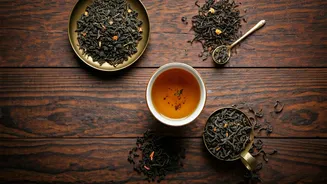
Perhaps no tea tells a story of place better than Darjeeling. Nestled in the Himalayan foothills, its history is a dramatic tale of colonial ambition and botanical experimentation. In the mid-1800s, the British, desperate to break China's monopoly on tea, began planting Chinese tea plants (Camellia sinensis var. sinensis) in this high-altitude region. The cool, misty climate and steep, well-drained slopes proved ideal. The resulting tea was not the strong, malty brew of Assam, but something entirely new: light, floral, and complex. Today, a tea can only be called 'Darjeeling' if it comes from one of the designated estates in the district, a protected Geographical Indication. Its flavour changes dramatically with the seasons, from the delicate, floral 'first flush' harvested in spring to the celebrated 'muscatel' notes of the second flush, which develops after the plants are visited by a local leafhopper insect.
The Story of Craft: Matcha's Ritual
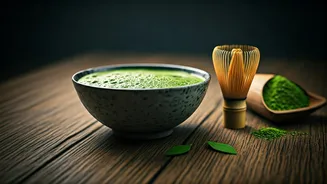
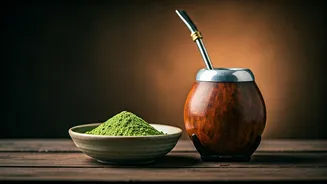
While Darjeeling’s story is rooted in its terroir, matcha’s is one of meticulous craft and cultural significance. Originating in China during the Tang Dynasty, the practice of grinding tea into a fine powder was introduced to Japan in the 12th century by a Buddhist monk named Eisai. While the practice faded in China, it became central to Zen Buddhism in Japan. Monks found that it induced a state of calm alertness, ideal for long meditation sessions. This evolved into the highly codified Japanese tea ceremony, or 'chado'. The production of high-quality matcha is an art. The tea plants are shaded for weeks before harvest to increase their chlorophyll and L-theanine content, giving the powder its vibrant green colour and umami flavour. The leaves are then steamed, dried, and stone-ground into a powder as fine as talc. To drink matcha is to partake in a centuries-old ritual of mindfulness and precision.
The Story of Time: The Magic of Pu-erh
Some teas tell a story of transformation over time. Pu-erh, a fermented tea from China's Yunnan province, is the most famous example. Unlike black teas, which are oxidized, Pu-erh undergoes a true microbial fermentation process, much like wine or cheese. This allows it to age and develop complex new flavours over years, or even decades. There are two main types: 'sheng' (raw), which ages naturally and slowly, and 'shou' (ripe), which undergoes an accelerated fermentation process to mimic the aged flavour. Young sheng Pu-erh can be bright and even astringent, but as it ages it becomes smoother, deeper, and earthier. A cup of aged Pu-erh is a taste of history, a liquid story that has been slowly unfolding for years in a dark, quiet place.
How to Find Your Story
Embarking on your own tea journey is easier than ever. Start by looking beyond the supermarket aisle to specialty tea shops or reputable online vendors. When you shop, look for details on the packaging. A good vendor will tell you not just the type of tea, but its origin, the estate it came from, and the harvest date or season. Look for whole leaves, which retain their essential oils and aroma far better than the 'dust' found in many tea bags. Don't be afraid to start small. Many retailers offer sample sizes, allowing you to explore different regions and styles without committing to a large bag. Experiment with brewing; many single-origin teas reveal different facets of their flavour with multiple short infusions rather than one long steep. Most importantly, be curious. Ask questions. The person selling the tea often has a story to tell, too.