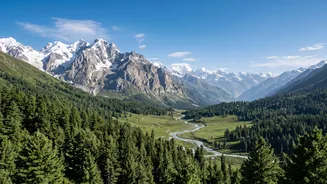







Aizawl, Mizoram: The Hillside Retreat
Tucked away in the hills of India's northeast, Aizawl often tops the charts for the country's cleanest air. With a small population, abundant green cover, and a high altitude, the city's AQI frequently sits in the 'Good' category, sometimes below 50.
The capital of Mizoram is built on steep slopes, which prevents the stagnation of air and helps disperse pollutants effectively. Its strong community-led cleanliness drives also contribute significantly. However, even here, air quality can dip. Smoke from local fires or shifts in regional weather patterns can temporarily raise pollution levels, reminding visitors that pristine air is a precious, and sometimes fleeting, resource.
Madikeri, Karnataka: Coorg's Verdant Heart
Known as the heart of the Coorg region, Madikeri is a haven of coffee plantations and spice gardens nestled in the Western Ghats. This geography is its greatest asset for air quality. The dense vegetation acts as a natural air filter, and its elevation ensures a steady flow of fresh mountain breezes. As a result, Madikeri's AQI is regularly in the 'Good' to 'Satisfactory' range. The primary caution here is the impact of tourism. During peak season, increased vehicular traffic can lead to a noticeable, though usually temporary, spike in local pollution, pushing the AQI towards the 'Moderate' level. It’s a classic example of how even the most idyllic spots are not entirely immune to human activity.
Shillong, Meghalaya: Scotland of the East
Shillong's nickname, the 'Scotland of the East', hints at its cool, misty, and often rain-washed environment. Abundant rainfall is a key factor in keeping its air clean, as it washes away particulate matter from the atmosphere. Surrounded by pine forests and situated at a high altitude, the city enjoys good air circulation, which prevents pollutants from settling. While Shillong's AQI is generally 'Moderate', it can occasionally climb. Winter inversions, a phenomenon where a layer of warm air traps cooler, denser air and pollution near the ground, can sometimes affect the valleys in and around the city.
Kollam, Kerala: The Coastal Breather
Unlike the hill stations on this list, Kollam benefits from its coastal location. The constant sea breeze from the Laccadive Sea plays a crucial role in blowing pollutants away from the land, leading to consistently 'Good' or 'Satisfactory' AQI readings. The city's extensive network of backwaters and greenery also helps maintain air quality. However, coastal cities are not entirely exempt from air quality issues. Industrial emissions from nearby areas or pollution from maritime traffic can drift inland under specific wind conditions. Furthermore, higher humidity can sometimes contribute to the formation of secondary pollutants, making it important to check real-time data.
Puducherry: The French Riviera's Fresh Air
Puducherry, with its charming French Quarter and seaside promenade, is another coastal destination that generally boasts better air than its landlocked counterparts. The Bay of Bengal provides a steady breeze that helps disperse urban pollutants from traffic and construction. This natural ventilation system often keeps the AQI in the 'Satisfactory' or 'Moderate' zone. But this isn't a given. On days with low wind speeds, local pollution can become more concentrated, pushing the AQI into the 'Poor' category for sensitive groups. This variability highlights that geography provides an advantage, not an immunity.
Ooty, Tamil Nadu: The Queen of Hills' Caveat
Nestled in the Nilgiri Hills, Ooty has long been a popular escape, partly due to its crisp, clean mountain air. Surrounded by eucalyptus forests and tea gardens, its natural ecosystem is a powerful defence against pollution, often keeping the AQI in the 'Good' to 'Moderate' range. However, Ooty also serves as a critical lesson in the fragility of clean air. As a major tourist hotspot, it faces significant challenges from vehicular emissions, especially during peak holiday seasons. The traffic congestion in the town centre can lead to sharp, localized spikes in pollution, sometimes pushing the AQI into 'Unhealthy for Sensitive Groups' territory. It's a stark reminder that a destination's reputation for clean air depends heavily on season and crowds.