





A Cross-Border Crisis Unfolds
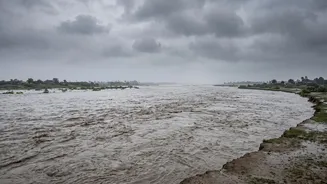
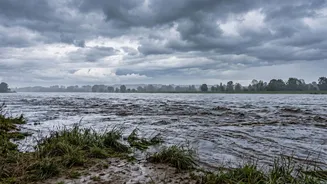
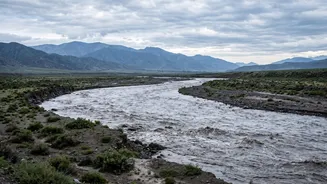
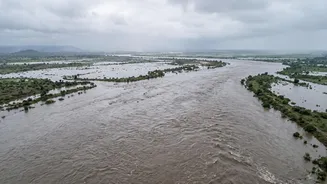
The crisis began with a catastrophic flash flood in Nepal on Wednesday, originating near the Nepal-China border. The event, possibly triggered by a glacial lake outburst or a landslide, sent a massive surge of water down the Bhote Koshi-Trishuli river
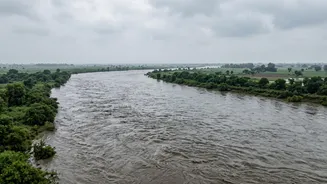
system. This surge is now travelling downstream into rivers that flow directly into India, primarily the Gandak river, which affects large, densely populated regions of eastern Uttar Pradesh and northern Bihar. Several rivers that originate in Nepal, including the Kosi and Gandak, flow into these Indian states, making them perennially vulnerable to monsoon-related disasters in the Himalayas. This annual threat has once again become an imminent reality, prompting a swift and coordinated response from both central and state governments.
Bihar Mobilises for a Familiar Threat
In Bihar, which shares a long and porous border with Nepal, the administration has been put on high alert. Authorities have specifically flagged risks in at least nine districts, including West Champaran, East Champaran, Gopalganj, Muzaffarpur, Sitamarhi, and Vaishali. The state's disaster management machinery has been fully activated. As a primary precautionary step, engineers opened all 36 gates of the Valmikinagar Barrage on the Gandak river to manage the massive discharge of water, which stood at around 86,000 cusecs on Wednesday afternoon. The National Disaster Response Force (NDRF) has deployed nine teams across the state, with special units sent to the most vulnerable districts of West Champaran and Muzaffarpur to assist with evacuations and potential rescue operations. Local authorities are making public announcements, urging residents in low-lying areas to move to safer locations, and some evacuations have already begun.
Uttar Pradesh on Guard
Adjoining Bihar, the eastern districts of Uttar Pradesh are also bracing for the impact of the swollen Gandak. Chief Minister Yogi Adityanath has directed the administrations of Maharajganj and Kushinagar districts to implement all necessary emergency measures. An alert has been sounded, with officials ordered to conduct round-the-clock monitoring of the river's water levels and embankments. In Kushinagar, the administration has begun evacuating several villages, including Marchahwa and Shivpur, asking residents to relocate to designated safe zones and relief camps. To bolster the state's preparedness, an additional NDRF team has been deployed to Kushinagar, with more teams placed on standby to be moved at a moment's notice should the situation escalate. The focus remains on preventing loss of life by moving people out of harm's way before the floodwaters arrive.
Coordination at the Highest Levels
The response is being overseen from the highest levels of government. Union Home Minister Amit Shah has spoken with the chief ministers of both Bihar and Uttar Pradesh, assuring them of all possible assistance from the Centre. A multi-ministry team involving officials from Home Affairs, External Affairs, and Jal Shakti is monitoring the situation closely. While the Central Water Commission (CWC) has stated that water levels in Nepal's reservoirs are currently reducing and no panic-like situation has arisen yet, the NDRF remains on high alert across both states. This high-level coordination extends to Nepal, as India immediately offered support to its neighbour. India dispatched a C-130J military aircraft with 10 tonnes of humanitarian aid, including medicines, shelters, and blankets, to assist with relief efforts in Nepal. The Indian Air Force has also placed its transport fleet on standby for further assistance.
The Lifeline of Data Sharing
Underpinning this entire response is a critical, albeit still developing, system of cross-border data sharing. India and Nepal have a three-tier bilateral mechanism to cooperate on water resources, which includes sharing hydro-meteorological data during the monsoon season. Information on water discharge and rainfall from stations in Nepal is made available on an hourly basis to flood forecasting divisions in Lucknow and Patna. This real-time data allows the Central Water Commission to issue timely warnings and advisories, which form the basis for the alerts sent to state and district administrations. While this system is crucial, experts have pointed out the need for even more integrated, automated, and comprehensive data-sharing agreements to further improve early warning systems and protect communities on both sides of the border from the recurring threat of trans-boundary floods.