




Why Water on the Moon Matters
Finding accessible water on the Moon would be a monumental achievement for humanity. It’s not just about giving future astronauts something to drink. Water (H2O) can be split into its core components: hydrogen and oxygen. This provides breathable air
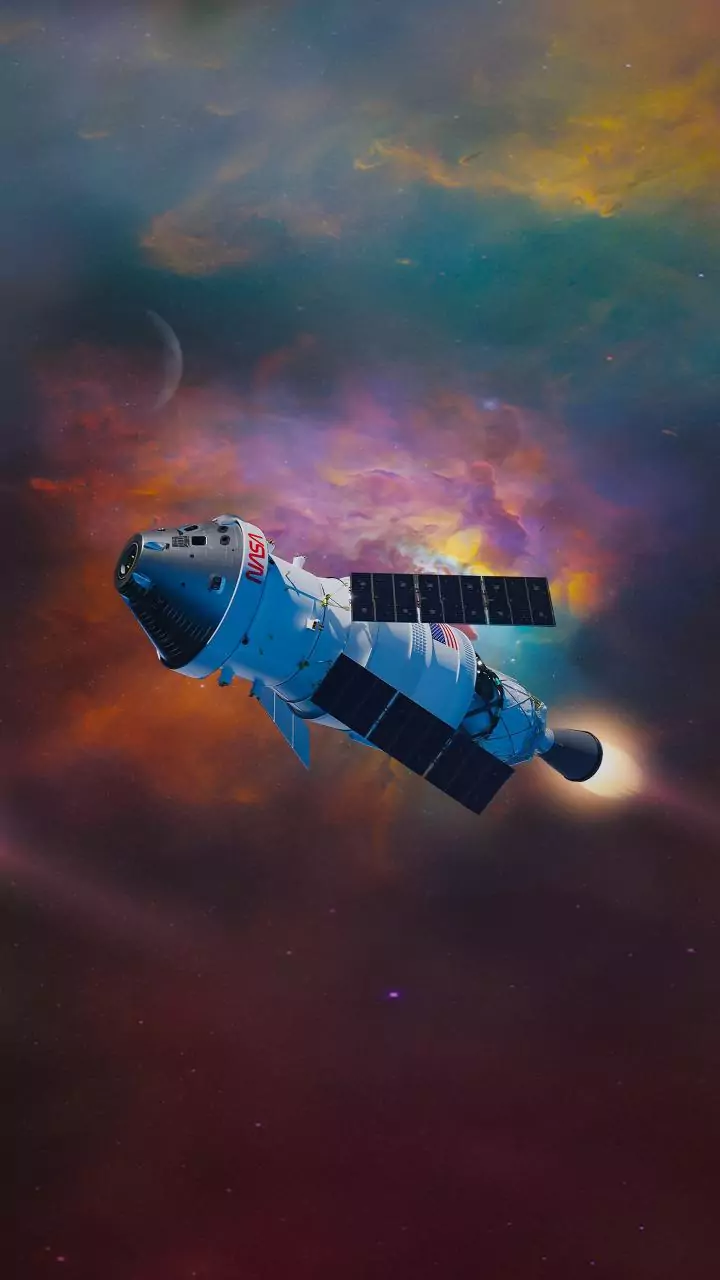
for lunar habitats and, crucially, the two key ingredients for rocket fuel. Manufacturing fuel on the Moon would revolutionize space travel, making our natural satellite a refuelling station for more ambitious missions to Mars and beyond. It dramatically cuts the cost and complexity of deep-space exploration, as launching heavy water supplies from Earth is incredibly expensive. Essentially, lunar water is the key to making a sustained human presence in space a feasible reality.
Hunting in Eternal Darkness
The most promising locations for finding water ice are the Moon's Permanently Shadowed Regions (PSRs), located in deep craters near the lunar poles. Because of the Moon's slight axial tilt, the floors of these craters have not seen direct sunlight for billions of years. This makes them some of the coldest places in our solar system, with temperatures plunging to nearly -250°C. These extreme conditions act as perfect 'cold traps', allowing water ice delivered by comets and asteroids over eons to remain frozen and stable, protected from the Sun's radiation. Recent data from ISRO’s Chandrayaan-2 orbiter has provided compelling evidence of subsurface ice in these dark, frigid craters, sharpening the focus on the south pole as a region of immense strategic value.
ISRO’s Tools for the Job
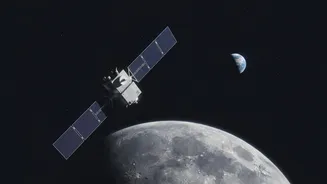
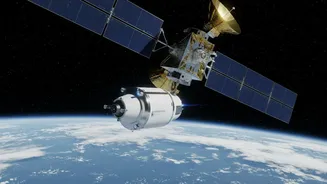
ISRO has been a pioneer in the hunt for lunar water since its Chandrayaan-1 mission, which carried a NASA instrument that confirmed the presence of water molecules. The legacy continues with Chandrayaan-2's advanced payloads. The orbiter is equipped with a Dual-Frequency Synthetic Aperture Radar (DFSAR), which is crucial for this task. This instrument can peer below the lunar surface, sending out radar waves that bounce back differently depending on the material they hit. By analyzing these signals, scientists can distinguish the signature of water ice from that of dry rock. Using DFSAR data, scientists have recently identified specific craters, including one within the larger Faustini basin, that show strong radar signatures consistent with significant deposits of subsurface ice.
From Buried Ice to Usable Water
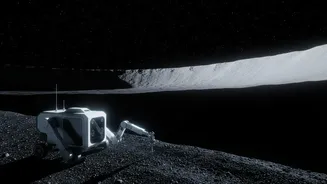
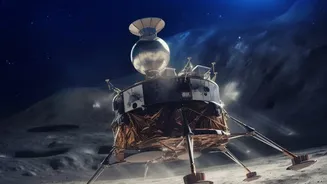
Detecting ice is one thing; extracting it is another challenge altogether. The ice in these craters is not a clean, solid block but is mixed with lunar soil, or regolith, and is as hard as granite at those temperatures. Future missions will need to deploy rovers and machinery that can operate in extreme cold and darkness. Several methods are being considered. One approach involves heating the icy regolith to sublimate the ice directly into water vapour, which can then be collected and re-frozen. This is an energy-intensive process. Another idea involves physically excavating the icy soil and transporting it to a processing plant. ISRO's future Chandrayaan-4 mission is planned as a sample-return mission, which will be critical in developing and demonstrating the technologies needed for such complex operations.
India’s Next Giant Leap
Success in this endeavour would cement India's status as a leading spacefaring nation. The discoveries from Chandrayaan-2 are already guiding the global conversation about where to land future crewed missions and establish lunar bases. By developing the capability to prospect for and potentially extract lunar water, ISRO is not just conducting a scientific experiment; it is laying the groundwork for India’s ambitious future in space. These plans include a crewed lunar landing by 2040 and the eventual construction of a permanent moon base. Mastering in-situ resource utilization (ISRU) — the ability to live off the land — is the most critical step in that journey, and ISRO’s polar payloads are leading the charge.