






An AI University For The Future
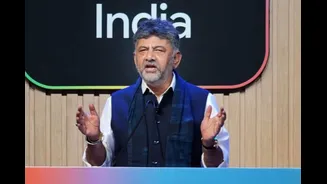
Karnataka's Chief Minister D.K. Shivakumar recently announced an ambitious plan to establish India's first government-driven university dedicated entirely to Artificial Intelligence. The announcement, made at a major Google event in Bengaluru, outlines
a vision for an institution focused on building world-class AI talent, fostering cutting-edge research, and strengthening the bond between academia, industry, and government. This initiative is part of a larger strategy to make Karnataka an "AI-native state," where technology is deeply integrated into governance and daily life. The proposal includes a 100-acre main campus in Bengaluru, with regional centers planned across the state, signaling a significant public investment in specialized higher education.
Bridging a Critical Skills Gap
The plan for a dedicated AI university isn't just about prestige; it's a direct response to a growing crisis in the tech ecosystem. While India produces a vast number of engineering graduates, a significant gap exists between traditional academic curricula and the hyper-specialized, rapidly evolving skills required by the AI industry. Companies often invest heavily in reskilling new hires. A dedicated university aims to solve this by creating a pipeline of talent that is industry-ready from day one. The curriculum would focus on high-demand areas like machine learning, data science, and robotics, moving beyond theoretical knowledge to emphasize practical application and hands-on experience. This addresses a core challenge for India: equipping its massive workforce with the skills to not just participate in, but lead, the AI revolution.
A New Public-Private Playbook
The Karnataka government's approach is a notable departure from simply relying on existing IITs or private institutions. By creating a government-backed university, the state can direct policy and funding toward national strategic goals. Alongside the university, the government plans to establish an AI Innovation Hub to serve as an incubator for startups and researchers. This model encourages a symbiotic relationship where the university produces talent and research, which then fuels the innovation hub, creating a self-sustaining ecosystem. Chief Minister Shivakumar explicitly invited collaboration with tech giants like Google, suggesting a public-private partnership model that leverages corporate expertise and resources while being guided by public policy objectives.
A National Blueprint in the Making?
While the plan is rooted in Karnataka, its implications are national. The state already accounts for nearly 40% of India's software exports and is a hub for thousands of startups and global capability centers. A successful AI university here could serve as a blueprint for other states and for India's national AI strategy, which emphasizes building a skilled workforce and fostering homegrown innovation. The initiative aligns perfectly with central government missions like 'Digital India' and the broader goal of making India a global leader in technology. This move is less of an isolated project and more of a large-scale pilot for how India can systematically build competence in critical future technologies.
Challenges on the Horizon
Despite the ambitious vision, the path forward is complex. Creating a world-class university from scratch requires enormous and sustained funding. Attracting and retaining top-tier global faculty in a competitive market will be a major hurdle. Furthermore, the curriculum will need to be incredibly agile to avoid becoming obsolete within a few years. There are also significant infrastructural needs, including the development of next-generation green data centers to power the intensive computing required for AI research, a challenge the government has already acknowledged. Ensuring that the university promotes responsible and ethical AI development, rather than just technical prowess, will be another critical test of its success.