








Puttur's Dengue Alert
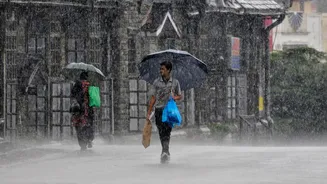
As the monsoon season began, authorities in Puttur, a town in Dakshina Kannada, issued a dengue alert. Local officials directed health and ASHA workers to conduct door-to-door awareness campaigns about symptoms and prevention. This proactive, on-the-ground
response became necessary because broad, national-level advice often fails to address specific local realities. A generic advisory to 'prevent mosquito breeding' means little without context. In a place like Puttur, effective communication requires specifying which water containers are high-risk, explaining the biting patterns of the local Aedes mosquito, and suggesting locally available and affordable repellents. The situation underscores a vital point: public health communication cannot be one-size-fits-all. What works in a Delhi high-rise is often irrelevant in a coastal Karnataka village.
When 'Google Knows Best' Fails
For many, the first instinct when feeling unwell is to search online. While helpful for basic queries, this reliance on digital oracles becomes problematic in a country with vast regional differences. Much of the health information online is generic, often originating from Western sources, and fails to consider Indian diets, genetic predispositions, and environmental factors. For example, dietary advice for managing diabetes that recommends quinoa and avocados is unhelpful for someone whose diet is built around local millets and vegetables. The failure to provide locally relevant information can lead to poor health choices, distrust in medical advice, and the spread of dangerous misinformation. Poorly communicated information can directly impact disease control, leading to fear and reluctance to seek proper medical care.
A 'Map' of Culture, Not Just Place
Creating 'wider maps' for health content means going beyond geography. It requires mapping the cultural, linguistic, and social terrain of a community. India has a long history of local health traditions (LHTs) and home remedies that are deeply integrated into daily life. Effective health communication doesn't dismiss these traditions but seeks to integrate them responsibly. For instance, instead of just telling people to take a certain pill, a better approach might explain how the pill works alongside a traditional herbal concoction, and which combinations to avoid. This requires a deep, non-judgmental understanding of local beliefs. Ignoring these cultural nuances can create a wall between healthcare providers and the communities they serve, fostering distrust that can have tragic consequences, as seen in historical public health crises in India.
The Challenge of Trust and Quality
Even when information is available, trust remains a significant hurdle. This issue came to the forefront during a recent debate over generic versus branded medicines. In 2023, when the National Medical Commission made it mandatory for doctors to prescribe generic drugs, the Indian Medical Association (IMA) protested, citing a lack of confidence in their quality control. This highlights a fundamental trust deficit in the system. If doctors themselves are wary, how can patients be expected to trust the advice they are given? Building wider, more effective health maps requires a foundation of trust, which can only be achieved through transparency, rigorous quality control, and a healthcare system that listens to both its professionals and its patients.
The Way Forward: Hyperlocal Health
The solution lies in decentralisation and technology. Initiatives like the Ayushman Bharat Digital Mission aim to create a unified digital health ecosystem, which is a crucial first step. However, the real impact will come from hyperlocal applications built on this infrastructure. Imagine ASHA workers equipped with tablets that provide health information in local dialects, using videos and folk songs to educate communities, a strategy already used effectively in states like Odisha. Developing these tools requires collaboration between tech innovators, public health experts, and community leaders. The goal is to build a system rooted in local sociocultural contexts, empowering communities to take charge of their own health with information they can understand and trust.