



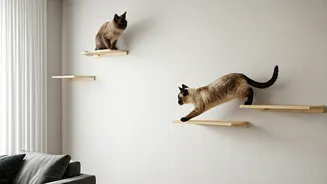


The Vertical World of Cats
To understand why shelves matter, we have to think like a cat. Felines are natural climbers and observers. In the wild, high vantage points offer safety from ground-level predators and a clear view of potential prey. This instinct doesn't disappear just
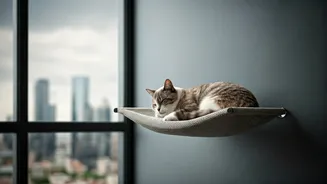
because your cat lives indoors. They still crave vertical territory. When you see your cat perched on top of a bookshelf, leaping onto the kitchen counter, or attempting to scale the curtains, they aren't being naughty. They are simply acting on a deep-seated need to survey their domain from above. Providing them with approved climbing spaces redirects this behaviour in a positive way, reducing stress and property damage.
The Challenge of Urban Living
For cats in smaller homes or apartments, horizontal space is limited. This can lead to a sedentary lifestyle, boredom, and even anxiety. A bored cat is often a destructive cat, prone to scratching furniture, over-grooming, or becoming withdrawn. Furthermore, lack of exercise is a leading contributor to feline obesity, which comes with its own host of health problems, including diabetes and joint issues. In a multi-cat household, the lack of space can also amplify territorial disputes. By failing to provide vertical options, we are effectively asking our cats to live in a one-dimensional world, which goes against their very nature.
Enter the Cat Superhighway
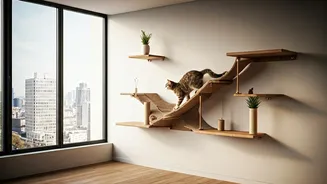
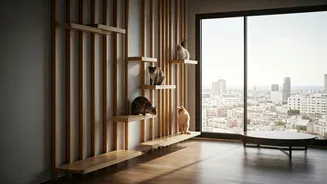
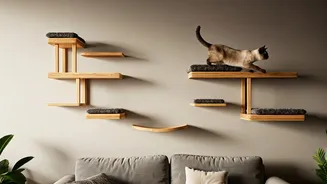
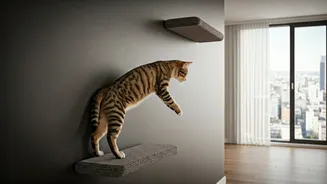
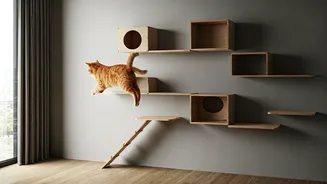
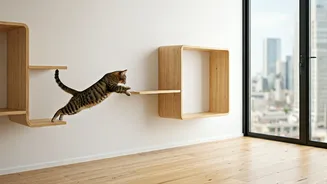
This is where cat shelves come in. More than just a perch, a well-planned series of shelves creates a 'cat superhighway' around your room. It’s an elevated pathway that allows your pet to navigate the space without ever touching the floor. This provides immense physical and mental stimulation. Your cat gets to leap, climb, and balance, which are all forms of exercise that maintain muscle tone and agility. Mentally, it enriches their environment, giving them new perspectives, new challenges, and a sense of control over their territory. It's a game-changer for transforming a static room into a dynamic, three-dimensional playground.
Why 'Soft Stepping' Matters
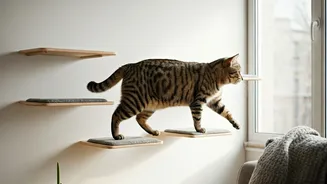
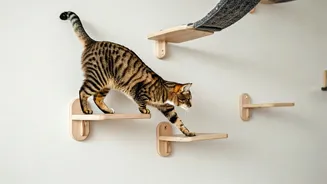
Not all shelves are created equal. The 'soft stepping' aspect is crucial for safety and comfort. Shelves made of slick, varnished wood or plastic can be hazardous. A cat might misjudge a jump or fail to get a good grip, leading to a dangerous fall. Soft-surfaced shelves—those covered in carpet, sisal rope, or thick felt—provide essential traction. This allows your cat to land, grip, and launch with confidence. The fabric also gives them a satisfying surface to scratch (saving your sofa) and a comfortable place to lounge. When choosing or building shelves, always prioritise grip. A secure footing is non-negotiable for a safe vertical setup.
Planning Your Cat’s Ascent
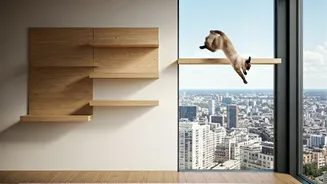
Creating an effective cat highway requires a bit of planning. Start by observing where your cat likes to hang out. Do they stare out a particular window or try to get a view of the kitchen? Place shelves near these areas of interest. Create a logical path. Don't place shelves too far apart; a comfortable horizontal distance is typically 2-4 feet, depending on your cat's age and athleticism. Vary the heights to make it more interesting. Ensure each shelf is securely anchored to the wall, preferably into studs, to support the weight of a leaping cat. You can test the setup by gently introducing your cat to the lowest shelf with treats or toys, encouraging them to explore their new domain one step at a time.