
Why Yoga Works for Flexibility
Many people think you need to be flexible to do yoga, but it is actually the other way around: you do yoga to become flexible. When you hold a yoga pose, you are not just stretching your muscles; you are also working on your fascia, the web of connective
tissue that surrounds your muscles and joints. Regular practice helps to lengthen these tissues, improving your range of motion. The combination of slow, controlled movements and deep breathing increases blood flow, releases tension, and signals your nervous system to relax, allowing for deeper, safer stretches.
Cat-Cow Pose (Marjaryasana-Bitilasana)
This gentle, dynamic movement is perfect for warming up and increasing spinal flexibility. Start on your hands and knees in a 'tabletop' position, with your wrists under your shoulders and knees under your hips. As you inhale, drop your belly towards the mat, lifting your chest and tailbone to look forward into Cow Pose. As you exhale, round your spine toward the ceiling, tucking your chin to your chest, like an arching cat. Flowing between these two poses for 10-20 repetitions helps to lubricate the spine and relieve tension in the back and neck.
Downward-Facing Dog (Adho Mukha Svanasana)
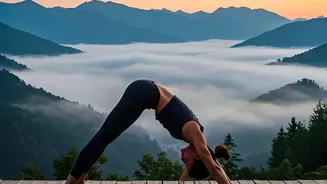
One of the most iconic yoga poses, Downward-Facing Dog is a full-body stretch that targets the hamstrings, calves, and spine. From your tabletop position, lift your hips up and back, forming an inverted 'V' shape with your body. For beginners, it is essential to bend your knees generously. This allows you to focus on keeping your back straight and lengthening your spine, rather than forcing your heels to the floor. You can 'pedal' your feet, bending one knee and then the other, to gently deepen the stretch in your calves.
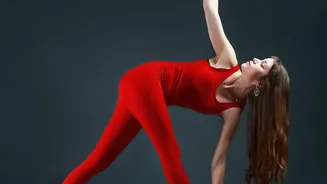
Triangle Pose (Trikonasana)
Triangle Pose is a fantastic standing posture for stretching the hamstrings, hips, and side body. Start by standing with your feet about 3-4 feet apart. Turn your right foot out 90 degrees and your left foot in slightly. Inhale and extend your arms parallel to the floor. As you exhale, reach forward over your right leg and then hinge at your hip, bringing your right hand down to your shin, ankle, or a block. Extend your left arm toward the ceiling, opening your chest. This pose builds stability and improves balance.
Seated Forward Bend (Paschimottanasana)
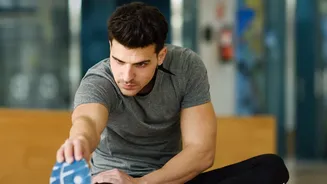
This pose provides a deep stretch for the entire back of the body, especially the hamstrings and lower back. Sit on the floor with your legs extended straight in front of you. If your hamstrings are tight, bend your knees or sit on the edge of a folded blanket to help tilt your pelvis forward. Inhale to lengthen your spine, and as you exhale, hinge forward from your hips, not your waist. Walk your hands forward as far as is comfortable, keeping your back long. The goal is not to touch your toes, but to feel a steady, manageable stretch.
Bridge Pose (Setu Bandhasana)
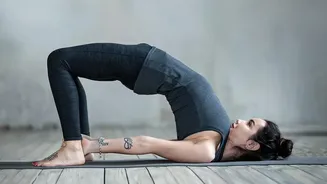
Bridge Pose is a gentle backbend that helps to open the chest and shoulders while strengthening the back and glutes. Lie on your back with your knees bent and feet flat on the floor, hip-width apart. Your feet should be close enough that you can touch your heels with your fingertips. Press down through your feet and inhale to lift your hips off the floor. Keep your thighs parallel. This pose counteracts the effects of prolonged sitting and can help relieve lower back pain.
Child's Pose (Balasana)
An essential resting pose, Child's Pose offers a gentle stretch for the hips, thighs, and lower back. Kneel on the floor, sit back on your heels, and then fold your torso forward, resting your forehead on the mat. You can keep your arms extended in front of you or rest them alongside your body. This posture is excellent for releasing tension and calming the mind after your practice.