




The Golden Breakthrough
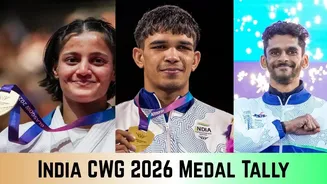
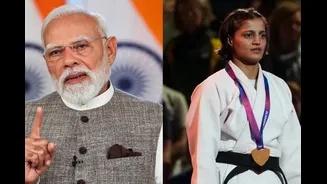
The charge was led by Asmita Dey, who etched her name in the record books by becoming India's first-ever Commonwealth Games judo champion. Competing in the women's -48kg category, the judoka from Tripura showed immense tenacity. Her final bout against
Canada's Heidi Quach was a nail-biting affair that went into a 'Golden Score' sudden-death period. Dey held her nerve, executed a decisive throw, and secured the historic gold, a moment that sent waves of celebration through the Indian camp. Her victory was not just a personal triumph but the breaking of a barrier that had stood for decades.
Harsh Singh Doubles the Joy
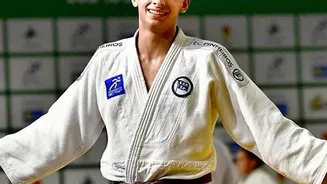
The celebrations had barely begun when Harsh Singh took to the mat for the men's -60kg final. Minutes after Dey's historic win, Singh created his own slice of history. Facing the experienced Australian Olympian Joshua Katz, the 23-year-old Indian delivered a masterclass in tactical judo. He controlled the bout from the start, scoring a waza-ari to take the lead and defending it with composure to clinch the gold medal. This victory made him the first Indian male judoka to stand atop the Commonwealth Games podium, completing an unprecedented double gold for India on the same day.
Strength in Depth
The success story wasn't limited to the two gold medals. The 'rise of India' was underscored by the team's collective performance. Yamini Mourya added to the tally with a hard-fought silver medal in the women's -57kg category, showcasing resilience and skill on her way to the final. The fourth and final medal came from Unnati Sharma, who claimed a brilliant bronze in the women's -63kg division. Sharma won her bronze medal bout decisively by ippon in just over a minute, proving that India's success was built on a foundation of multiple talented athletes ready to perform on the big stage. This four-medal haul represents India's best-ever performance in judo at the Commonwealth Games.
The Road to Glasgow and Beyond
This sudden surge in performance is no accident. It is the culmination of years of hard work, improved training infrastructure, and consistent performances on the international circuit by athletes like Dey and Singh. Both gold medalists have been active on the IJF World Tour, gaining valuable experience against world-class opponents. Asmita Dey, for instance, had previously won gold at the Junior Asia Cup and an African Open, signalling her potential long before Glasgow. The confidence and tactical maturity displayed by the entire team suggest a positive shift in the sport's ecosystem in the country. After this historic performance, the judokas are hopeful that the sport's profile will be raised in India, inspiring a new generation to take up the discipline.