



A Geological Drama Unfolds
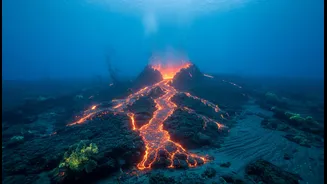
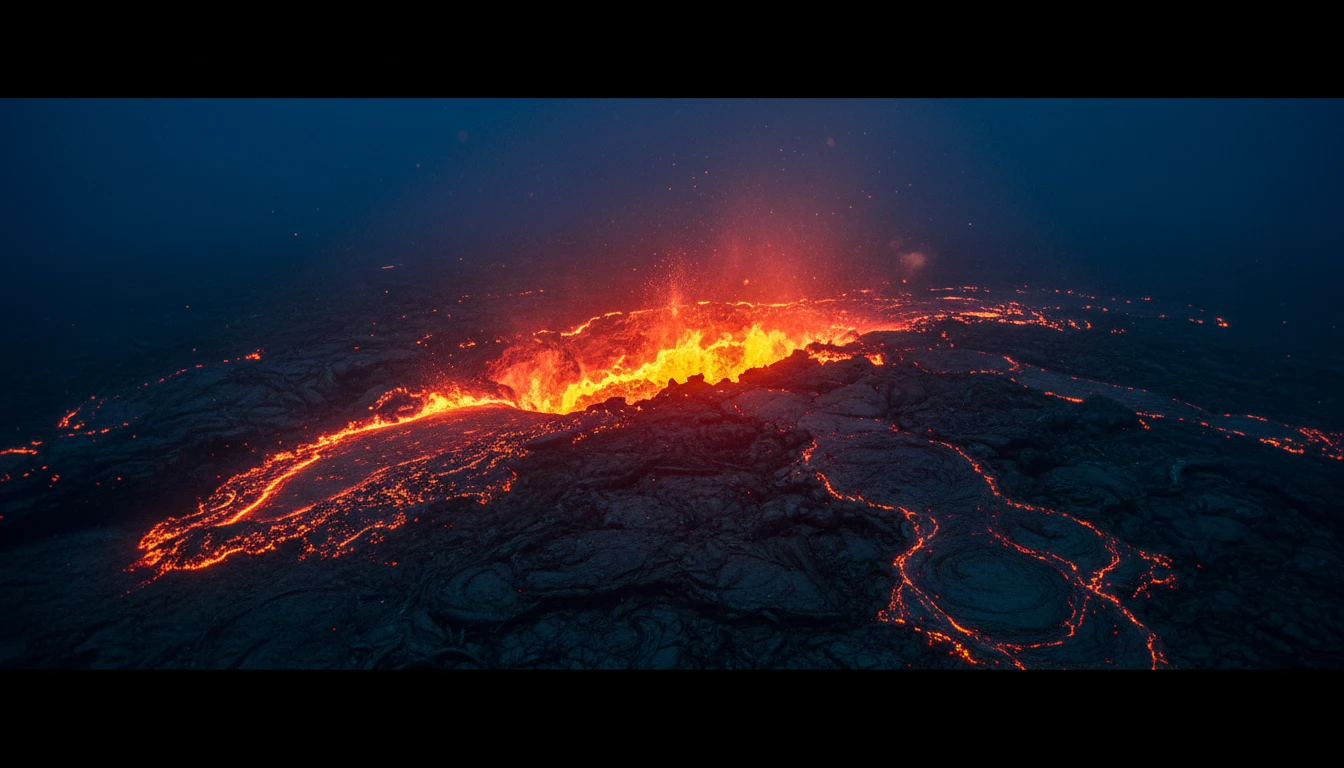
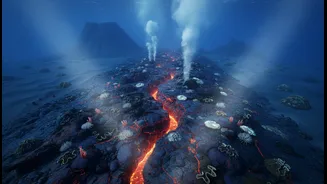
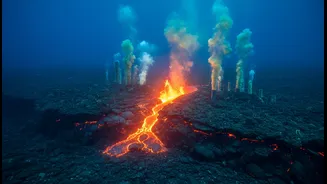
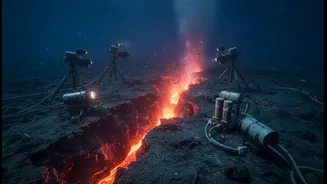
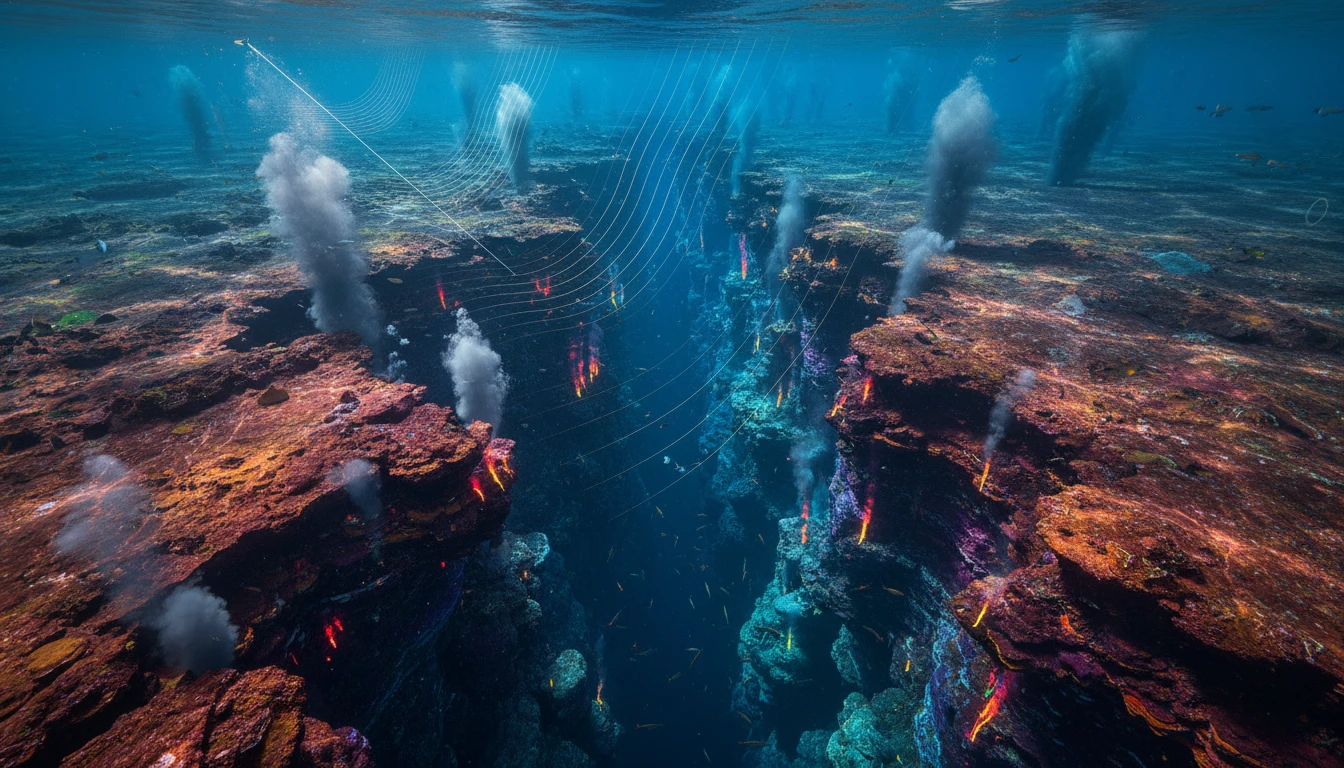
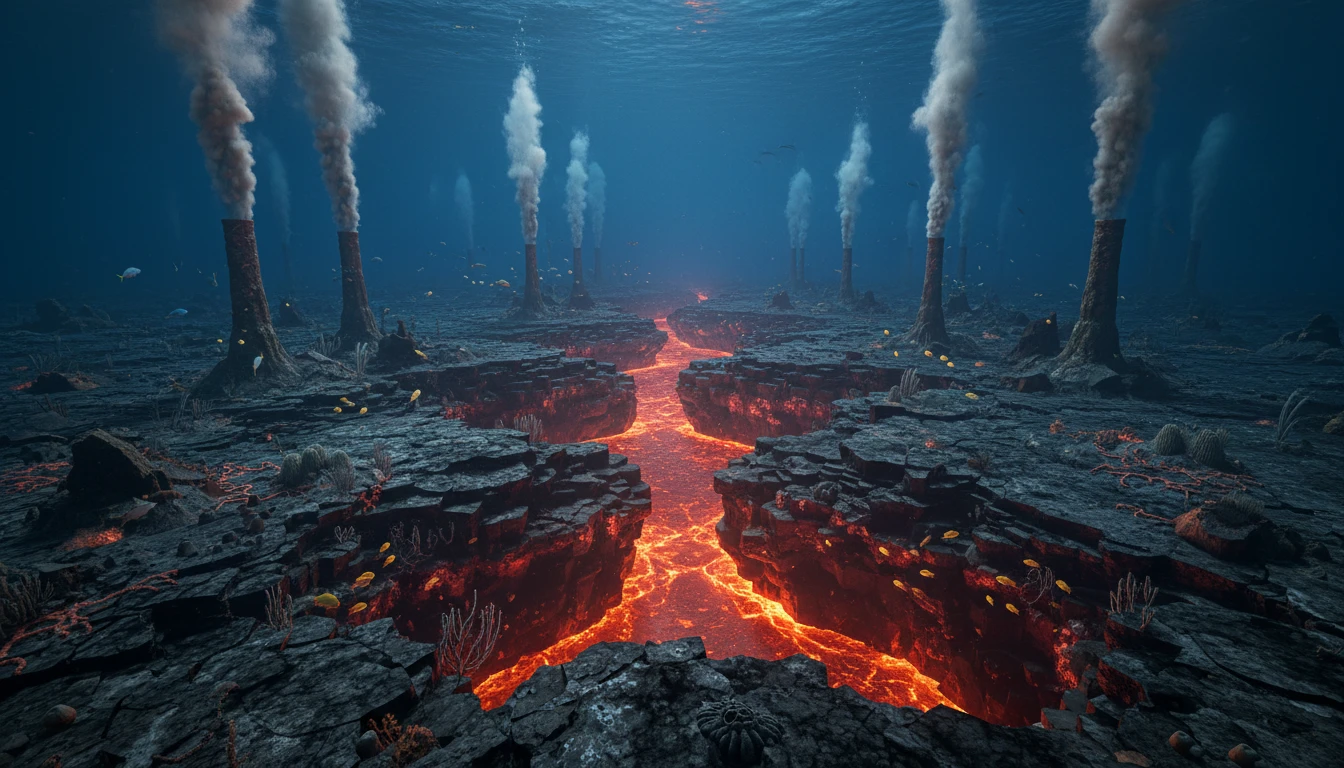
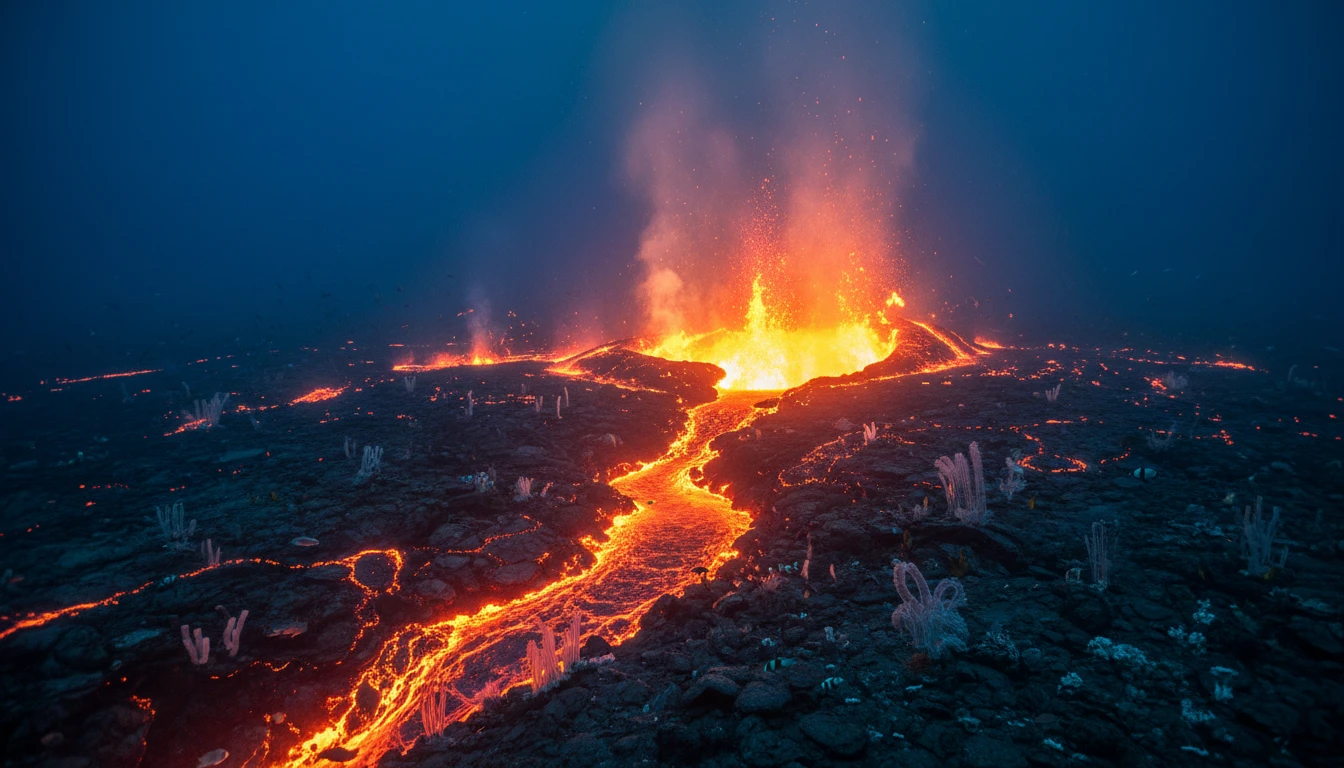
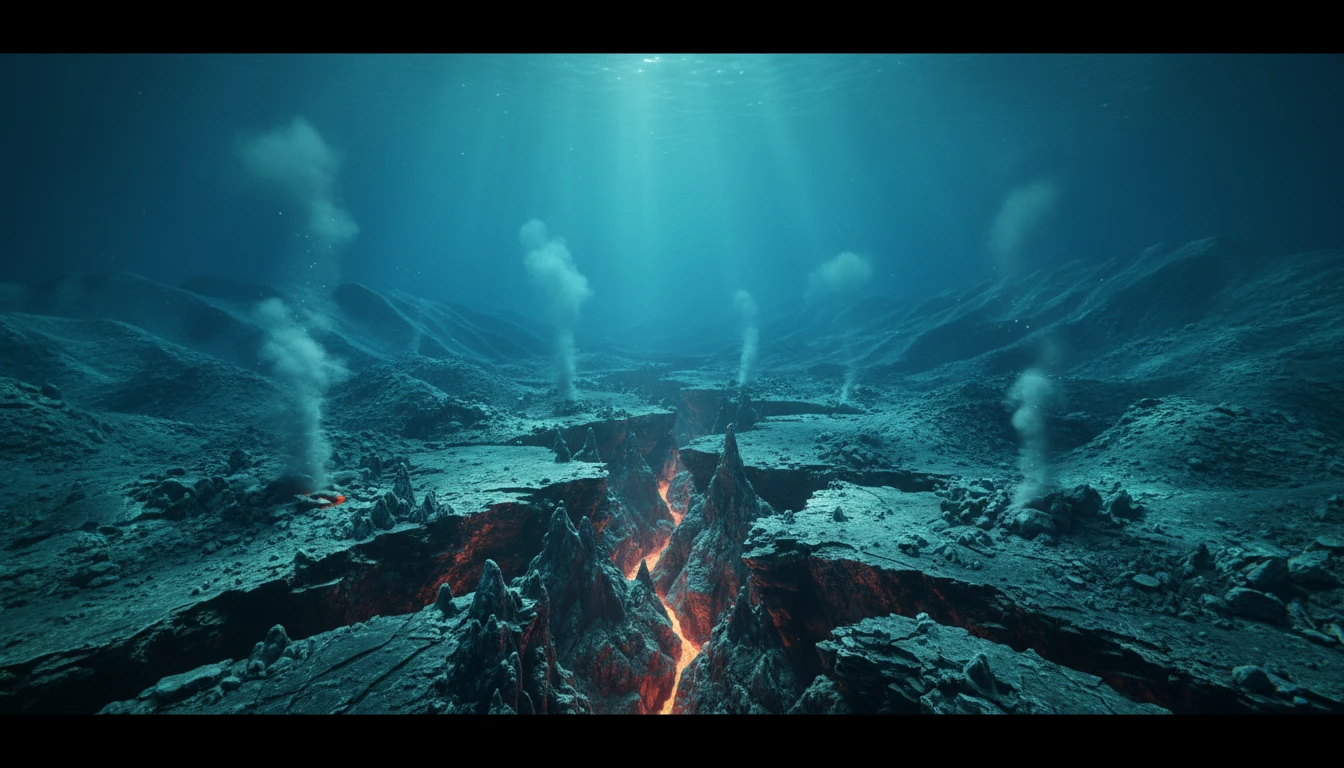
In April 2024, at the Southeast Indian Ridge—a remote boundary where tectonic plates pull apart—scientists captured a complete seafloor spreading event in real-time. An array of instruments, deployed just months earlier, recorded a swarm of earthquakes
migrating along the ridge. Within weeks, the seafloor sank by several metres and an estimated 160 million cubic metres of lava erupted, forging a new segment of Earth's crust. This wasn't just a single volcanic eruption; it was a fundamental planetary process observed from start to finish for the first time, offering a rare window into the forces that shape our oceans. This event is part of a larger, slower drama in the Indian Ocean, particularly in the Wharton Basin, where the massive Indo-Australian plate is showing signs of breaking in two. This slow-motion breakup, moving at just 1.7 millimetres per year, builds immense stress, which is occasionally released in powerful earthquakes.
The Scientific Detective Kit
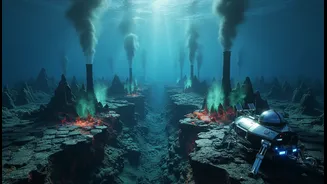
To understand these deep-sea phenomena, scientists rely on a trio of sophisticated techniques. The first is geodesy, the science of measuring Earth's shape, orientation, and gravity field with extreme precision. By tracking minute changes, geodesy reveals how the Earth’s surface deforms under stress. The second tool is acoustics. Using underwater microphones called hydrophones, researchers can listen to the ocean's soundscape for years at a time. These instruments pick up everything from the songs of whales to the tell-tale rumbles of underwater earthquakes and volcanic activity. The final piece of the puzzle is seafloor mapping, which uses sonar to paint a detailed picture of the ocean bottom. Ships equipped with multibeam echosounders send out fans of sound waves and measure the echoes that bounce back, creating high-resolution 3D maps of underwater mountains, valleys, and faults. Together, these methods allow scientists to see, hear, and measure geological events happening kilometres below the surface.
Why Seafloor Spreading Matters for India
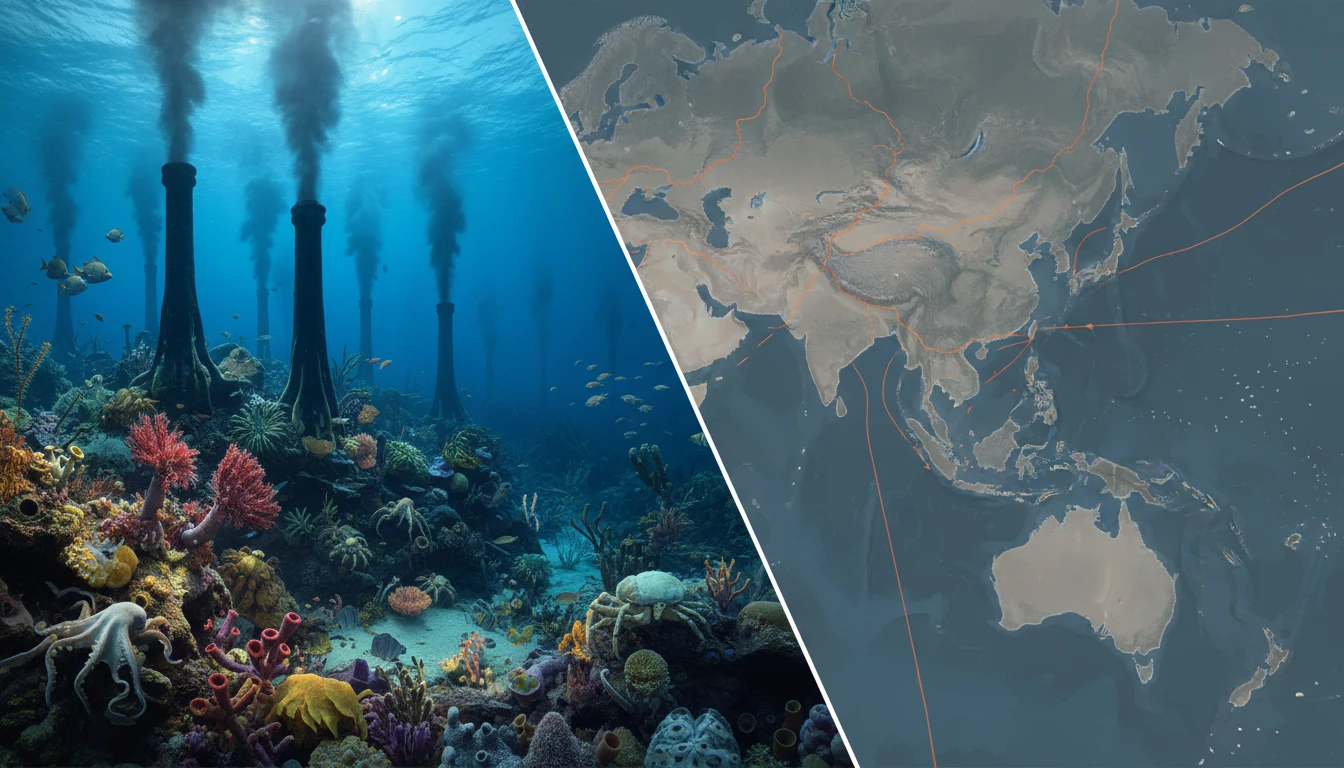
While these events occur deep in the ocean, their implications are felt on land. The Indian Ocean is one of the most tectonically active regions in the world. The breakup of the Indo-Australian plate in the Wharton Basin is not happening in isolation. This area has produced some of the largest intraplate earthquakes ever recorded, like the magnitude 8.6 and 8.2 quakes in 2012. These massive disturbances can generate tsunamis that pose a significant threat to coastal regions, including India's extensive eastern and western coastlines. Understanding the stress building up in these submarine fault zones is crucial for hazard assessment. The tectonic activity in the Indian Ocean basin is directly linked to the northward push of the Indian plate, the very same force that created the Himalayas and makes the region seismically active. Studying seafloor spreading helps scientists build more complete models of these immense geological forces, ultimately improving our ability to anticipate and prepare for seismic hazards.
A Restless Planet, A Clearer Future
The groundbreaking observation of the 2024 seafloor spreading event revealed that the process happens in violent, rapid bursts rather than a slow, continuous creep. At its peak, the ridge pulled apart at a rate nearly half a million times faster than its long-term average. Crucially, the instruments also detected significant 'aseismic' movement—fault motion that occurs silently without producing earthquakes. This discovery helps solve a long-standing puzzle for geophysicists: the mismatch between the observed rate of plate separation and the energy released by earthquakes alone. It turns out, a lot of the action happens quietly. By combining geodesy, acoustics, and mapping, scientists are no longer just inferring what happens at mid-ocean ridges; they are observing it directly. This clearer understanding of the engine of plate tectonics provides vital data for assessing the risks of future earthquakes and tsunamis in the Indian Ocean, offering a better chance to safeguard the millions of people living along its shores.