




10. Saeed Anwar (Pakistan)
A master of timing and placement, Saeed Anwar was the epitome of grace at the crease. The Pakistani opener could decimate a bowling attack with wristy flicks and effortless drives. For over a decade, his 194 against India in 1997 stood as the highest
individual score in ODIs, an innings that showcased his ability to blend aggression with artistry. Anwar's knack for scoring big hundreds, particularly in the one-day format, made him one of the most feared openers of his generation.
9. Matthew Hayden (Australia)
A hulking, powerful presence, Matthew Hayden was an intimidating force at the top of the order for Australia. He wasn't just a brute; he was a thinking cricketer who used his physique to dominate bowlers, famously using the sweep shot to conquer spin. For five consecutive years, he scored over 1,000 Test runs. His then-world record 380 against Zimbabwe in 2003 was a testament to his immense power and concentration, and he was a key pillar of Australia's era of dominance.
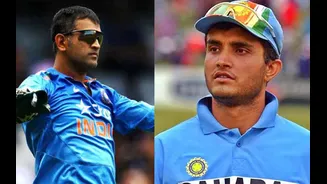
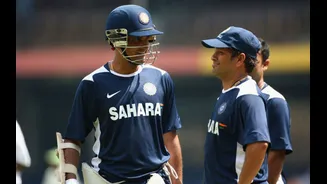
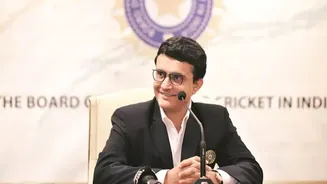
8. Sourav Ganguly (India)
Known as the 'God of the Off Side', Sourav Ganguly's cover drives were a thing of beauty. But beyond his elegant strokeplay, 'Dada' was an aggressive and transformative captain who instilled a fighting spirit in the Indian team. As a batsman, he was a master of ODI cricket, scoring over 11,000 runs and forming a legendary opening partnership with Sachin Tendulkar. His ability to take the attack to spinners and clear the ropes with ease made him a formidable white-ball player.
7. Sanath Jayasuriya (Sri Lanka)
Sanath Jayasuriya didn't just play the game; he revolutionized it. Alongside his opening partner Romesh Kaluwitharana, he turned the first 15 overs of an ODI into an all-out assault during Sri Lanka's triumphant 1996 World Cup campaign. This aggressive approach changed limited-overs cricket forever. More than just a pinch-hitter, Jayasuriya scored over 13,000 ODI runs and took over 300 wickets, making him one of the format's greatest all-rounders.
6. Allan Border (Australia)
Tough, gritty, and relentlessly determined, Allan Border was the man who rebuilt Australian cricket from the ground up. Taking over the captaincy during a difficult period, he led with a stubborn refusal to lose. His batting was much the same—grinding down opposition with immense concentration. For years, he was the world's leading Test run-scorer, finishing with 11,174 runs and leading Australia to a historic World Cup win in 1987.
5. Adam Gilchrist (Australia)
Adam Gilchrist redefined the role of the wicketkeeper-batsman forever. Before him, keepers were specialists who could bat a bit. Gilchrist was a devastating, match-winning batsman who happened to keep wickets. Coming in at number seven in Tests, he would launch blistering counter-attacks that took the game away from the opposition. A key member of three World Cup-winning teams, his explosive batting and high strike rate made him arguably the most impactful lower-order batsman in history.
4. Graeme Pollock (South Africa)
Often cited as the greatest batsman South Africa has produced, Graeme Pollock's career was tragically cut short by the nation's sporting isolation. In the 23 Tests he played, he showcased a talent that drew comparisons to the very best, finishing with an incredible average of 60.97—second only to Don Bradman for those with over 20 innings. Those who saw him play speak of a batsman with sublime timing and effortless power, a genius lost to the world stage.
3. Kumar Sangakkara (Sri Lanka)
The epitome of class, consistency, and elegance, Kumar Sangakkara was a pillar of Sri Lankan cricket for a decade and a half. Whether behind the stumps or as a specialist batsman, his cover drive was one of the most beautiful sights in cricket. He is the fifth-highest run-scorer in international cricket history, with 38 Test centuries and an average of over 57. His partnership with Mahela Jayawardene, which included a world-record stand of 624 runs in a Test match, defined an era for Sri Lanka.
2. Sir Garfield Sobers (West Indies)
Often called the greatest all-rounder the game has ever seen, Sir Garfield Sobers was also one of its finest batsmen. He could do everything: bowl fast-medium, orthodox spin, and wrist-spin. As a batsman, he was sublime, possessing a grace and power that saw him score 8,032 Test runs at a phenomenal average of 57.78. His 365 not out against Pakistan in 1958 was his first Test century and stood as the world record for 36 years.
1. Brian Lara (West Indies)
For sheer genius and an insatiable appetite for huge scores, Brian Lara stands alone. The Trinidadian maestro had a high, theatrical backlift and the ability to find gaps in the field that no one else could see. He is the only batsman in history to have reclaimed the Test world record score, scoring 375 and then an incredible 400 not out. He also holds the record for the highest first-class score of 501 not out. With nearly 12,000 Test runs, Lara was a player who could single-handedly win a match with his breathtaking brilliance.