

Craving the vibrant, buttery, and spicy flavours of Indian street food? Bring home the magic of Surat's famous stalls with a homemade version of Paneer Ghotala, a deliciously messy and utterly irresistible dish you can master in your own kitchen.
The Delicious 'Mess' Called Ghotala
Originating
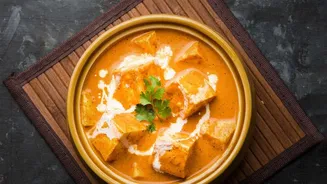
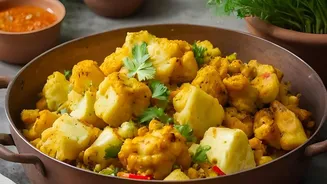
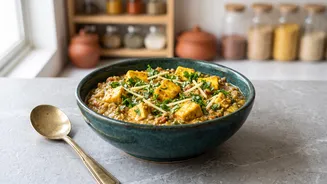
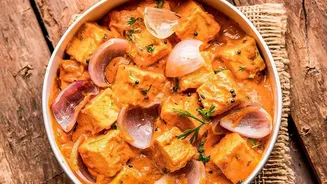
from the bustling streets of Surat, Gujarat, Paneer Ghotala is a celebrated vegetarian masterpiece. The word 'Ghotala' literally translates to 'scam' or 'mess', which perfectly describes the dish's preparation and appearance. It's a glorious, mashed-up medley of grated paneer, tangy tomatoes, crisp onions, and a blend of aromatic spices, all cooked together on a large flat griddle, or tawa. This dish is the vegetarian answer to the popular Surti 'Anda Ghotala' (egg scramble) and has carved out its own dedicated following. Unlike a standard paneer bhurji, which is a simple scramble, Ghotala involves mashing the ingredients into a cohesive, semi-gravy consistency, making it uniquely rich and flavourful.
Capturing the Street-Style Essence
The soul of street-style Paneer Ghotala lies in a few key elements. First is the generous use of butter, which creates its signature richness and helps all the spices meld together. Second is the use of pav bhaji masala, a spice blend that instantly imparts that unmistakable street-food aroma. Many street vendors also use a special green chutney, sometimes called 'leela masala', made from fresh coriander and green garlic, to build a fresh, aromatic base. Finally, the texture is paramount. The paneer is typically grated, not cubed, allowing it to absorb the masala and almost melt into the gravy, often finished with a handful of grated processed cheese for extra creaminess.
Your Ingredient Checklist
To get started, you will need a few core ingredients. For the paneer, aim for 200-250 grams of fresh, soft malai paneer, as it yields the best texture. You'll want to grate it using a medium or large-hole grater. For the base, gather one large onion, two or three ripe tomatoes, and one capsicum, all finely chopped. The spice arsenal includes ginger-garlic paste, green chillies, turmeric powder, red chilli powder, coriander powder, and the all-important pav bhaji masala. To finish, you'll need butter (plenty of it), processed cheese for grating, fresh coriander for garnish, and Kasuri methi (dried fenugreek leaves) for aroma.
The Step -by -Step Ghotala Method
Begin by heating a tablespoon of oil and two tablespoons of butter in a heavy -bottomed pan or kadhai. Add cumin seeds , and once they crackle , add the finely chopped onions and sauté until translucent . Add the ginger -garlic paste and chopped green chillies , cooking for another minute until fragrant . Next , add the chopped tomatoes and capsicum , along with a pinch of salt to help them soften . Cook until they become mushy , using a potato masher to gently crush them into a thick paste . Now , it 's time for the dry spices . Add turmeric , red chilli powder , coriander powder , and a generous teaspoon of pav bhaji masala . Stir for a minute until the spices are aromatic and the oil begins to separate . Add the grated paneer and mix everything thoroughly . Pour in a little hot water to achieve a thick , gravy -like consistency . Let it simmer for 3 -4 minutes , allowing the paneer to absorb the flavours . Finish by stirring in the grated cheese , another knob of butter , and crushed Kasuri methi . Garnish with fresh coriander before serving.
How to Serve It Like a Pro
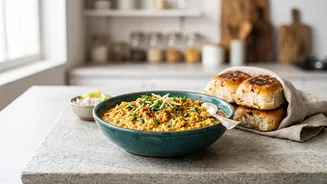
Paneer Ghotala is traditionally served piping hot with buttered pav . To make authentic 'masala pav' , melt a generous amount of butter on a tawa or pan , sprinkle some red chilli powder or pav bhaji masala , and toast the pav on both sides until they are warm and slightly crisp . Serve the Ghotala in a bowl , topped with an extra sprinkle of grated cheese , a dollop of butter , and finely chopped onions on the side . A squeeze of fresh lemon juice just before eating cuts through the richness and brightens all the flavours . While pav is the classic companion , this versatile dish also pairs wonderfully with naan , roti , or even as a filling for a dosa .