




More Than Just a Spell Check
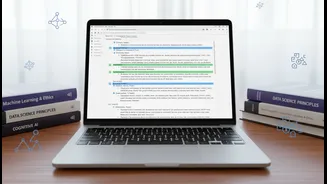
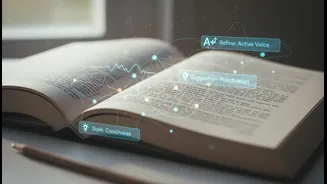
Forget the simple red squiggly line under a typo. Modern AI proofreaders are sophisticated assistants that go far beyond basic grammar and spelling corrections. Powered by complex algorithms and large language models, these tools analyse your writing
for clarity, tone, style, and structure. They can suggest ways to rephrase convoluted sentences for better readability, recommend more precise vocabulary, and even check for consistency in formatting and citations. Think of it less as a simple error-spotter and more as a real-time writing coach that provides instant feedback to help you refine your arguments and polish your prose.
The Benefits of an AI Writing Partner
For students juggling tight deadlines and complex subjects, the advantages are clear. AI tools can dramatically improve writing efficiency, allowing students to produce a more polished draft faster. This saves time and reduces the stress associated with academic writing. For students for whom English is a second language, these tools can be particularly helpful, offering suggestions that build confidence and improve fluency. Some educators even use AI-generated reports on common errors to tailor their lessons, addressing specific weaknesses seen across a class. The goal isn't just to correct mistakes, but to provide an interactive learning experience that helps students identify patterns and improve their skills over time.
The Risks of Over-Reliance and Misuse
Despite their power, these tools come with significant risks. The primary concern among educators is that over-reliance on AI can prevent students from developing their own critical thinking and writing skills. If a student simply accepts every suggestion without understanding the underlying rule, they are not learning; they are merely delegating their thought process to a machine. This can lead to a superficial understanding of the subject and a loss of the student's unique authorial voice. Furthermore, there is a serious ethical line to consider. Using AI to generate entire essays is a form of academic misconduct, equivalent to plagiarism. Many institutions now have clear policies on the acceptable use of AI, and undisclosed use can lead to serious consequences.
A Guide to Using AI Proofreaders Smartly
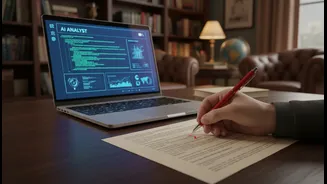
To harness the benefits of AI without falling into the traps, students should approach these tools as a partner, not a replacement for their own effort. The most effective strategy is to use AI for editing and proofreading, not for initial drafting. Write your own arguments and develop your ideas first. Then, use the tool as a final check to catch errors and refine your language. Critically evaluate every suggestion the AI makes. Ask yourself why it's recommending a change. Does it actually improve the sentence or just make it sound generic? This active engagement is key to ensuring the tool serves as a learning aid. Always be transparent about your use of AI if your institution requires it, and remember that the goal is to enhance your work, not to have AI do the work for you.