




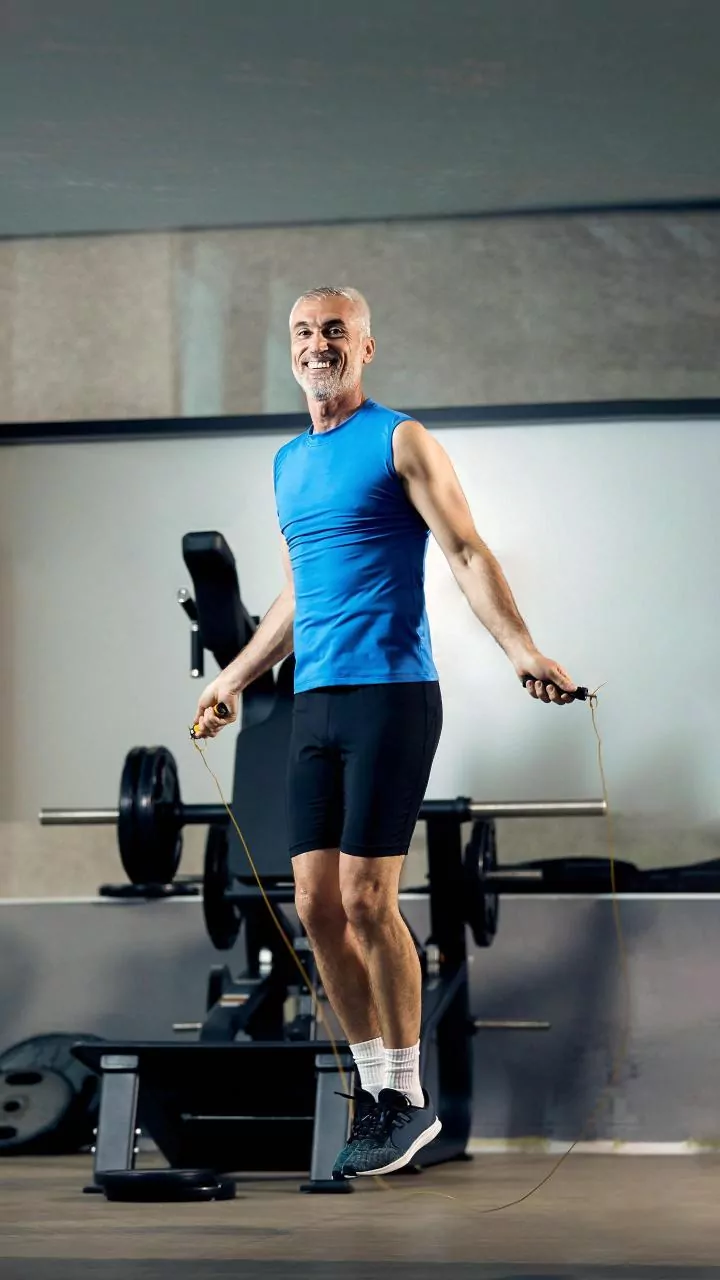



Long hours at a desk can lead to stiff hips, achy knees, and a sore back. Your joints weren't designed for a sedentary life, but a targeted gym workout can counteract the damage, improve mobility, and restore your body's natural balance.
Why Your Joints Dislike Your Desk Job
Sitting for prolonged
periods is not a neutral act for your body. It places your joints in a static, flexed position, which can lead to several issues. The hip flexor muscles become short and tight, while the opposing glute muscles weaken from inactivity. This imbalance places extra stress on your lower back and can alter your walking mechanics. Furthermore, movement is essential for circulating synovial fluid, the natural lubricant for your joints. When you're still for hours, this fluid doesn't flow as effectively, leading to that familiar feeling of stiffness in your hips, knees, and spine when you finally stand up. Over time, this can contribute to increased joint pain and a higher risk of injury.
The Essential Warm-Up: Mobility First
Before you even think about weights, dedicate 5-10 minutes to a dynamic warm-up focused on mobility. The goal is to gently move your joints through their full range of motion, increasing blood flow and preparing them for work. Skip static holds and focus on fluid movements. Start with shoulder rolls and neck stretches to release tension from screen time. Then, move to spinal rotations, like seated trunk twists, to gently mobilise your back. Finish with leg swings (forward-and-back and side-to-side) and hip circles to open up the tight hip joints. These simple movements signal to your body that it's time to move, reducing stiffness and priming your muscles.
Strength Training: Your Joint Armour
Strong muscles are the best defense for your joints. They act as shock absorbers and provide stability, taking pressure off of cartilage and ligaments. Focus on compound exercises that recruit multiple muscle groups. Glute bridges are non-negotiable for office workers, as they activate the weak glute muscles to support the hips and lower back. Squats and lunges, when done with proper form, strengthen the entire leg musculature that supports your knees. For your upper body, rowing variations (using cables or bands) are crucial. They strengthen the muscles of your upper back, pulling your shoulders back and counteracting the forward slouch that's common with desk work.
Low-Impact Cardio: Circulation Without the Pounding
Cardiovascular exercise is vital for overall health, but high_impact activities can sometimes aggravate sensitive joints. Low_impact cardio provides the heart_health benefits without the jarring stress. The elliptical machine is an excellent choice as it mimics running without the impact on your knees and hips. Stationary cycling and rowing are also fantastic options that strengthen the muscles around the joints in a controlled, fluid motion. Even a brisk walk on an inclined treadmill can elevate your heart rate while being gentle on your body. Aim for 20_30 minutes of low_impact cardio 3_4 times a week.
Cool Down: Restoring Flexibility
Your workout isn't over when the last weight is racked. A cool down focused on static stretching helps restore flexibility to the muscles that are chronically tight from sitting. This is where you hold stretches for 20 -30 seconds. Prioritise a hip flexor stretch, such as a half -kneeling lunge, to lengthen the front of your hips. Hamstring stretches are also key to relieving tension in the back of your legs, which can pull on your lower back. Finally, include a chest stretch, like standing in a doorway and pressing your arms against the frame, to open up the front of your body and complete the reversal of your 'desk posture'.