






Saturn Reaches Its Peak
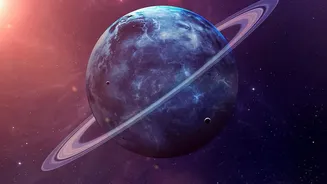
October is the best month of 2026 to see Saturn. The ringed planet reaches opposition on October 4, an event where Earth passes directly between Saturn and the Sun. This alignment means Saturn rises around sunset, remains visible all night long, and sets
around sunrise. It will be at its closest and brightest for the year, making it easily visible to the naked eye as a steady, bright point of light. For observers in India, Saturn will rise in the eastern sky around 6:11 p.m. on October 4 and will be visible throughout the night. While you can spot it without any equipment, even a small telescope will offer a breathtaking view of its famous rings.
Jupiter in the Morning Sky
While Saturn dominates the evening, Jupiter commands the pre-dawn sky. The largest planet in our solar system will be a brilliant, unmissable light in the east before sunrise. A special event occurs on the morning of October 6, when a waning crescent Moon passes close to Jupiter, creating a beautiful pairing in the sky. For some parts of the world, the Moon will actually pass in front of Jupiter in an event called a lunar occultation. While the full occultation isn't visible everywhere in India, the close conjunction itself is a stunning sight worth waking up early for.
The Draconid Meteor Shower
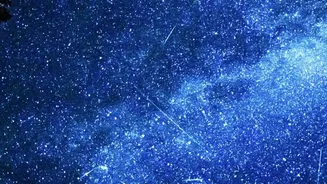
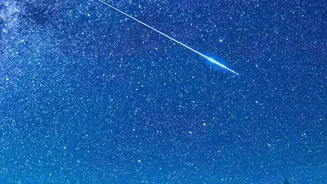
The first of two meteor showers this month, the Draconids, is active from October 6 to 10, peaking on the night of October 8-9. This is an unusual shower because it's best viewed in the early evening, just after nightfall, rather than in the early morning hours. The radiant, or the point from which the meteors appear to originate, is in the constellation Draco the Dragon. The Draconids are typically a modest shower, producing about 5 to 10 slow-moving meteors per hour. However, the shower is known for occasional outbursts of much higher activity. With the moon being a thin crescent and setting early, viewing conditions in 2026 are excellent for spotting these 'fiery dragons'.
The Orionid Meteor Shower
October's grand finale is the Orionid meteor shower, which peaks on the night of October 21-22. These meteors are famous because they are dusty debris left behind by the one and only Halley's Comet. The Orionids are known for being bright and fast, often leaving persistent trails that can glow for a few seconds. At its peak, you can expect to see up to 20 meteors per hour from a dark location. The shower's radiant is in the constellation Orion the Hunter, which rises in the east after midnight. The best time to watch will be in the hours before dawn. A bright moon will be present in the evening but is expected to set a few hours before dawn, leaving the sky dark for the most active part of the shower.
How to Best Enjoy the Show
You don't need any special equipment to enjoy these celestial events. Meteor showers, in particular, are best viewed with just your eyes. Find a location away from city lights with a clear, unobstructed view of the sky. This is crucial as light pollution can wash out fainter meteors and planets. Give your eyes about 20-30 minutes to fully adjust to the darkness. Lie back on a blanket or reclining chair to take in as much of the sky as possible without straining your neck. While planets like Saturn and Jupiter are bright enough to be seen from urban areas, a dark site will reveal their splendor against a backdrop of countless stars. Patience is key, so get comfortable and enjoy the cosmic display.