







Your Office Fitness Secret Weapon
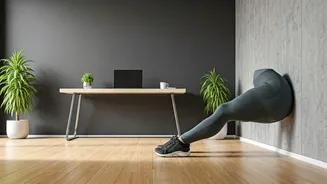
The modern workday often involves hours of sitting, which can weaken glutes, tighten hip flexors, and contribute to poor posture. Finding time for fitness can feel impossible. Enter the wall sit. This powerful isometric exercise requires nothing more
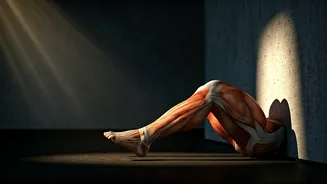
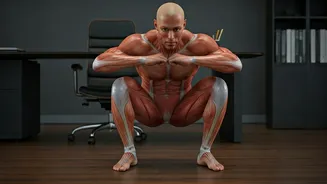
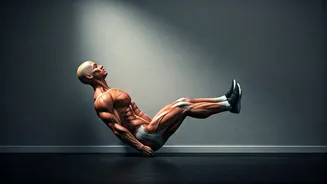
than a sturdy wall and a minute of your time. It primarily targets your quadriceps (the front of your thighs) but also engages your glutes, hamstrings, and calves. Because you're holding a static position, it builds muscular endurance and stability without putting stress on your knees, making it a fantastic, low-impact choice for almost anyone looking to break up their day with a burst of activity.
How to Do the Perfect Wall Sit
Form is everything when it comes to getting results and preventing injury. Follow these steps for a perfect, effective wall sit: 1. **Find Your Wall:** Stand about two feet away from a flat, solid wall, with your back facing it. 2. **Get into Position:** Lean back until your entire back—from your shoulders to your lower back—is pressed firmly against the wall. 3. **Slide Down:** Slowly slide your back down the wall until your thighs are parallel to the floor, as if you’re sitting in an invisible chair. Your knees should be directly above your ankles, forming a 90-degree angle. Check to make sure your knees aren’t drifting past your toes. 4. **Check Your Feet:** Your feet should be hip-width apart and planted firmly on the floor. 5. **Engage and Hold:** Keep your core tight, your back flat against the wall, and your gaze straight ahead. Breathe steadily and hold this position. Aim for 60 seconds, but if you're a beginner, start with 20-30 seconds and gradually increase the time as you get stronger.
The Real Benefits Beyond Toning
While wall sits are excellent for building the strength that contributes to a toned appearance, the benefits run much deeper. As an isometric exercise, it forces your muscles to activate without movement. This is incredibly effective for building muscular endurance—the ability of your muscles to sustain effort over time. This kind of strength is crucial for supporting your joints during other activities, from running to climbing stairs. Furthermore, holding the correct posture during a wall sit—with your back straight and core engaged—can help improve your postural awareness, which is a great antidote to the slouching that often happens at a desk.
Common Mistakes to Avoid
A few small errors can reduce the effectiveness of a wall sit or even lead to strain. Be mindful of these common mistakes: * **Sliding Too Low or Not Low Enough:** Your thighs should be parallel to the floor. Going lower puts unnecessary strain on your knees, while not going low enough reduces the engagement of your quads. * **Letting Knees Cave Inward:** Actively press your knees outward so they stay aligned with your feet. This ensures your glutes are properly engaged and protects your knee ligaments. * **Arching Your Back:** Keep your lower back pressed into the wall. If there’s a gap, you’re not engaging your core properly and may put stress on your spine. * **Holding Your Breath:** Remember to breathe! Inhaling and exhaling steadily helps deliver oxygen to your working muscles and keeps you from tensing up unnecessarily.
Fitting It Into Your Workday
The beauty of the wall sit is its convenience. You don’t need to change clothes or even leave your general work area. Try incorporating it into your routine by setting a recurring alarm for every hour or two. You can do a wall sit while on a phone call (if you're not on video), while waiting for a document to print, or as a quick reset before a meeting. This practice, often called an 'exercise snack', is a proven way to counteract the negative effects of prolonged sitting and boost your energy and focus.
Ready for a Challenge? Try These Variations
Once you can comfortably hold a standard wall sit for 60 seconds or more, you can increase the difficulty: * **Add Weight:** Hold a dumbbell, a heavy book, or even your work bag on your lap to increase the resistance. * **Single-Leg Wall Sit:** From the standard position, lift one foot off the floor and extend it straight out in front of you. Hold for as long as you can, then switch legs. This dramatically increases the challenge for your supporting leg and core. * **Wall Sit with Calf Raises:** While holding the sit, slowly lift your heels off the floor, hold for a moment, and then lower them back down. Repeat for the duration of your sit to engage your calf muscles.