



Meet Your Bedroom’s New Best Friends
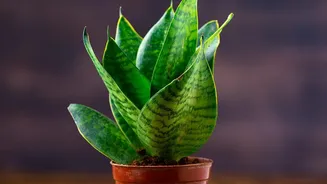
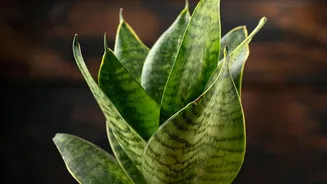
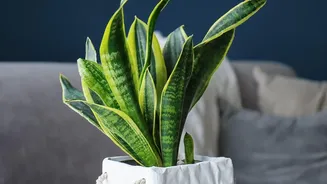
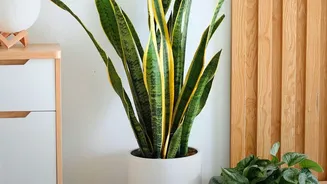
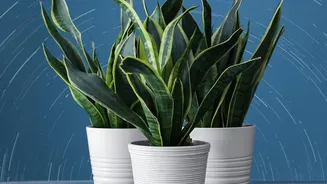
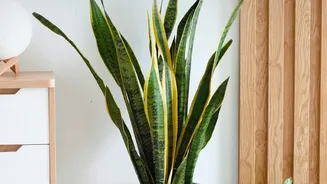
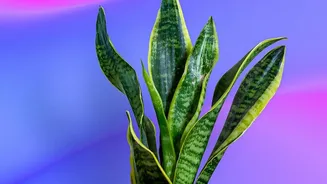
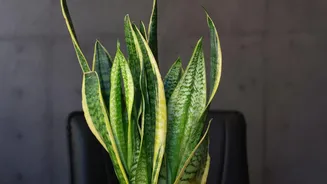
The Snake Plant, or Sansevieria trifasciata, is known for its striking, sword-like leaves that grow vertically, adding a touch of modern, architectural elegance to any room. They come in various patterns, often featuring green bands and yellow or silver
edges. On the other hand, the Golden Pothos, or Epipremnum aureum, is a lush, trailing vine with heart-shaped leaves, often variegated with splashes of yellow, cream, or white. Its cascading nature makes it perfect for shelves or hanging baskets, adding a soft, organic feel. Together, they offer a dynamic visual contrast while sharing a reputation for being incredibly forgiving.
The ‘Hard to Kill’ Promise
Both plants are lauded as ideal for beginners precisely because they thrive on a bit of neglect. They are highly adaptable to a wide range of lighting conditions, from low light to bright, indirect sunlight. This makes them suitable for bedrooms that may not have perfect, sun-drenched windows. Their watering needs are minimal, which is where many new plant owners falter. Snake plants, in particular, are drought-tolerant and prefer their soil to dry out completely between waterings; they are far more susceptible to overwatering than underwatering. Pothos is similarly forgiving and will often droop its leaves slightly to let you know it's thirsty, quickly perking up after a drink.
The Air-Purifying Claim: Fact vs. Fiction
You've likely heard that these plants are amazing air purifiers, a claim that stems from a 1989 NASA Clean Air Study. The study found that in a sealed laboratory chamber, certain plants, including snake plants, could remove common airborne toxins like formaldehyde and benzene. While this is scientifically true, the context is crucial. A typical home or bedroom has natural ventilation that makes the air-purifying effect of a few plants negligible. You would need an enormous number of plants—some experts estimate 10 to 1,000 per square metre—to replicate the results of the sealed lab environment. So, while they do absorb some pollutants, their primary benefit is aesthetic and psychological. Think of them as a beautiful addition that makes your space feel fresher, not as a replacement for good ventilation.
Uniquely Suited for the Bedroom
Despite the nuance around air purification, the Snake Plant has a special trick that makes it a perfect bedside companion. Unlike most plants, it performs a type of photosynthesis called Crassulacean Acid Metabolism (CAM). This means it releases oxygen at night, whereas most other plants do so during the day. While a single plant won't dramatically alter the oxygen levels in your room, it's a unique feature that has made it a bedroom favourite. The presence of greenery is also linked to reduced stress and an overall sense of calm, which is exactly the atmosphere you want in a space dedicated to rest and relaxation.
A Simple Care Guide to Get Started
Caring for these two is straightforward. For your Snake Plant, place it in anything from low to bright, indirect light. Water only when the soil is 100% dry, which could be as infrequently as every few weeks or even once a month. For Pothos, it also prefers bright, indirect light but tolerates lower light levels well. Water it when the top inch or two of soil feels dry, typically every one to two weeks. Both plants are generally happy in standard indoor potting soil and don't require much fertilisation. A note for pet owners: both Snake Plants and Pothos are toxic to cats and dogs if ingested, causing gastrointestinal upset, so it's best to place them out of reach of curious pets.