
More Than Just Specks of Dust
Dubbed “Little Red Dots” (LRDs), these objects first appeared in Webb’s initial data releases in 2022. They are extremely compact, very red, and incredibly distant, seen as they were when the universe was in its infancy—some as early as 600 million years
after the Big Bang. Initially, their identity was a complete puzzle. Were they a new type of compact, star-forming galaxy, or something else entirely? Their sheer number in the early universe, followed by a rapid decline as the cosmos aged, only deepened the intrigue. They appeared to be a fleeting, yet significant, phase of cosmic evolution that theories had not predicted.
A Black Hole Surprise
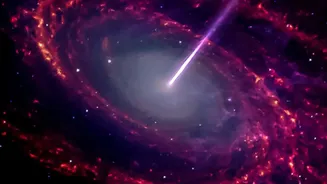
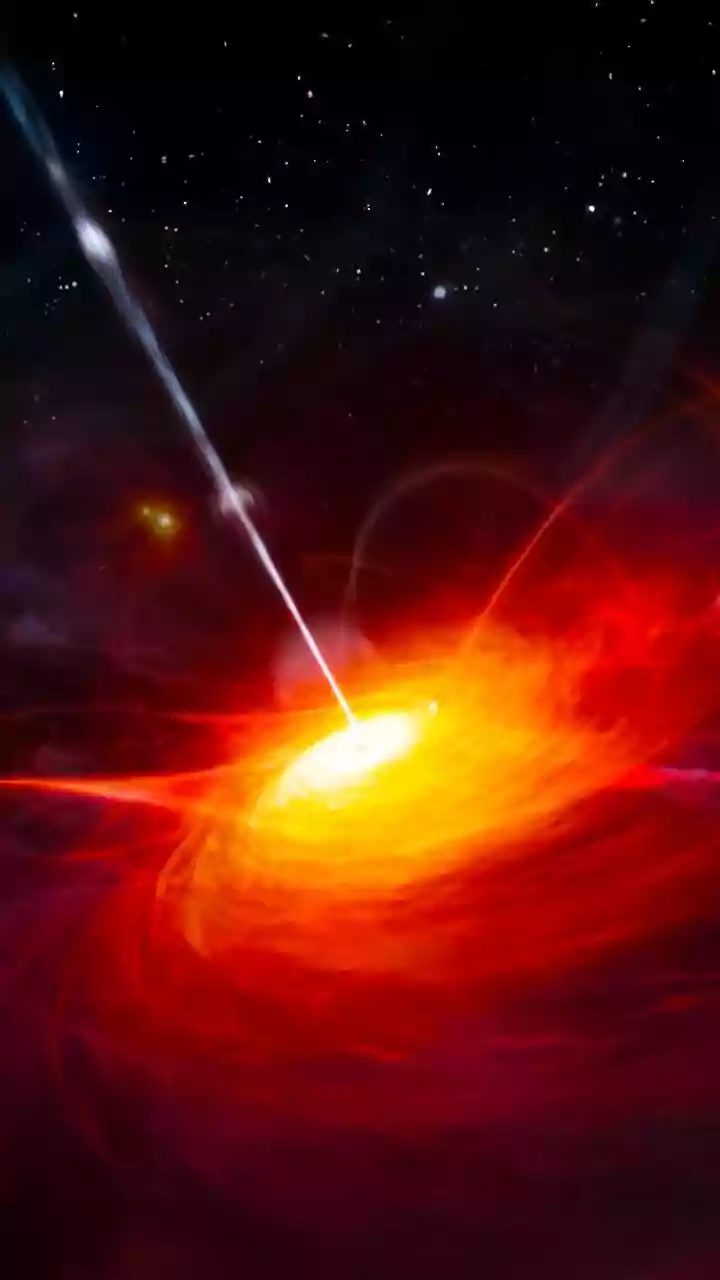
The leading theory now is that these LRDs are not just galaxies, but active galactic nuclei (AGN)—in other words, they are powered by ravenously feeding supermassive black holes. This conclusion comes from analyzing the light, or spectra, from these dots. Astronomers detected signs of extremely fast-moving gas, swirling at speeds that could only be generated by the immense gravitational pull of a supermassive black hole. However, they don't behave quite like the AGN we see in the universe today. LRDs are surprisingly faint in X-rays and show little variation in brightness, characteristics that differentiate them from their modern counterparts.
The 'Black Hole Star' Hypothesis
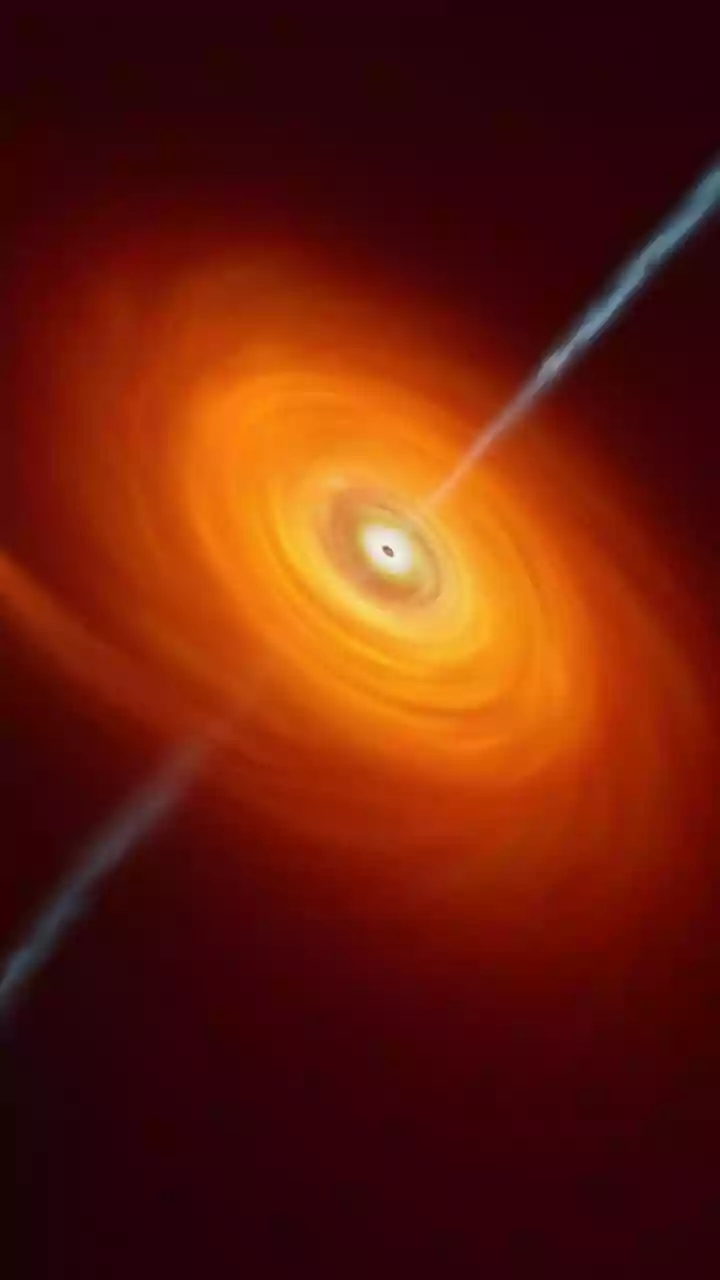
To explain these peculiarities, a fascinating new model has emerged: the “black hole star.” This theory suggests an LRD is a supermassive black hole enveloped in a thick, dense cocoon of gas and dust. This shroud would absorb high-energy light like X-rays, explaining why they aren't detected, and re-emit the light at redder wavelengths, accounting for the signature color of the dots. A recent, incredibly detailed spectrum of one LRD, known as GLIMPSE-17775, has provided the strongest evidence yet for this model, showing multiple chemical signatures consistent with a powerful source being smothered by a dense gas cocoon.
Rewriting the Cosmic Playbook
This discovery forces a rethink of how the universe's biggest structures grew up so quickly. For years, a major puzzle in cosmology has been how supermassive black holes became so enormous so early in cosmic history. Existing models struggled to explain their rapid growth. The LRDs, interpreted as black hole stars, could be the missing link. They represent a hyper-efficient growth phase, allowing black holes to bulk up at an incredible rate before they blow away their gassy cocoons and evolve into the more familiar, unobscured quasars seen in the later universe. In effect, Webb may have found the turbulent nurseries where the first monster black holes were born.
From Red Dots to Modern Galaxies
If LRDs are an early, explosive phase, what do they become? The thinking is that they don't just vanish. A recent study proposed that as the universe matures, these objects evolve. One study simulated what a modern spiral galaxy, nicknamed “Saguaro,” would look like if viewed in the early universe, and found its bright, compact core was a dead ringer for an LRD. This suggests that LRDs could be a temporary but common stage for many galaxies. Other theories propose that LRDs might evolve into the massive, densely packed globular clusters of stars we see today. These findings provide the first clues about the family tree connecting these enigmatic ancient objects to the familiar structures in our own cosmic neighborhood.