








What Exactly Is Geoengineering?
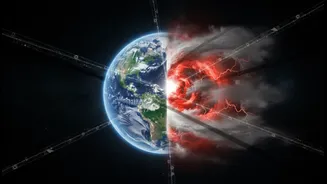
Geoengineering refers to the deliberate, large-scale intervention in Earth's climate system to counteract global warming. The proposals generally fall into two main camps. The first is Solar Radiation Management (SRM), which aims to reflect a small fraction
of sunlight back into space, essentially creating a planetary cooling effect. Think of it like mimicking a massive volcanic eruption by spraying reflective particles (aerosols) into the stratosphere. The second category is Carbon Dioxide Removal (CDR), which involves technologies designed to pull vast quantities of CO2 directly from the atmosphere. This can range from massive tree-planting initiatives to building giant machines that act like air filters for the planet.
The Danger of Unpredictable Side Effects
The most prominent risk of solar geoengineering is its potential to wreak havoc on global weather patterns. While computer models suggest it could cool the planet, they also show it could drastically alter rainfall, potentially disrupting vital systems like the Indian monsoon, which underpins the region's agriculture and economy. An experiment by one country could inadvertently trigger droughts, floods, or locust swarms in another, with no international framework for accountability. Furthermore, SRM doesn't eliminate the root cause of climate change—greenhouse gases. It only masks the warming. If a geoengineering system were deployed and then suddenly stopped for any reason—be it political conflict, economic collapse, or a natural disaster—the world would experience a rapid and catastrophic temperature rebound known as "termination shock".
Who Controls the World's Thermostat?
Beyond the physical risks lies a tangled web of geopolitical and ethical problems. Who gets to decide if we should geoengineer the planet? A wealthy nation or billionaire could theoretically deploy SRM unilaterally, imposing a new climate reality on the entire world without global consent. This raises profound questions of justice and equity, as the nations most vulnerable to climate change would likely have the least say but could suffer the worst consequences of a failed or flawed intervention. The technology could become a new source of international conflict, with one country's 'fix' becoming another's disaster. There is currently no global governance system prepared to handle such high-stakes decisions.
The 'Moral Hazard' Dilemma
A significant ethical concern is the concept of "moral hazard." Critics argue that the mere possibility of a future technological fix could reduce the urgency to cut fossil fuel emissions now. If governments and corporations believe a 'get-out-of-jail-free' card exists, they may be less motivated to make the difficult economic and political choices required for decarbonisation. This could lock in a dependency on a risky, unproven technology while neglecting the most effective and durable solution: transitioning away from fossil fuels. Geoengineering, in this view, becomes a dangerous distraction rather than a solution.
Even 'Safer' Options Carry Risks
Carbon Dioxide Removal (CDR) is often presented as the more benign form of geoengineering, as it addresses the root cause of warming by removing CO2. However, deploying these technologies at a scale large enough to make a difference comes with its own set of major challenges. For example, planting enough trees or growing enough biomass crops for bioenergy with carbon capture (BECCS) would require vast amounts of land. This could compete with food production, threaten biodiversity, and consume enormous quantities of water. Meanwhile, more high-tech solutions like Direct Air Capture (DAC) are currently extremely expensive and energy-intensive, requiring massive amounts of clean energy to avoid simply creating more emissions.