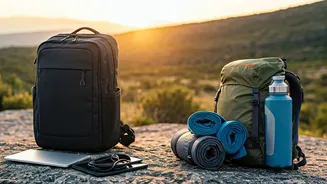









The Era of the ‘Smart’ Backpack
Just a few years ago, the travel world was dominated by the ‘one bag’ philosophy, perfected for the digital nomad. The luggage of choice was the tech backpack. Think meticulously organised bags from brands like Nomatic, Peak Design, or Aer. These were
marvels of engineering, clad in black ballistic nylon with dedicated, padded sleeves for a laptop, a tablet, a camera, a drone, and a dozen other gadgets. They were designed for efficiency, promising a seamless transition from airport lounge to co-working space. This type of bag became a status symbol, a uniform for those who could work from anywhere. It was luggage as a portable office, prioritising organisation and protection for expensive electronics above all else.
A Shift in Travel Philosophy
The travel landscape has changed. For many, the appeal of being constantly connected has waned, replaced by a desire to disconnect and immerse oneself in the destination. This isn't just a nostalgic whim; it's a practical response to the realisation that carrying a 10-kg bag full of tech through a humid city or up a cobblestone street is, frankly, exhausting. The new travel philosophy prioritises experience over documentation. Backpackers are realising that the most important gear isn't the drone for the perfect aerial shot, but a bag that doesn’t cause back pain. This shift has led them to look outside the dedicated travel market and into the world of outdoor recreation.
Why Mountain Gear Wins for Travel
Hiking and mountaineering companies have been solving a simple problem for decades: how to carry heavy loads comfortably over long distances. Their solutions are a revelation for travellers tired of their tech-heavy burdens. Firstly, the suspension systems are vastly superior. A proper hiking pack features an adjustable harness, load-lifter straps, and, most importantly, a padded hip belt. This transfers up to 80% of the bag's weight from your shoulders to your hips, the part of your body designed to bear weight. A tech bag, with its simple shoulder straps, places the entire load on your shoulders and spine. The difference in comfort after a full day of walking is staggering. Furthermore, hiking packs offer better ventilation, with mesh panels and air channels that prevent the dreaded sweaty-back syndrome.
The Surprising Advantage of Simplicity
Another key factor is weight. The materials used in modern hiking packs, like Ripstop nylon or even exotic Dyneema composites, are incredibly light yet durable. An empty 40-litre tech bag can weigh over 2 kg, while a comparable hiking pack can weigh less than half of that. This leaves more of your precious baggage allowance for things you actually need. While tech bags boast a pocket for everything, many travellers are finding this a disadvantage. A hiking pack’s large, simple main compartment, often called a “bucket,” offers more versatility. Using packing cubes, travellers can create their own modular organisation system that can be adapted for any trip, rather than being locked into a pre-designed layout. It also makes the bag more versatile; it’s just as at home on a multi-day trek as it is in a hostel.
Making the Switch: What to Know
This trend doesn't mean tech bags are obsolete. For short business trips or for those whose work truly requires a mobile office, they still reign supreme. But for the adventurous traveller, the benefits of mountain luggage are compelling. If you're considering the switch, look for a hiking pack in the 30-45 litre range, which is typically carry-on compliant. Pay attention to fit; try on different bags with weight in them to see how the hip belt sits. Look for models with panel access (a U-shaped zip that opens like a suitcase) if you dislike the traditional top-loading style of many hiking packs. Brands like Osprey, Deuter, and Gregory offer excellent crossover options that blend travel features with hiking comfort.