







Mistake 1: You’re Not Using Nearly Enough
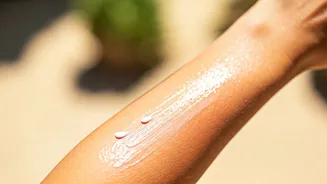
This is the most common sunscreen mistake. The Sun Protection Factor (SPF) on the bottle is determined in labs using a thick layer—about 2 milligrams of product per square centimetre of skin. Most people, however, apply only 25-50% of that amount. This doesn't
cut your protection in half; it reduces it dramatically. An SPF 50 sunscreen applied too thinly might only give you the real-world protection of SPF 10 or 15. For Indian weather, where UV intensity is high, this protection gap is significant. A simple guide is the “two-finger rule”: squeeze sunscreen along the full length of your index and middle fingers. This amount is roughly correct for your face and neck. For your body, you need about 30 ml, or enough to fill a shot glass, to cover all exposed skin.
Mistake 2: You Apply It Only When It’s Sunny
Thinking you only need sunscreen on bright, sunny days is a major error. Up to 80% of the sun’s harmful UV rays can penetrate through clouds, haze, and fog. UVA rays, which are responsible for premature ageing, wrinkles, and pigmentation, are present with consistent intensity all day, every day, throughout the year. They can even pass through window glass, meaning you're exposed while driving or sitting near a window at home or in the office. In a country like India, this daily, incidental exposure adds up, contributing to concerns like tanning and dark spots. To be truly protected, sunscreen must be a non-negotiable part of your daily routine, regardless of the weather forecast.
Mistake 3: You Forget to Reapply
Applying sunscreen once in the morning and forgetting about it is another critical mistake. Sunscreen is not a one-and-done product. Its effectiveness decreases over time as it's broken down by sunlight. The standard rule from dermatologists is to reapply every two hours when you are outdoors. This timeframe shortens significantly if you are swimming or sweating heavily, as moisture washes away the product. Even water-resistant formulas are only effective for a specified time (usually 40 or 80 minutes) and need reapplication after you towel off. A study found that only about a third of people reapply sunscreen as recommended, leaving them exposed as the day goes on.
Mistake 4: You Rely on Makeup with SPF
While your foundation or compact powder may list an SPF of 30 or 50, it is not a replacement for a dedicated sunscreen. The issue, once again, is the amount. To get the SPF protection stated on the label, you would need to apply a very thick layer of makeup—far more than anyone typically would. A normal application of foundation with SPF might only provide an effective SPF of 5 or 10. Think of the SPF in your makeup as an extra bonus layer of protection, not your primary defence. The correct method is to apply a full, proper dose of a broad-spectrum sunscreen first as the last step of your skincare, let it absorb, and then apply your makeup on top.
Mistake 5: You're Using an Expired Bottle
That bottle of sunscreen from last year’s beach trip is likely no longer effective. The active ingredients that protect your skin degrade over time. The FDA requires sunscreens to maintain their strength for at least three years, and most will have an expiration date printed on the packaging. If there's no date, you should discard it three years after purchase. Using expired sunscreen can be ineffective, leading to sunburn and long-term skin damage because you think you're protected when you're not. Exposure to heat and sunlight (like in a car) can also cause the formula to break down faster. If the texture, colour, or smell has changed, it's time to throw it out, even if it’s not past its expiration date.
Mistake 6: You Miss Important Spots
Even diligent sunscreen users often miss key areas. A study observing people at a state fair found that only a third of them applied sunscreen to all exposed skin. The most commonly forgotten spots include the ears, back of the neck, the tops of your feet, your scalp (especially along your hair parting), and your hands. These areas are just as susceptible to sun damage, premature ageing, and skin cancer as your face. When applying sunscreen, be mindful and methodical. Make sure every part of your skin that will see the sun is covered to ensure you don't end up with unexpected sunburn or long-term damage in these neglected zones.