




A Personal Bubble of Pressure
The most immediate threat in space is the vacuum. On Earth, the atmosphere exerts constant pressure on our bodies, keeping our bodily fluids in a liquid state. In the near-zero pressure of space, this external force vanishes. The consequences are terrifying
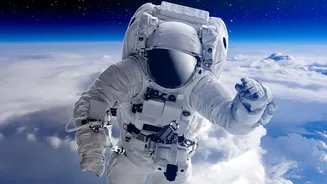
and immediate: a phenomenon called ebullism would occur, where the boiling point of your fluids—including blood and saliva—drops below your body temperature. Gas bubbles would form in your bloodstream, causing catastrophic failure of your organs within seconds. A spacesuit's primary job is to counteract this by creating a pressurised, human-shaped atmosphere. The suit is inflated with pure oxygen to a pressure of about 4.3 psi, roughly 30% of Earth's sea-level pressure. This is enough to keep body fluids stable while allowing the astronaut enough flexibility to move and work.
Surviving Extreme Temperatures
Imagine being simultaneously burned and frozen. That's the reality of space, where temperatures can swing wildly from a scorching 120°C in direct sunlight to a bone-chilling -150°C in the shade. Without an atmosphere to distribute heat, an unprotected body would suffer severe burns and frostbite at the same time. To manage this, spacesuits employ a sophisticated personal climate control system. The first layer an astronaut wears is a Liquid Cooling and Ventilation Garment, essentially a set of long underwear woven with about 300 feet of thin plastic tubes. Chilled water circulates through these tubes to draw heat away from the body. The suit's outer layers provide insulation. Comprising multiple layers of materials like aluminised Mylar, they act like a high-tech thermos, reflecting solar heat and preventing the astronaut's body heat from escaping into the cold void.
Oxygen to Breathe, CO2 to Remove
While providing pressure is crucial, so is providing something to breathe. Spacesuits are fed with 100% pure oxygen from a backpack known as the Primary Life Support System (PLSS). Using pure oxygen allows the suit to operate at a lower pressure, making it less rigid and easier to move in. However, this creates another challenge. Before a spacewalk, astronauts must pre-breathe pure oxygen for a period to flush nitrogen from their blood, preventing a painful condition similar to 'the bends' that divers experience. Just as important as supplying oxygen is removing the carbon dioxide that astronauts exhale. A build-up of CO2 inside the helmet would be toxic. The PLSS circulates air through a system that scrubs the carbon dioxide, often using canisters containing materials like metal oxide, before feeding the clean oxygen back into the helmet.
A Shield Against Invisible Threats
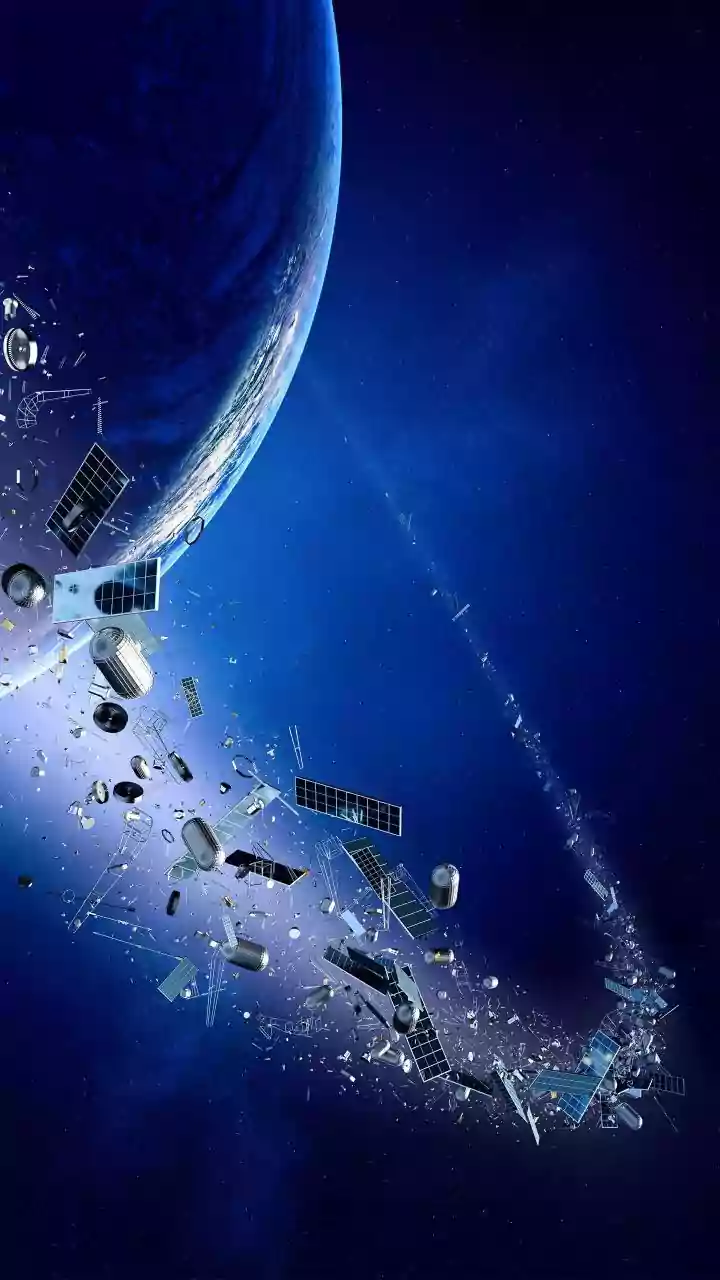
Beyond the vacuum and temperatures, space is filled with invisible dangers. The first is radiation. Without Earth's protective magnetic field and atmosphere, astronauts are exposed to high-energy cosmic rays and solar particles that can damage DNA and increase cancer risk. The second threat comes from micrometeoroids—tiny particles of rock and debris moving at speeds of up to 27,000 kilometres per hour. While a spacesuit cannot block all radiation, its multiple layers offer significant protection. The outer layers of a modern suit, known as the Thermal Micrometeoroid Garment, are made of tough, puncture-resistant materials like Kevlar, Nomex, and Gore-Tex. These layers are designed to break up tiny particles on impact before they can puncture the inner pressure bladder. The helmet's visor also has a thin gold coating that reflects harmful ultraviolet and infrared radiation.